Help
Overview
1 / 19
Toolbox

Set Up API Integration

Save your own API key in Kuration, then call any external tool from a table column with the HTTP API tool. This example runs email discovery.

17 steps About 5 minutes Needs an external API key

You will save an API key under Settings → Your API Keys, then create an HTTP API column that sends your table data to that tool’s endpoint and writes the response back into the table.

Please note the demo is not just about using an email tool, its about running columns with your own API key, the example we used is for an email tool, so instead of using Kuration's key, we can use an external email tool via API
  • In KurationA table with the columns your endpoint needs, such as full name and domain.
  • In your toolAn API key and the endpoint URL you want to call.
  • Credits0.1 credits per row for each HTTP API run.
01 of 17

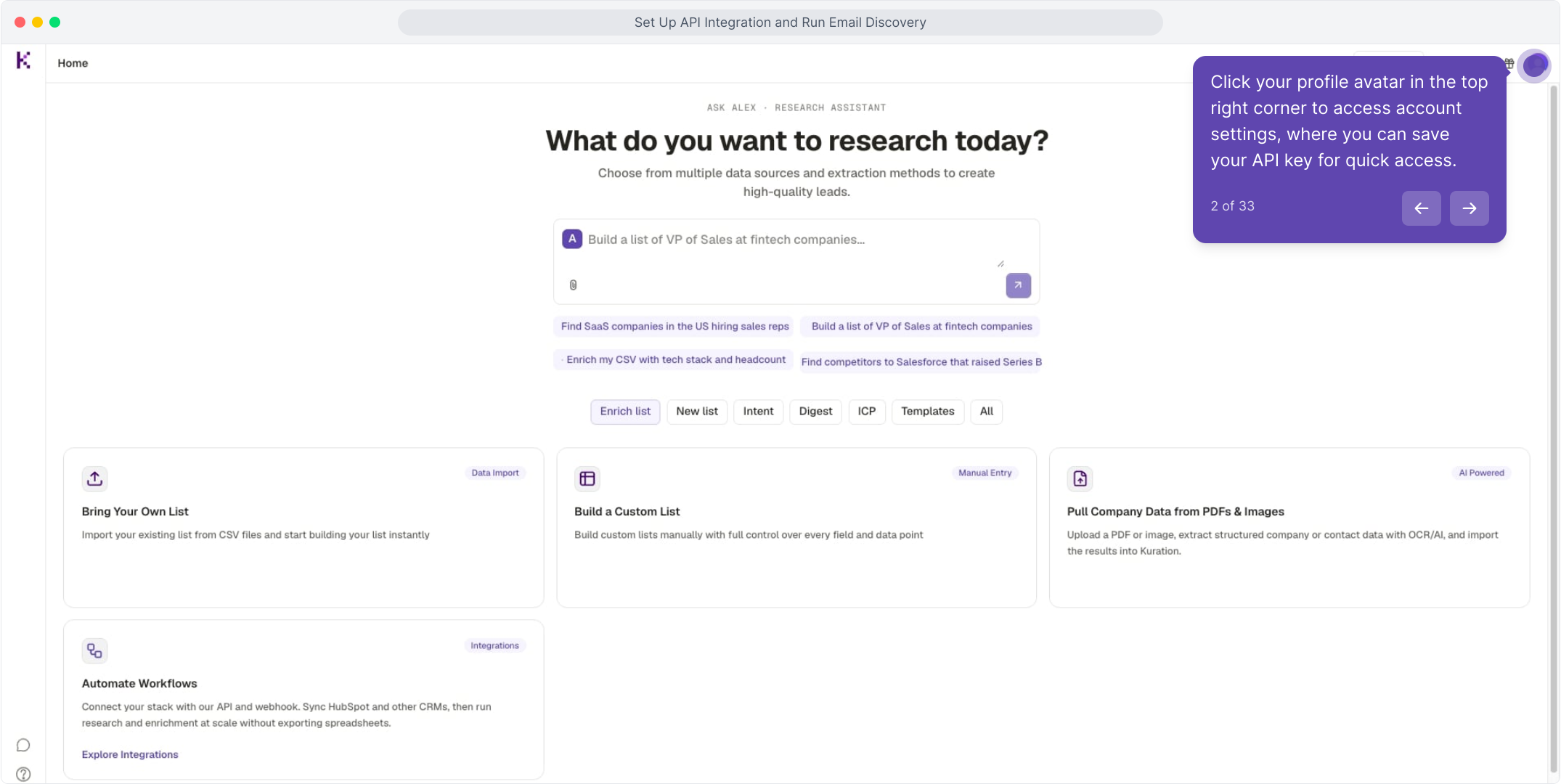
Click your profile avatar in the top right corner to access account settings, where you can save your API key for quick access.

Kuration home with the profile avatar highlighted in the top right
02 of 17

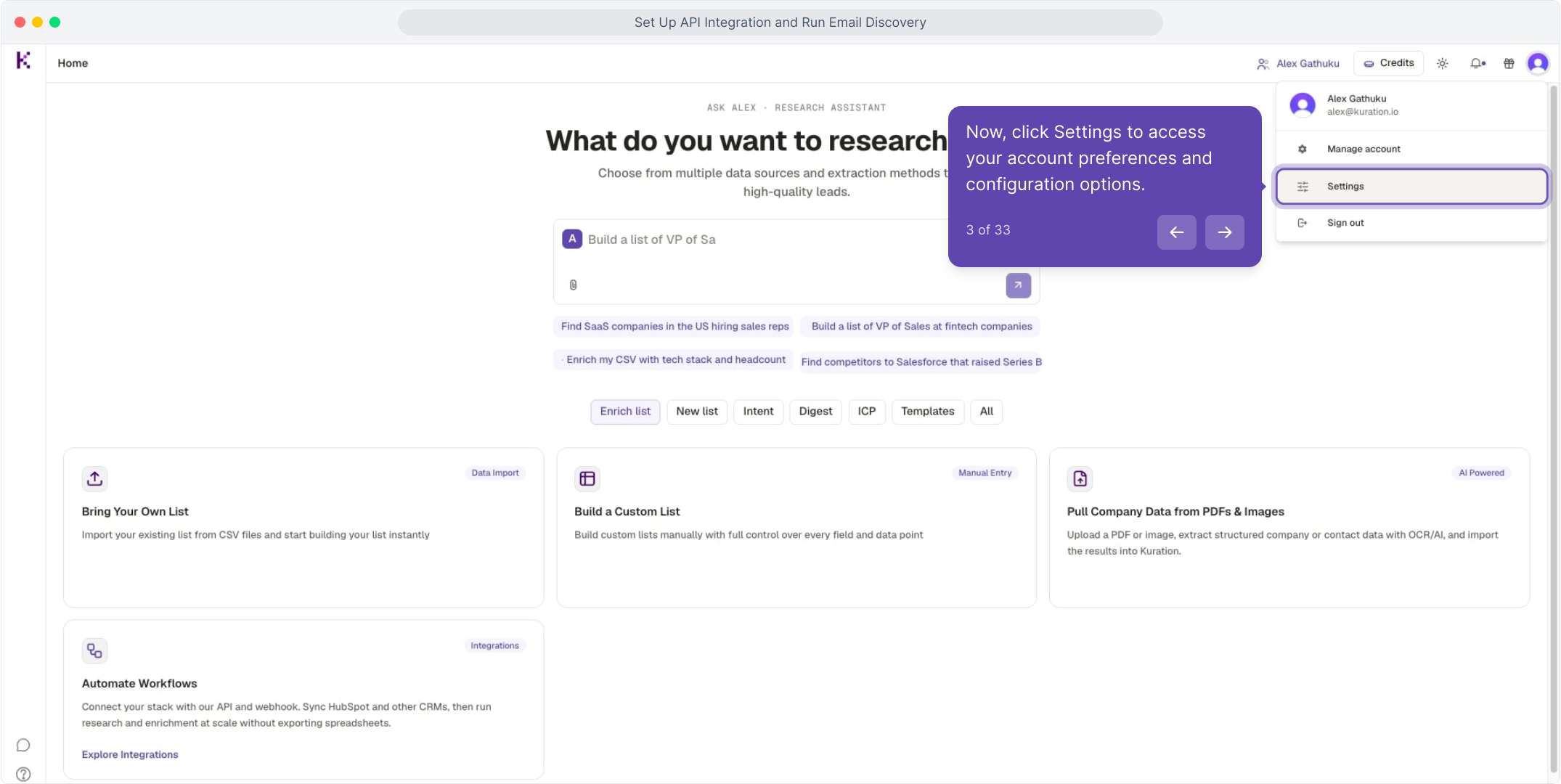
Now, click Settings to access your account preferences and configuration options.

Profile menu open with Settings highlighted
03 of 17

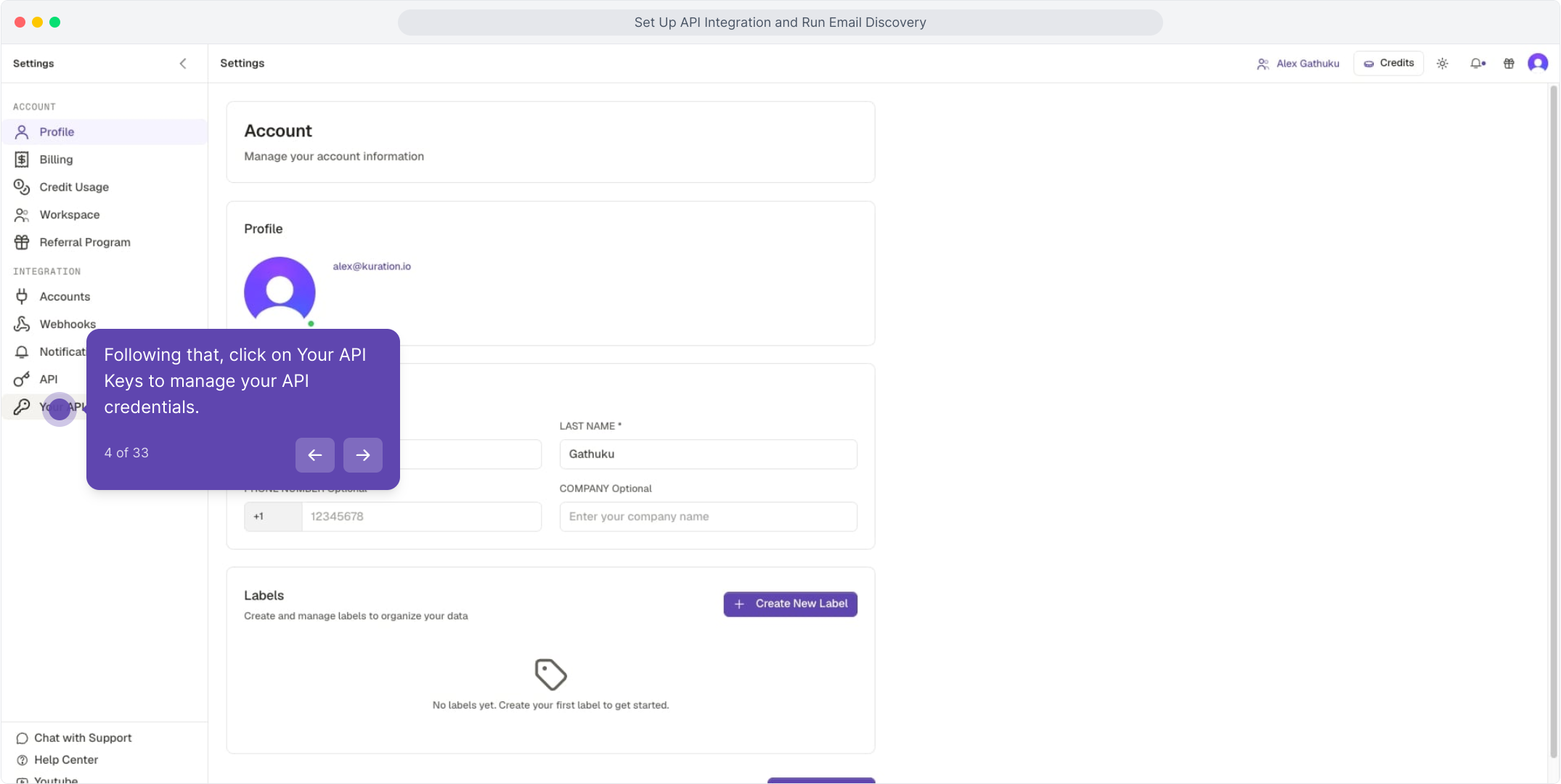
Following that, click on Your API Keys to manage your API credentials.

Settings sidebar with Your API Keys highlighted
04 of 17

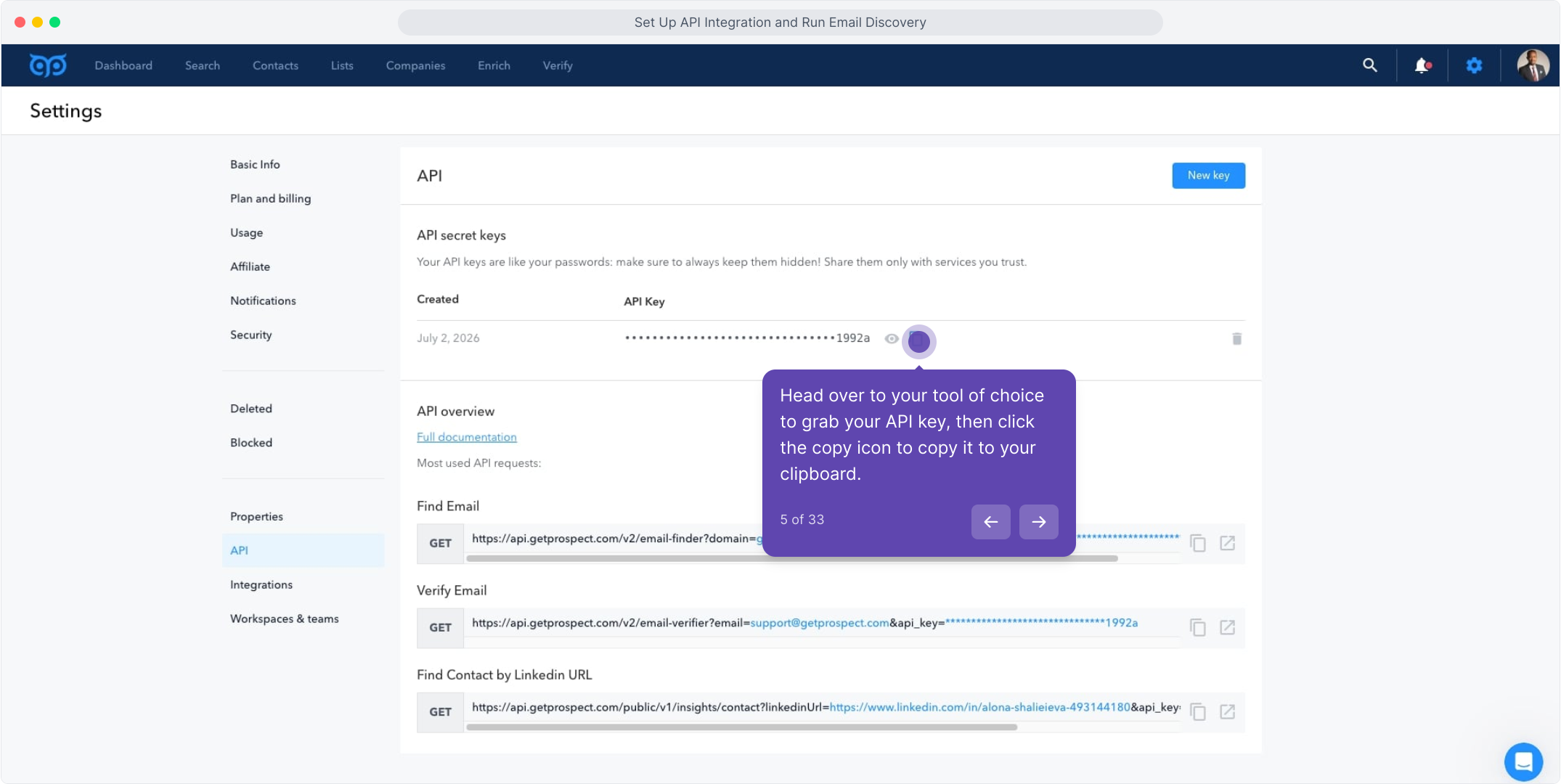
Head over to your tool of choice to grab your API key, then click the copy icon to copy it to your clipboard.

External tool settings page with the API secret key copy icon highlighted
05 of 17

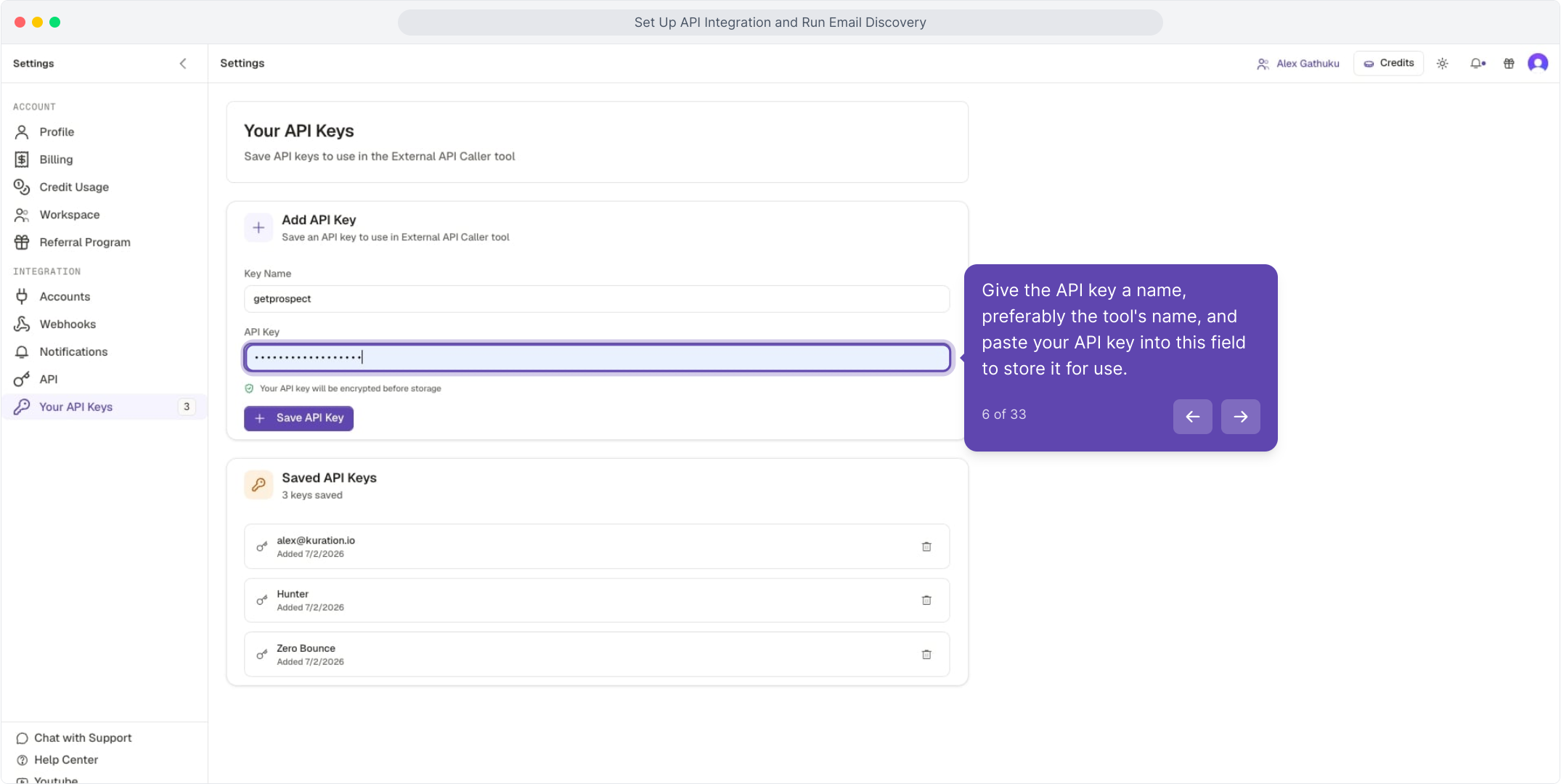
Give the API key a name, preferably the tool’s name, and paste your API key into this field to store it for use.

Add API Key form with a key name entered and the API key field focused
06 of 17

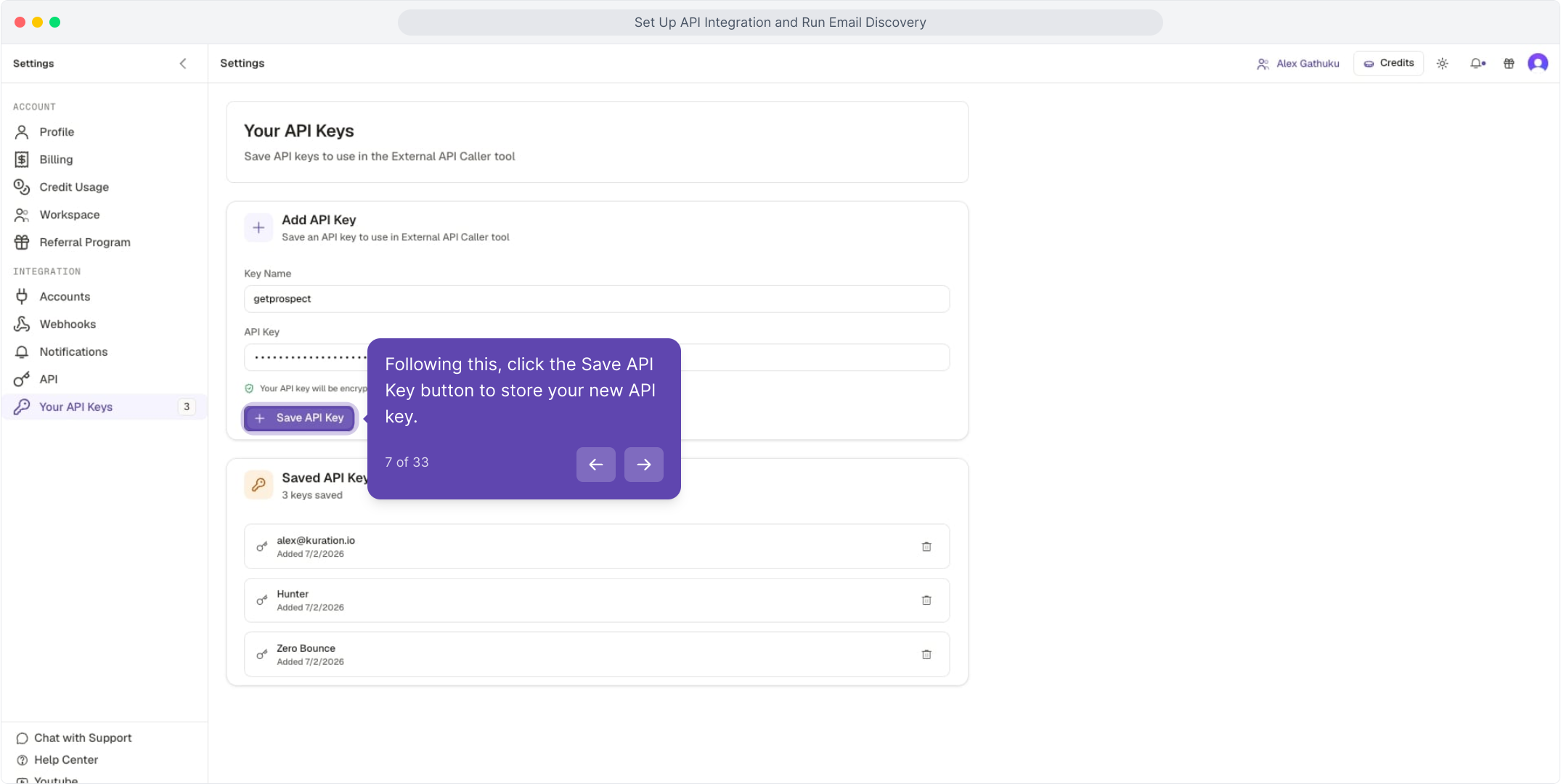
Following this, click the Save API Key button to store your new API key.

Keys are encrypted before storage and appear under Saved API Keys, ready to select inside the HTTP API tool.
Add API Key form with the Save API Key button highlighted
07 of 17

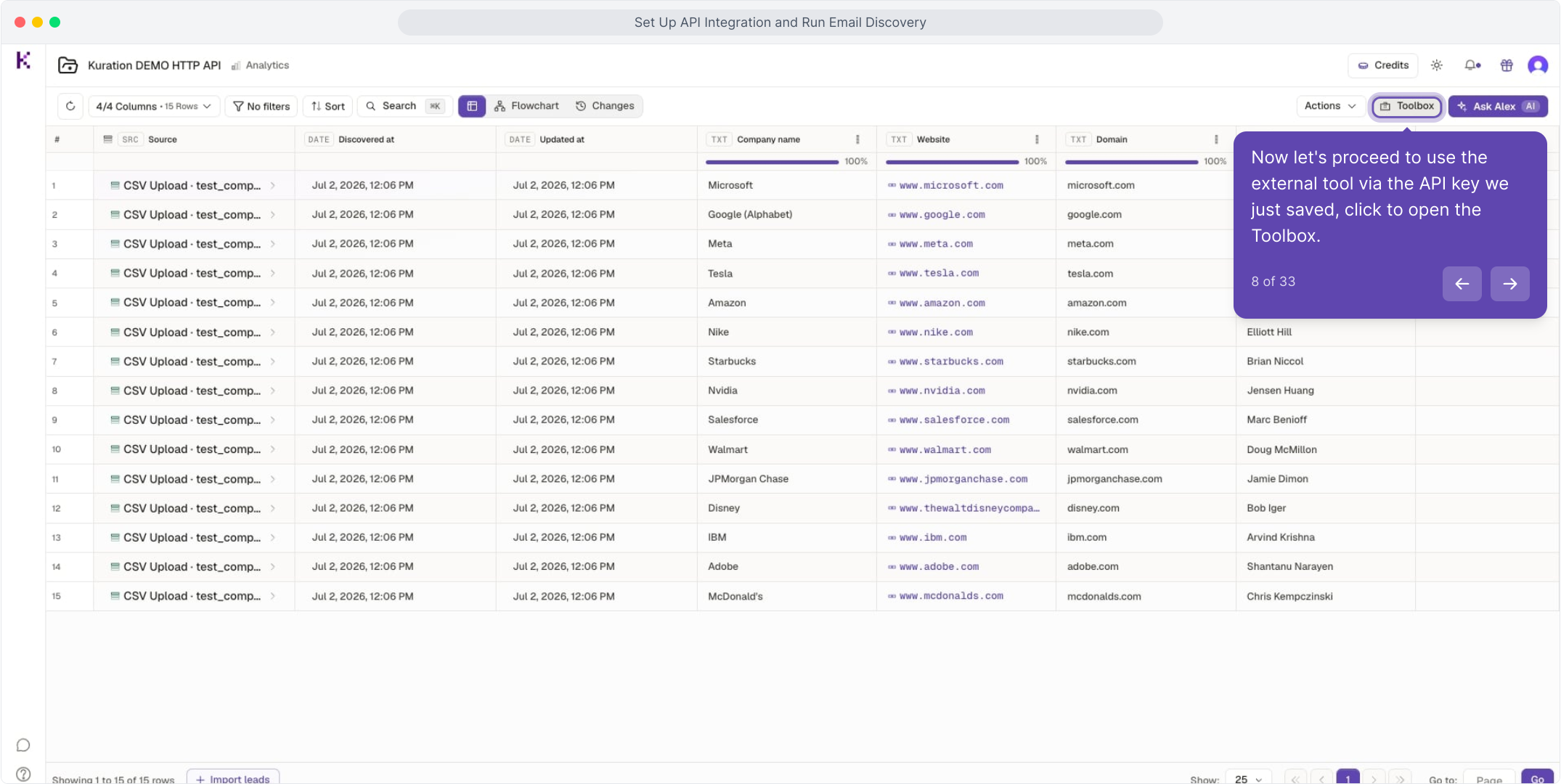
Now let’s proceed to use the external tool via the API key we just saved, click to open the Toolbox.

Kuration table with the Toolbox button highlighted
08 of 17

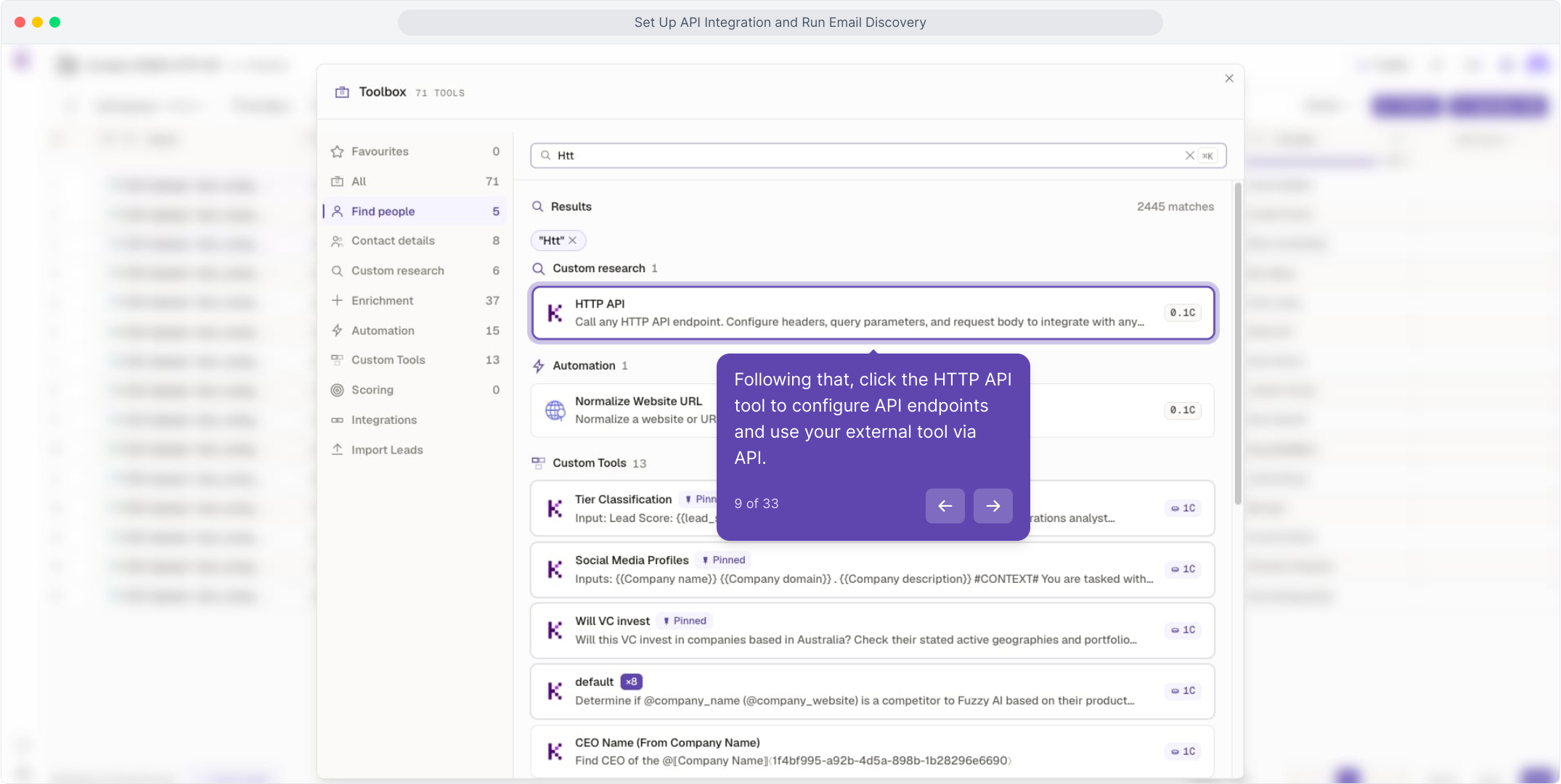
Following that, click the HTTP API tool to configure API endpoints and use your external tool via API.

Toolbox search results with the HTTP API tool highlighted
09 of 17

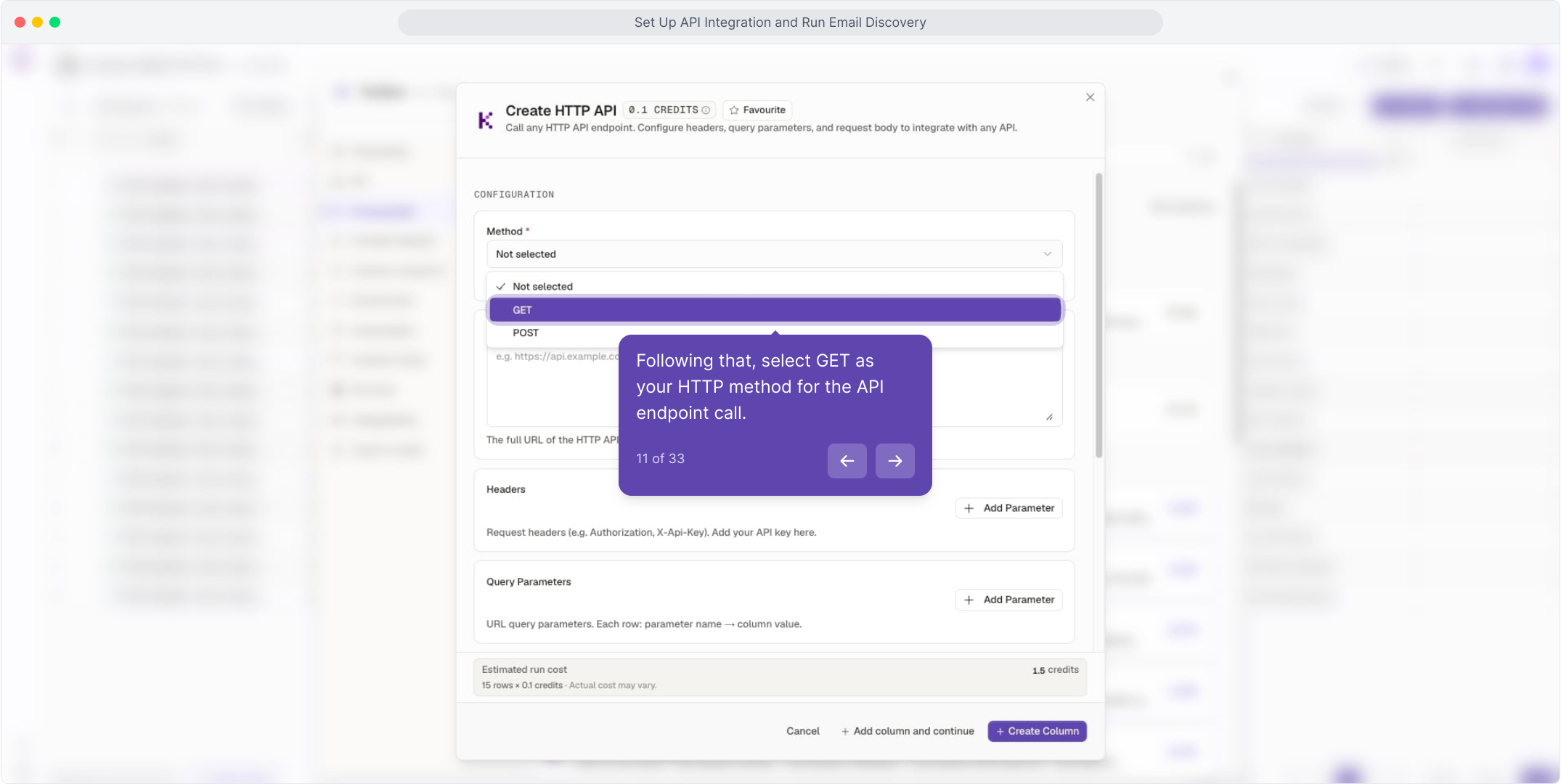
Click the Method dropdown, then select GET as your HTTP method for the API endpoint call.

Method dropdown open with GET highlighted
10 of 17

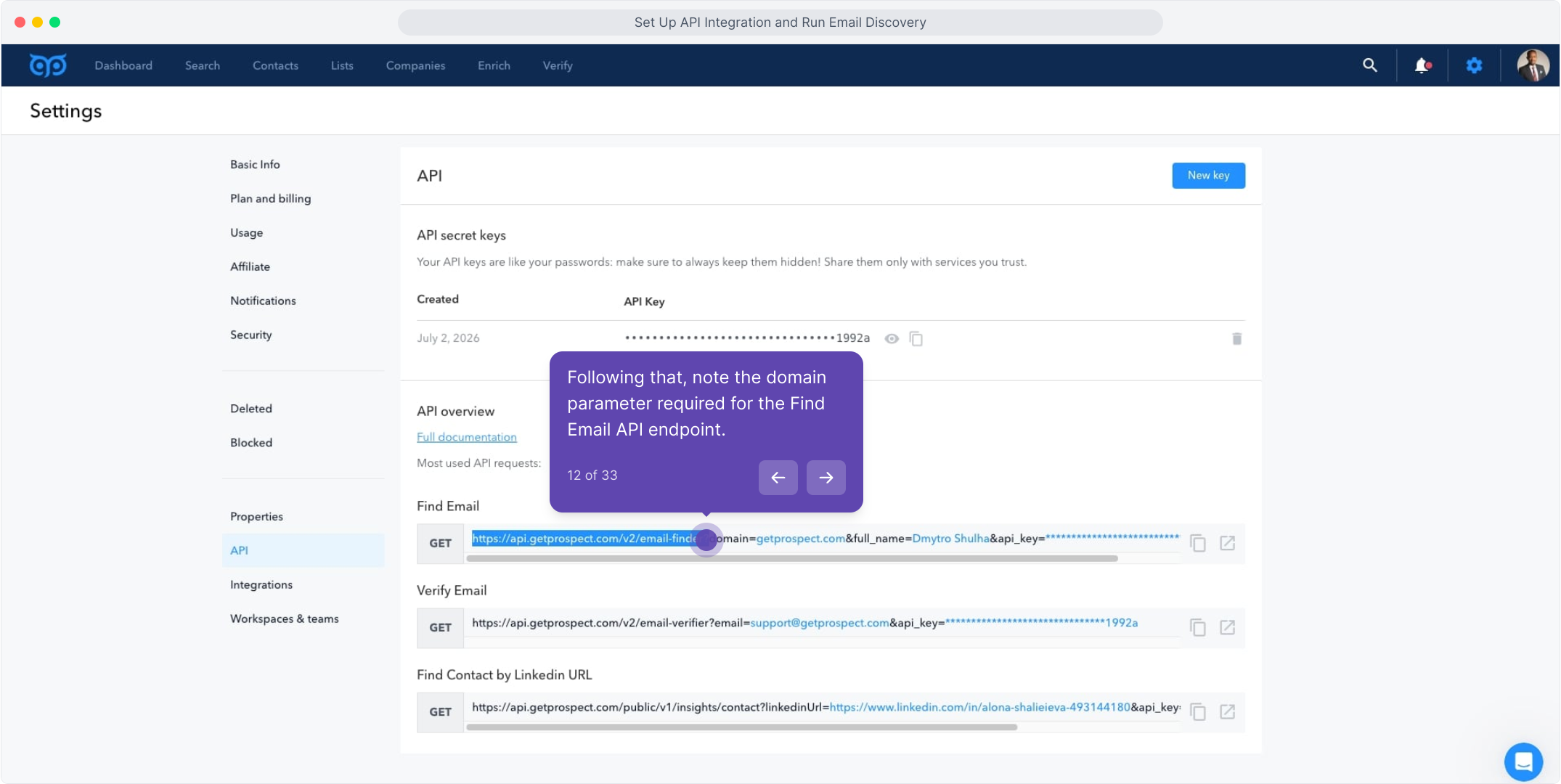
Back in your tool’s documentation, note the parameters required for the endpoint you are calling — here, domain and full_name for Find Email.

External tool API documentation with the Find Email request URL highlighted
11 of 17

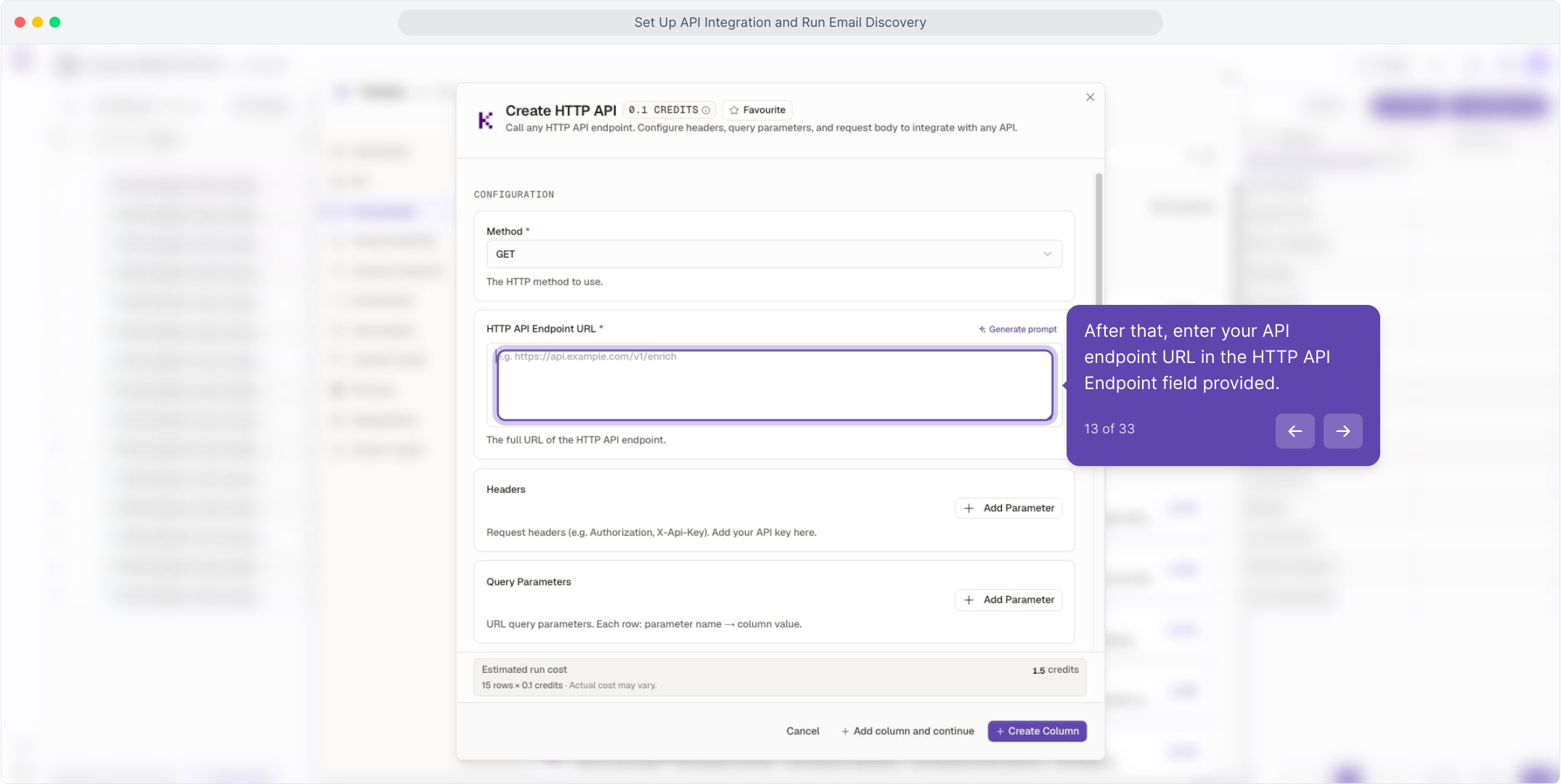
After that, enter your API endpoint URL in the HTTP API Endpoint field provided.

Create HTTP API dialog with the endpoint URL field focused
12 of 17

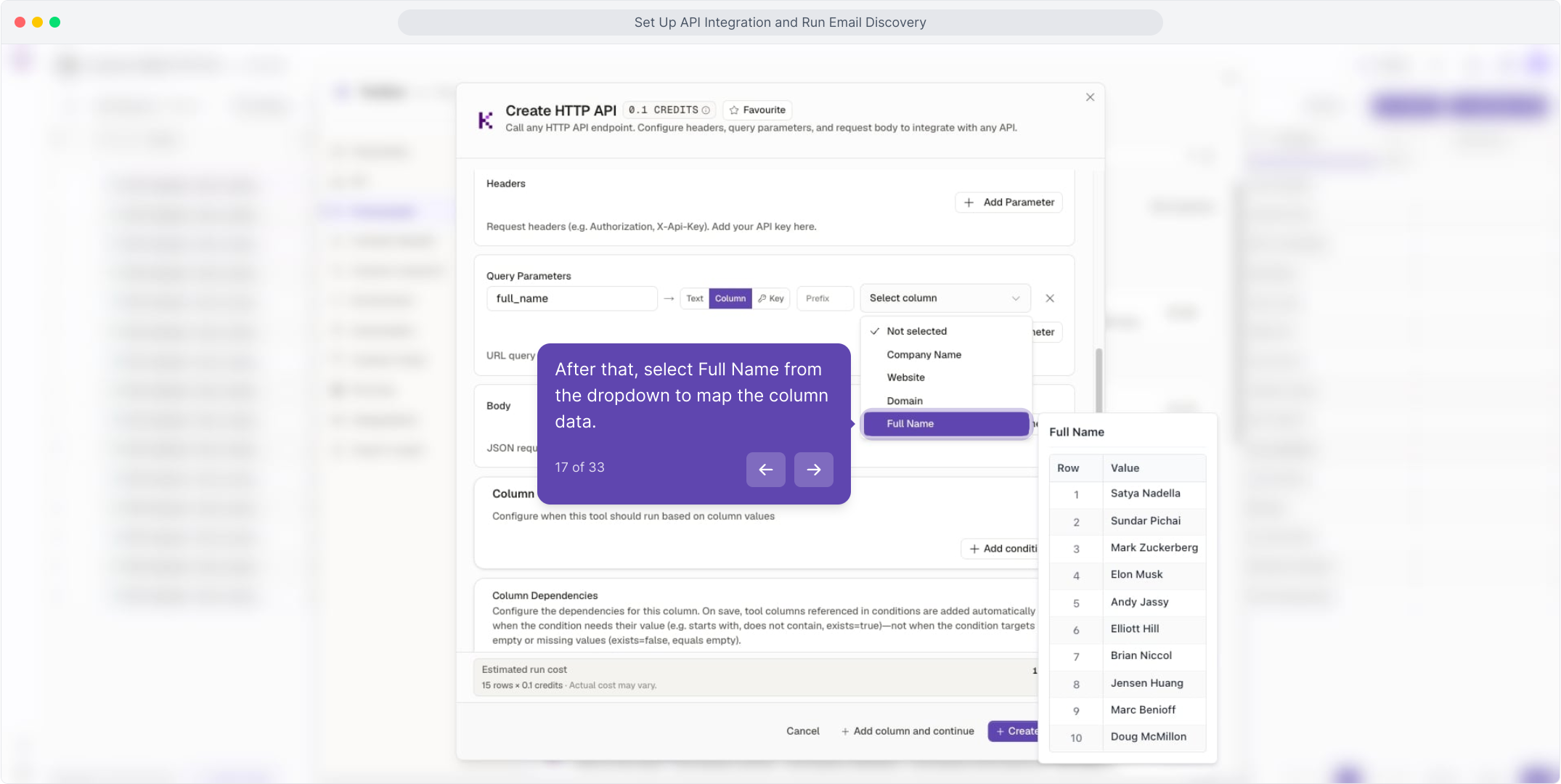
Click Add Parameter, enter the parameter name, then use the Select column dropdown to map it — full_name takes the Full Name column from your table.

Query parameter full_name being mapped to the Full Name column
13 of 17

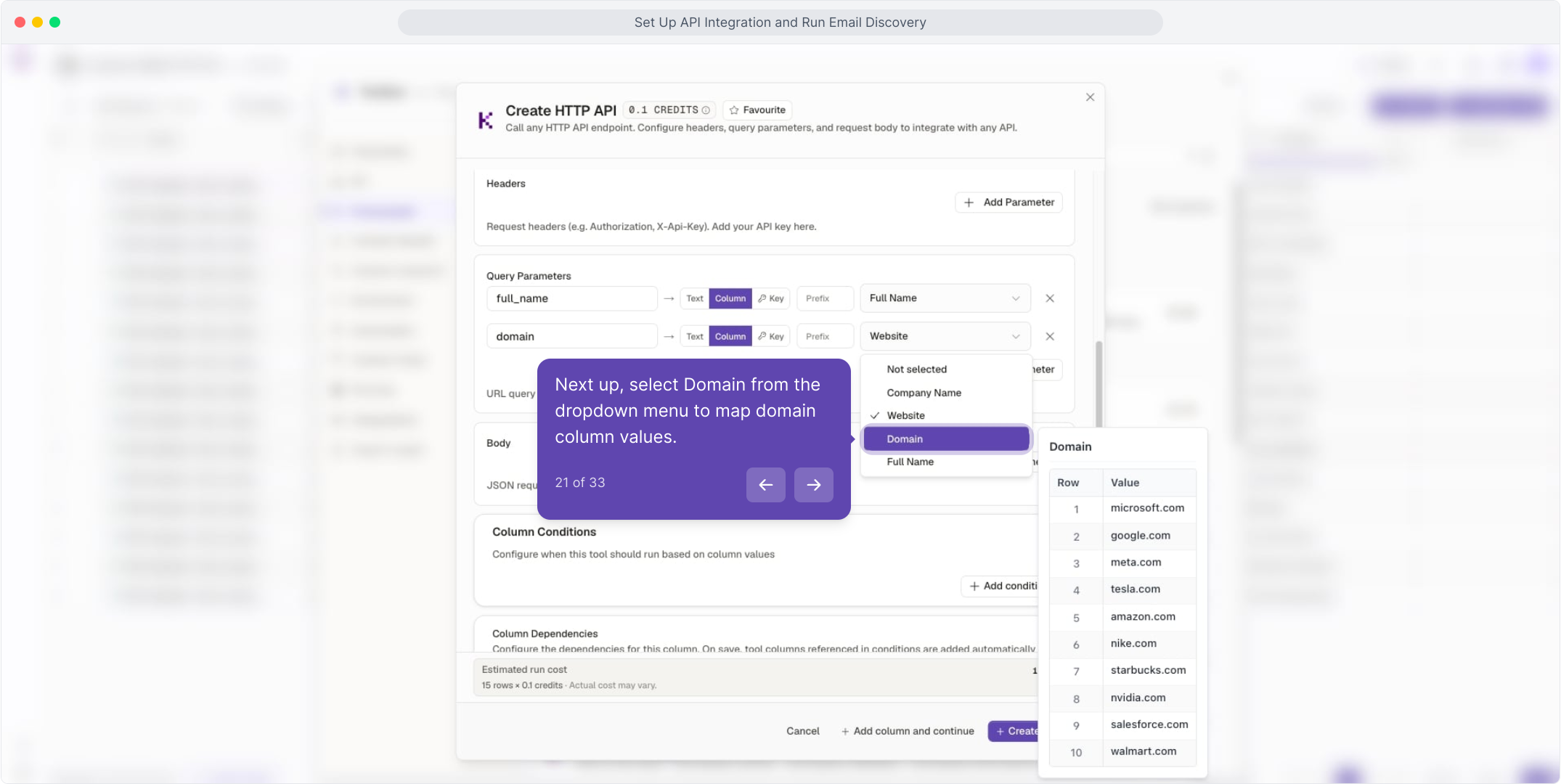
Add another parameter, name it domain, and select Domain from the dropdown menu to map domain column values.

Query parameter domain being mapped to the Domain column
14 of 17

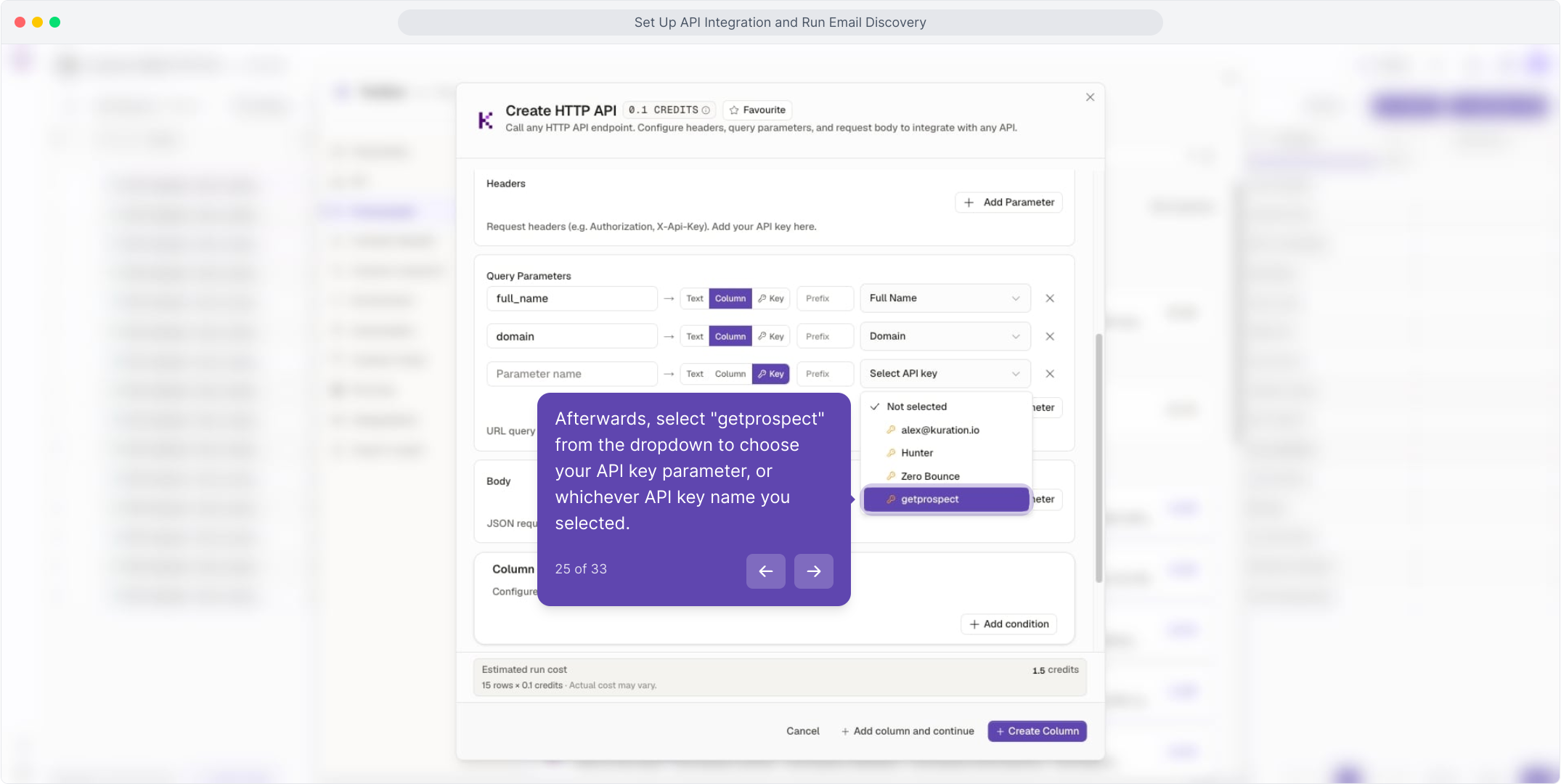
Add one more parameter, click the Key button to enable parameter mapping options, then select your saved key from the Select API key dropdown.

Choose whichever API key name you saved earlier. The key value is injected at run time and never shown in the table.
Select API key dropdown open with the saved getprospect key highlighted
15 of 17

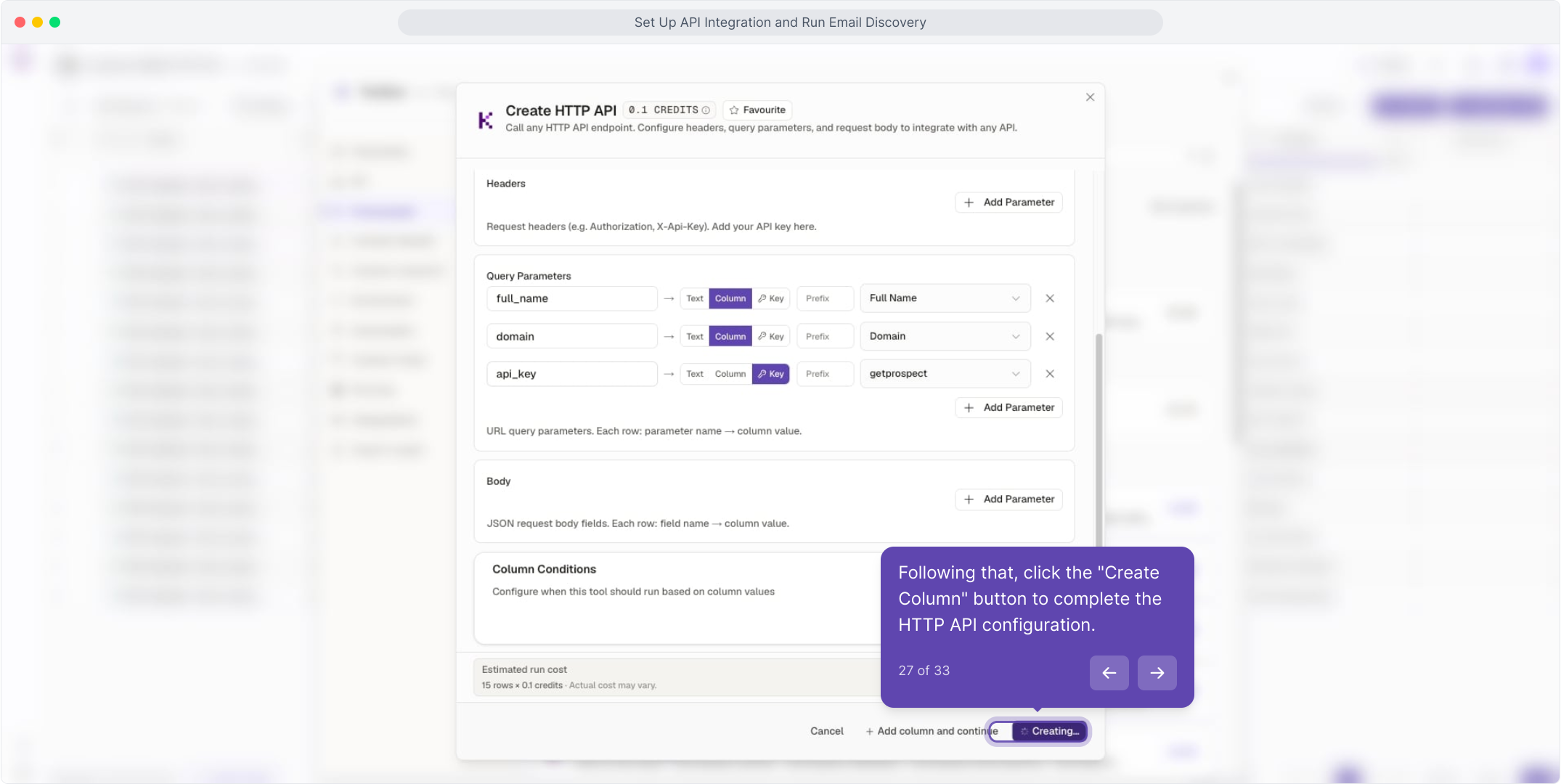
Following that, click the Create Column button to complete the HTTP API configuration.

Create HTTP API dialog with all three query parameters set and Create Column clicked
16 of 17

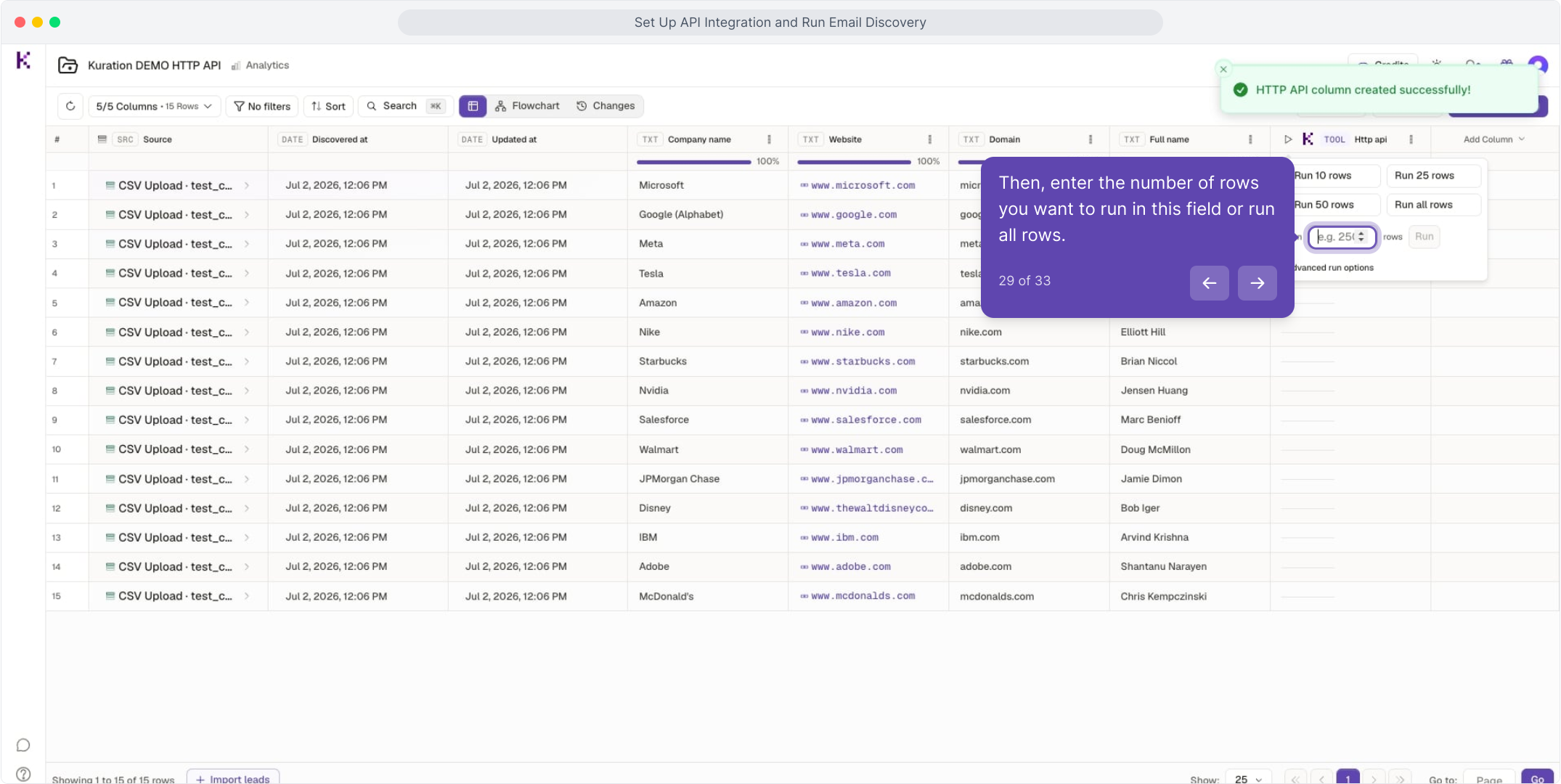
Click the play button on the new column, enter the number of rows you want to run or run all rows, then click Run and Confirm.

Run options for the HTTP API column with the row count field focused
17 of 17

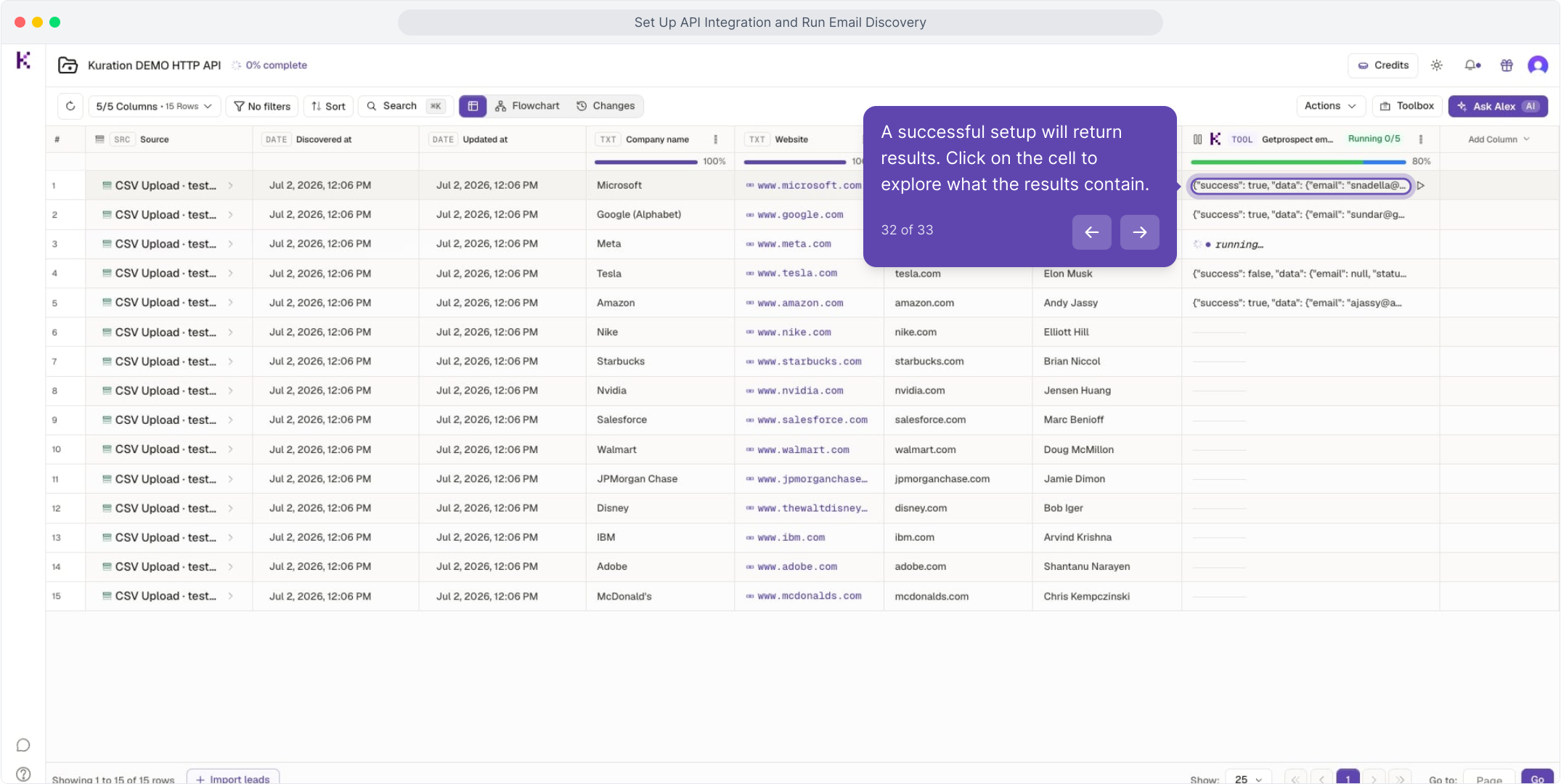
A successful setup will return results. Click on the cell to explore what the results contain.

Table showing returned JSON results in the HTTP API column

Your API call is running in Kuration

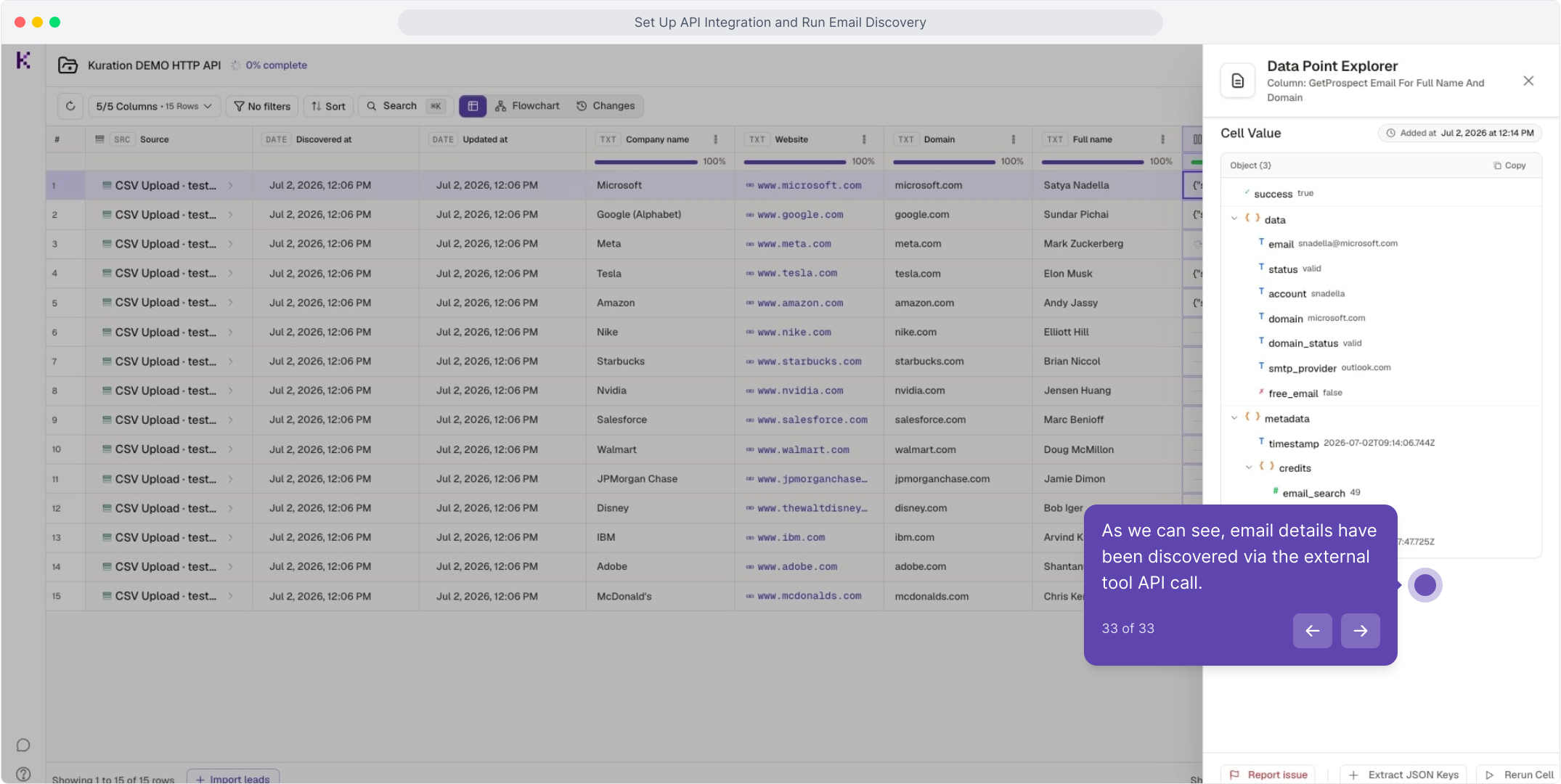
As we can see, email details have been discovered via the external tool API call. The same setup works for any endpoint you have a key for.

Data Point Explorer showing the discovered email, status and metadata for a row
Use to navigate