Lesson 2.3.6
Check for companies you already have, before you pay for them
What this costs
Free, and it is the cheapest credit saving in the product.
Before you start
More than one project in your workspace.
After a few months your workspace already holds most of your market. Sourcing a new list and enriching it flat means paying again for companies whose contacts are sitting in a project from March, and double touching people who already heard from you.
- 1
Run the existing company check on a freshly sourced list
Before any enrichment. It tells you which rows are new and which already exist elsewhere in your workspace.
- 2
Split the list in two
New companies go through the full enrichment stack. Known companies get their existing data brought across instead.
- 3
Treat a known company as a signal, not a duplicate
A company appearing again in a new source has done something. Worth a look before you discard the row.
- 4
Suppress anyone already in a campaign
Contacting the same person from two lists is worse than not contacting them at all. Suppression before spend is covered further in course 3.1.
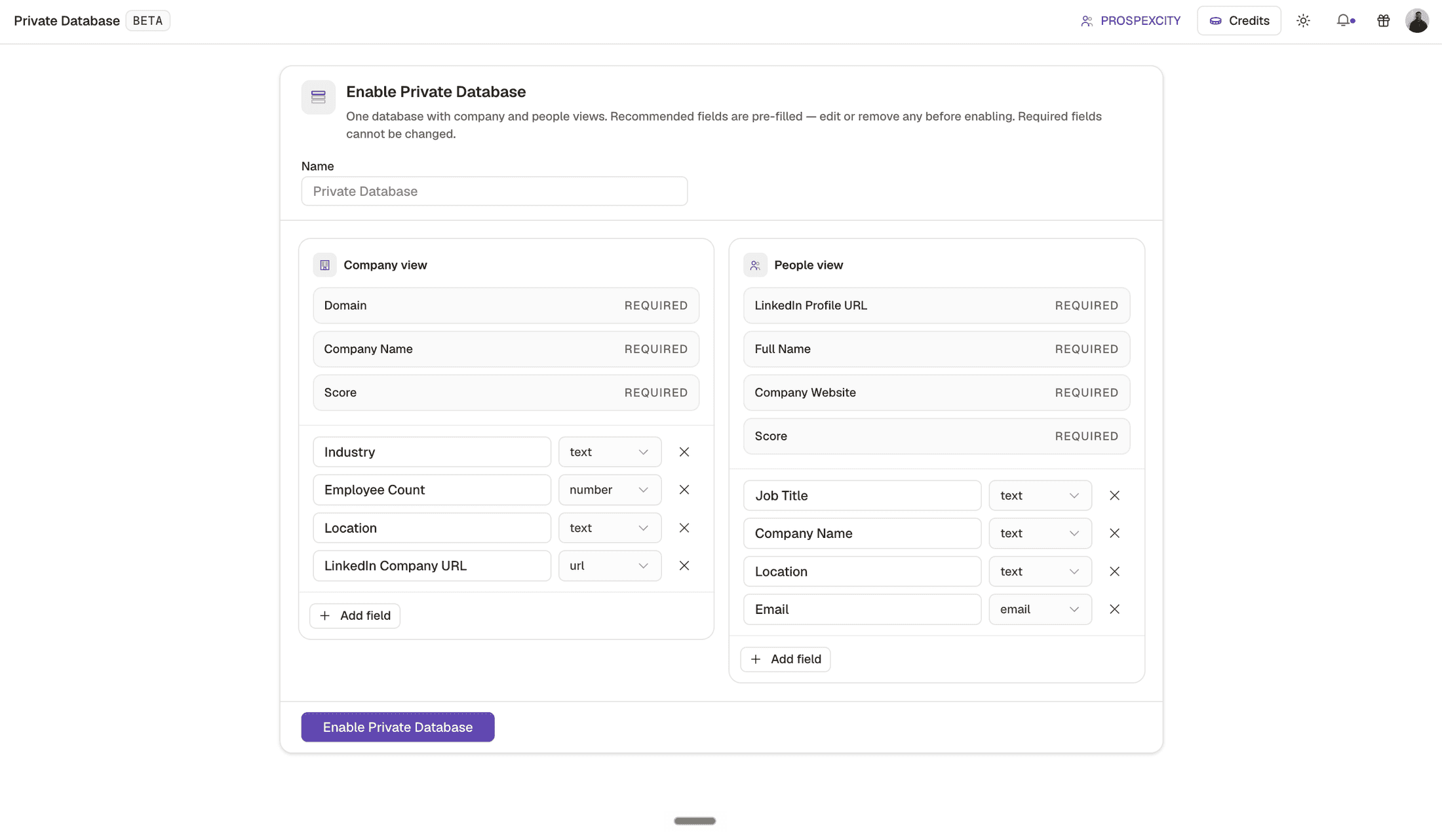
- 1Every company the workspace has ever touched, in one place, with the field count beside it.
- 2The same database seen as people instead of companies. The existing company check reads the company side, suppression reads both.
- 3Fields is where the contract is set. A field that exists on one side and not the other is where a check quietly comes back empty.
- 4Which project a record arrived from. This is what turns a duplicate into a signal, because you can see where you already met them.
Check yourself
0 of 2 answered1.When should you check a new list against companies you already have?
2.A company in your new list already exists in another project. What is the best reading?
This lesson is written and complete. Its screen recording is still to come, and the written walkthrough is designed to stand on its own without one.