


Lesson 2.2.4
Score, threshold, segment, and decide what to cut
What this costs
Free. Scoring and filtering both cost nothing.
Before you start
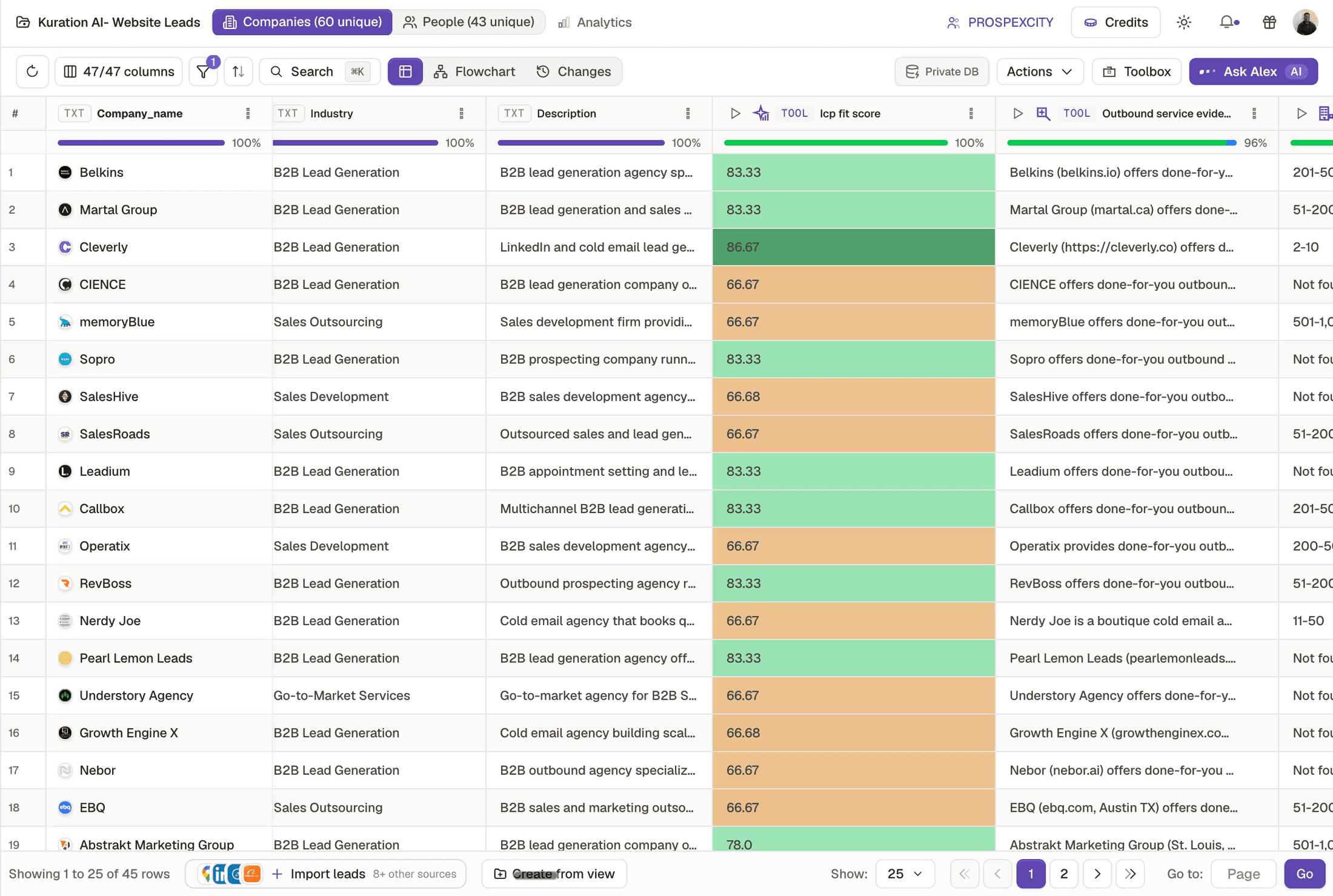
A scored table from lesson 2.2.3.
A score is not a decision. The threshold is the decision, and picking it well means reading your own distribution rather than reaching for a round number. Nine times out of ten the right cut point is visible in the data before you choose it.
Read the distribution before you pick a number
- 1
Sort by score and look for the gap
Real distributions have a shoulder: a point where the scores drop away. That shoulder is usually a better threshold than any round number you would have picked in advance.
- 2
Read ten rows either side of your candidate threshold
This is the whole check. If the rows just above look clearly better than the rows just below, the threshold is right. If they look the same, move it.
- 3
Let capacity set the threshold when quality does not
If you can work 150 accounts this quarter, take the top 150 whatever the score says, and be honest that the threshold is a capacity decision rather than a quality one.
- 4
Segment rather than cut, where the score is free
Because scoring costs nothing, keep the middle band as a nurture segment instead of deleting it. Re score it next month when the timing signals have moved.
What to actually do with each band
| Band | Action | Enrichment spend |
|---|---|---|
| Top | Full enrichment, contacts, validation, personalised outreach | Everything. These rows justify it |
| Working | Contacts and one personalisation field | Moderate |
| Nurture | Nothing yet. Keep and re score monthly | None |
| Cut | Delete or move out of the working project | None |
| Rejected | Delete, and check one or two to confirm the reject rule is right | None |
Turn the top two bands into their own project. It keeps the working list clean and it means your reporting is about the accounts you actually worked rather than everything you ever sourced.
Picked 7 out of 10 because it sounded right
- What you see
- Either almost nothing or almost everything survives
- The fix
- Look at your distribution first. The shoulder is where the cut belongs.
Deleted the middle band
- What you see
- Re sourcing the same companies three months later
- The fix
- Keep it as a nurture segment. Re scoring is free.
Never checked rows below the line
- What you see
- A systematic miss nobody notices
- The fix
- Read ten rows below the threshold every time you build a model.
Check yourself
0 of 2 answered1.How should you pick a threshold?
2.What is the check that a threshold is right?
Try it yourself
Sort your scored list, find the shoulder, set a threshold there, then read ten rows either side of it.
- You have done it when
- You can explain, in one sentence, why the rows above are better than the rows below.
- Credit budget
- Free.