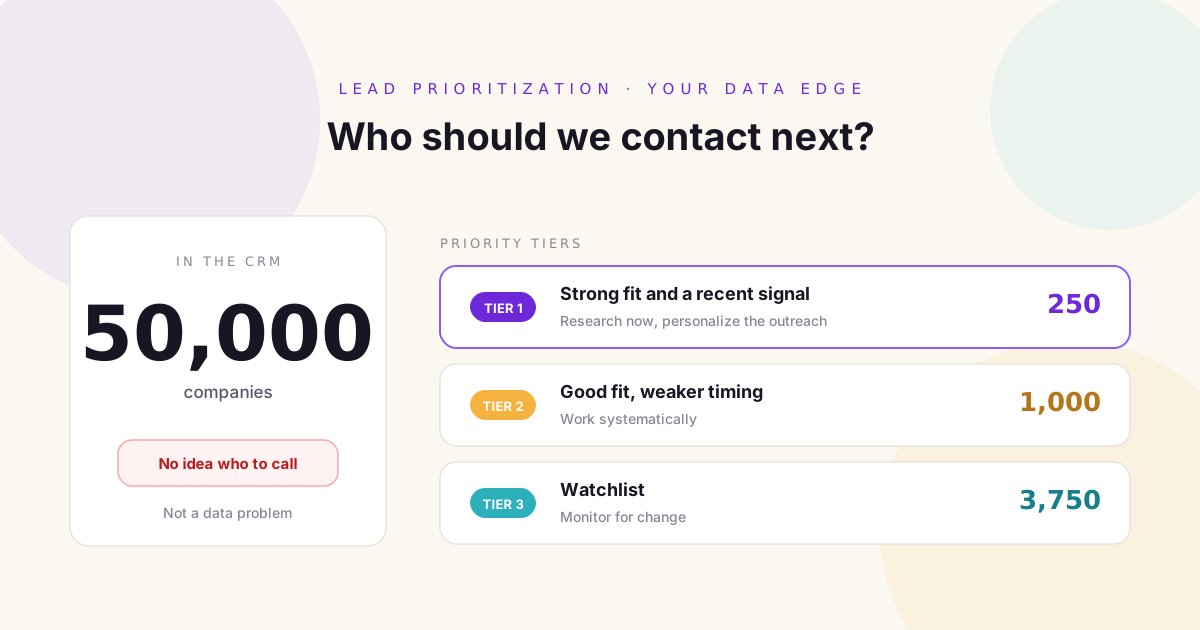
A sales team can have 50,000 companies in its CRM and still have no idea who to call this morning. That is not a data problem. It is a prioritization problem.
Most sales teams do not suffer from a lack of prospects. They suffer from too many. There are companies that fit the ICP, companies that almost fit, companies that used to fit, companies that might fit later, companies that just became relevant, and companies that were never worth targeting at all.
So the question is rarely how to find more leads. It is how to prioritize B2B leads well enough that your team knows which ones deserve attention first.
What Is B2B Lead Prioritization?
B2B lead prioritization is the process of ranking potential customers by how relevant and potentially valuable they are to your business. A useful system considers more than company size:
- ICP fit
- Industry and geography
- Company size and business model
- Relevant technology
- Recent business activity
- Buying signals and recency
- Contact relevance
- Previous engagement
The goal is simple. Help sales spend more time on the prospects most worth researching.
Why Company Size Is Not Enough
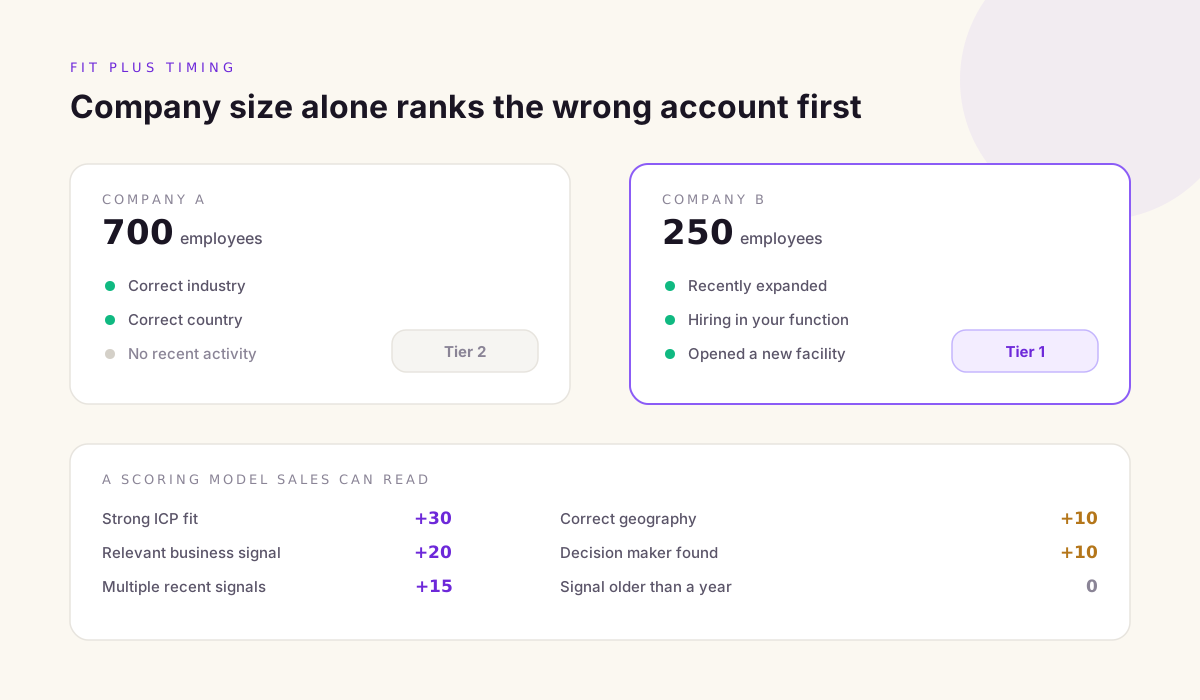
A common filter is companies with more than 500 employees. Useful, but consider two accounts. Company A has 700 employees, the correct industry, the correct country, and no recent activity. Company B has 250 employees, the correct industry, the correct country, recently expanded, is hiring in your target function, and just opened a new facility.
Which should sales research first? If you rank on company size, Company A wins. But Company B has far stronger timing. Good prioritization combines fit and context.
Fit Plus Timing Equals Priority
A simple way to think about prioritization is that fit asks whether this is the kind of business you want to sell to, and timing asks whether something is happening that makes your solution more relevant now.
A company with excellent fit and no obvious reason to engage is worth keeping in your database. A company with excellent fit and a relevant recent signal deserves immediate attention.
Start With ICP Fit
Your ideal customer profile is the foundation. Define industry, geography, company size, revenue, business model, customer type, technology environment and operational characteristics. Then ask the question most teams skip: what do our best customers have in common that standard database filters do not capture?
They may be international, highly regulated, growing quickly, operating from multiple locations, export focused, opening facilities, or attending specific events. Those characteristics are what improve a prioritization model.
Add Business Signals
Once fit is established, look for signs of change. Expansion into a new market. Hiring that builds a new team. Funding. A new warehouse, factory or office. A product launch. A new distribution or technology partnership. Trade show activity in a market that matters to you.
Not Every Signal Is Equal
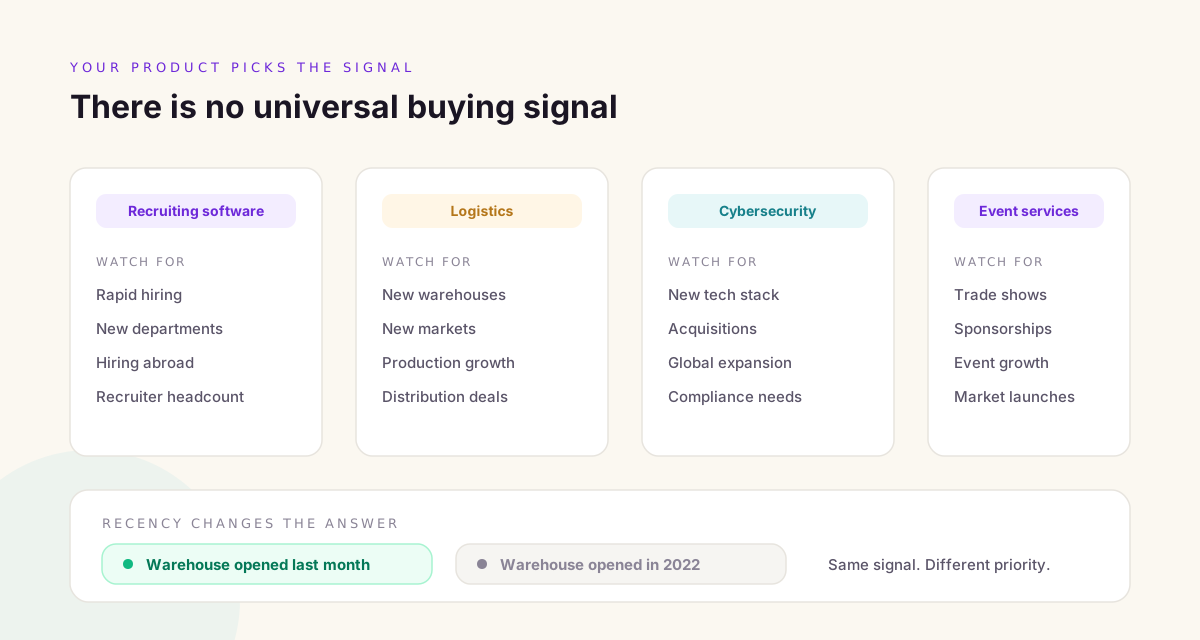
A common mistake is treating every signal as equally important. For a logistics company, a new warehouse may be highly relevant. For an HR platform, hiring growth matters more. For a cybersecurity provider, international expansion or new technology adoption is more interesting.
Your signals should connect to your product. The question that reveals them is: what happens inside our customers' businesses shortly before they need what we sell?
Build a Simple Lead Scoring Model
You do not need a complicated formula. Start with something your sales team understands. Strong ICP fit might be worth 30 points, the correct industry 15, the correct geography 10, a relevant business signal 20, multiple recent signals 15, and a relevant decision maker identified 10.
A company scoring 85 deserves immediate research. A company scoring 40 stays in the nurture pool. The numbers are not universal. The model should reflect your business.
Add Recency
Timing matters. A warehouse opened last month is highly relevant. The same warehouse opened four years ago is context, not urgency. That means your database should track signal dates. Useful fields include the signal itself, the signal date, the source, the signal category, a confidence level and a last verified date.
Multiple Signals Are More Interesting
One signal can be noise. Several connected signals create a picture. A company that raised funding, started hiring, opened a new office and launched a product is going through a significant growth phase. You are not claiming it is ready to buy. You are giving sales a stronger reason to prioritize it.
Prioritize Accounts, Not Just Contacts
Finding a decision maker at the wrong company is not a win. Start with the account and ask whether the company is worth pursuing. Then ask who inside it you should speak with. That creates a logical workflow: account discovery, then account qualification, then contact discovery, then outreach.
Suppose your database hands you a VP of Sales. Useful, but what do you know about the company? Whether it fits your ICP, whether it is growing, whether it has a relevant need, whether anything changed recently? The contact is one part of the picture. Company context is the rest.
Build a Prospect Priority Tier
You can simplify all of this into three groups.
- Tier 1, strong ICP fit plus relevant recent signals. Active research and personalized outreach.
- Tier 2, strong ICP fit but weaker or older signals. Work these systematically.
- Tier 3, potential fit but little evidence of current relevance. Keep them and monitor for change.
This is almost always more useful than asking sales to treat every account equally.
Example: Prioritizing Manufacturers
Imagine you sell software to manufacturers and your database contains 5,000 of them. Instead of asking sales to contact all 5,000, identify businesses with 200 to 2,000 employees, in your target geography, with multiple facilities, that recently expanded production, are hiring operations staff, or recently opened a facility.
Now your 5,000 companies become roughly 250 high priority accounts, 1,000 good fit accounts and 3,750 on the watchlist. Sales focuses where the chance of relevance is highest.
Where Does the Data Come From?
This is where prioritization connects directly to data strategy. Your CRM already holds company information, contacts and historical activity. The additional context comes from trade shows, government databases, company websites, industry directories, certifications, Google Maps, job postings, business announcements and procurement sources.
CRMs are designed to manage relationships, not to discover every external signal about a company. Your CRM may know a company has 400 employees. It probably does not know that the company just opened a distribution center, is exhibiting at an industry event next month, or began hiring a regional sales team. That context changes how sales should prioritize the account.
AI Can Prioritize at Scale, But Not Decide
With 100,000 companies, no human can investigate every account in detail. AI can help with ICP matching, categorization, data extraction, signal detection, enrichment, duplicate identification, account scoring and segmentation. Instead of handing a rep 20,000 companies, you hand them the 100 that best match the ICP and show the strongest signals.
There is an important caveat. A score is a prioritization mechanism, not truth. If a system says a company is expanding into Germany, check the evidence. Where did the signal come from? How recent is it? Is it actually expansion? Does it matter to your product? AI reduces research time. It should not remove judgment.
Create a Signal Library
Once you identify useful signals, document them. For each one record what the signal is, why it matters, where to find it, how recent it should be, and how strongly it correlates with your opportunity. A new warehouse, for example, suggests logistics or operational investment, is found in company announcements and local business records, is most useful within six to twelve months, and rates high priority for logistics products.
Over time that becomes a repeatable prospecting system rather than a series of one off campaigns.
How Kuration AI Fits Into Lead Prioritization
Kuration AI helps revenue teams build prospect databases around their specific requirements. Instead of relying only on standard company filters, teams discover businesses through specialized sources and enrich them with the information that makes prioritization possible: trade show data, government records, certifications, industry directories, Google Maps, company websites and supplier databases.
If you want the discovery side of this, our guides on building a B2B prospect list from public data, building your ideal customer profile, and B2B data enrichment cover the steps that come before prioritization.
Frequently Asked Questions
How do you prioritize B2B leads?
Start with ICP fit, then layer on relevant business signals, recency, company characteristics and contact relevance. Score or segment accounts against those criteria rather than ranking on size alone.
What is the best way to prioritize sales prospects?
A combination of fit and timing is more useful than any single factor. Fit tells you whether the company is worth selling to. Timing tells you whether now is the moment.
What is lead scoring?
Lead scoring assigns points to prospects based on characteristics or behaviors that indicate relevance or potential value, so a long list can be ranked consistently.
Should every prospect get the same amount of attention?
No. High priority accounts should receive more research and more personalization than lower priority prospects. Spreading effort evenly is how good accounts get missed.
Can AI score B2B leads?
AI can assist with lead scoring by analyzing company characteristics, business information and relevant signals. Human validation of the underlying evidence remains important.
What makes a good B2B buying signal?
A good signal is relevant to your product, recent enough to matter, and connected to a business change that could create a need.
Stop Asking Sales to Work Every Lead
Your sales team does not need another spreadsheet with thousands of names. They need to know who matters, why they matter, and why now. That is what good prioritization answers.
The best prospecting systems do not simply collect more companies. They create a way to tell the difference between companies that fit, companies that might fit, and companies that fit and are showing signs that something is changing. That is where a large database becomes a focused sales strategy.