Most buying signals tell you something about a company. A funding round says there is money. A job advert says there is a gap. A new office says there is ambition. All useful, all indirect.
A leadership change tells you something about a person. Specifically, it tells you that someone has just been handed a budget, a mandate and a very short window in which to prove they deserved the job. That is a different kind of information, and it is the reason a new executive is the most actionable signal in B2B, and the one most teams never systematically track.
This article covers what actually happens inside a company in the first ninety days of a senior appointment, which appointments are worth your attention and which are noise, where the data lives, and how to turn it into a scored list rather than a stream of LinkedIn notifications you never act on.
What a new executive actually does in month one
A new senior hire arrives with a problem. They were hired because something was not working. Their predecessor left, or the function was created because the company outgrew doing it informally. Either way, the brief is change.
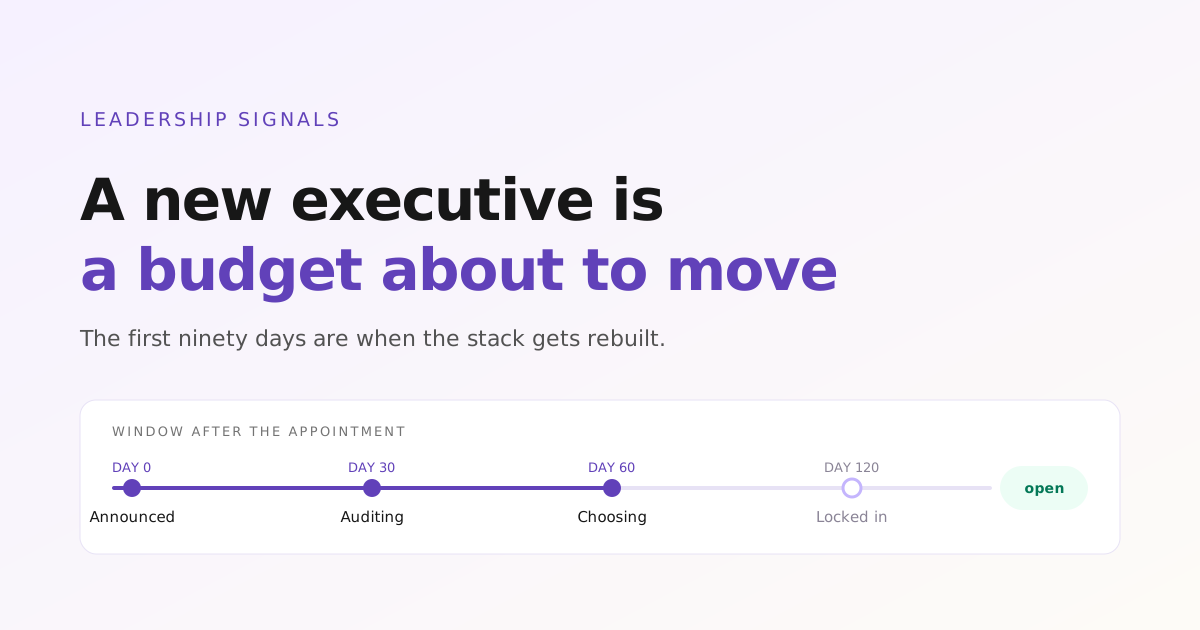
So the first thing they do is audit. They look at what they inherited: the tools, the vendors, the team, the numbers, the contracts. They ask their reports what is broken. They build a list of things they intend to fix, and they attach that list to a plan they present upward, usually somewhere between week four and week ten.
That plan is where your product either appears or does not. And the plan is written by someone who, at that exact moment, has three properties that make them unusually easy to sell to.
They are not loyal to the incumbent
Whoever chose the current vendor is often the person who just left. A new head of department has no political cost in replacing a tool they did not select. Six months later, once they have publicly stood behind the stack, that cost exists.
They have budget that is explicitly for change
Companies rarely hire a senior person and then ask them to keep everything the same. The hire itself is the signal that the business has accepted that spending will happen. Budget approvals in the first quarter of a new leader are faster because refusing them undermines the reason they were hired.
They need a visible win
A new executive has to show progress before their first proper review. Anything that produces a measurable result inside a quarter is disproportionately attractive to them, even if a slower, deeper project would be objectively better. If your product can show a number in six weeks, this is the person who wants it.
None of that is true of the same person eighteen months in. The window is real, it is short, and it closes quietly.
Which appointments are worth tracking
This is where most teams get it wrong. They set up a LinkedIn alert for job changes, get a hundred notifications a week, and stop reading them after a fortnight. The problem is not volume, it is that the list was never filtered against anything.
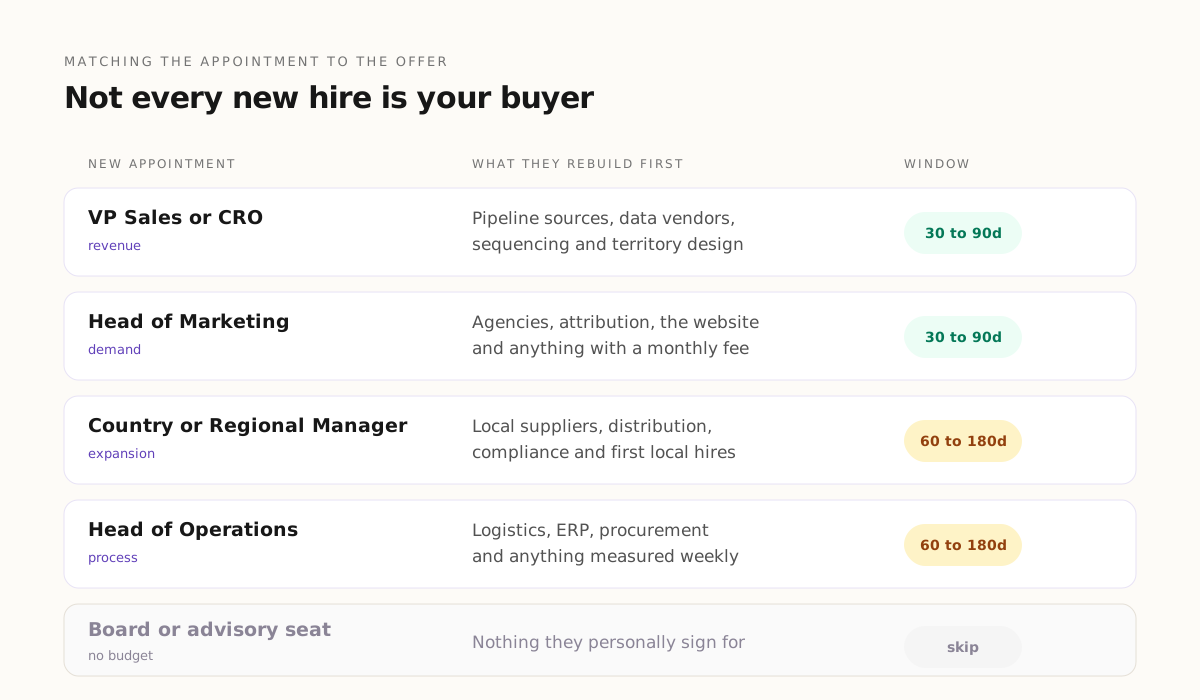
A leadership change is only a signal for you if the person who changed has authority over the thing you sell. Everything else is noise wearing the costume of a signal.
The three filters that matter
- Does this role own the budget line your product sits in? A new CFO is not a signal for a sales tool. A new VP of Revenue is.
- Is the company in your size and market range already? A senior hire at a company that will never buy from you is still not a prospect.
- Is the appointment recent enough to still be inside the window? Past about four months, the stack decisions are usually made.
Run those three and a hundred notifications a week becomes roughly eight to fifteen genuine prospects. That is a number a person can actually work.
Appointments that look like signals but are not
- Board appointments and advisory seats. Prestige, no purchasing authority, no operational mandate.
- Internal promotions into a role the person already effectively held. The audit happened years ago.
- Founder title changes. A founder relabelling themselves from CEO to Chief Product Officer has not changed what they buy.
- Interim or acting appointments. An interim leader is usually mandated to hold the line, not to sign new contracts.
- Anything at a company that announces ten senior hires at once. That is a funding round story, and you should treat it as a funding signal instead.
Where the data actually is
There is no single clean feed of leadership changes, which is precisely why this signal is underused. The data exists, it is public, and it is scattered across five places that do not talk to each other.
Company newsroom and press pages
The most reliable source and the least used. Mid sized companies publish appointment announcements on their own site because it matters to their customers and their staff. These pages are structured, dated, and state the exact job title. They are also almost never scraped, because doing it at scale means visiting hundreds of different site layouts.
Industry and trade press
Nearly every sector has a publication that runs a people moves or appointments column. For logistics, construction, insurance, hospitality and manufacturing, these columns are more complete than anything a general database holds, because the journalists are given the news directly.
Professional networks
Useful, but treat it as confirmation rather than discovery. Profile updates lag reality by weeks, people change titles without changing jobs, and the volume is unmanageable without a filter applied first.
Company registries
In the UK, much of Europe and parts of Asia, director appointments and resignations are filed publicly and dated precisely. This will not catch a VP of Sales, but it is authoritative for board level and managing director changes, and it comes with a legal filing date you can trust.
Conference speaker lists
An underrated one. A person newly appointed often appears on a conference panel within months, introduced with their new title and company. The speaker page is a dated, published record of who holds which seat.
Turning it into a list rather than a notification stream
The difference between a signal and a usable list is structure. A notification is an event you either act on in the next hour or lose. A list is something you work in a sitting, in priority order, with the context already attached.
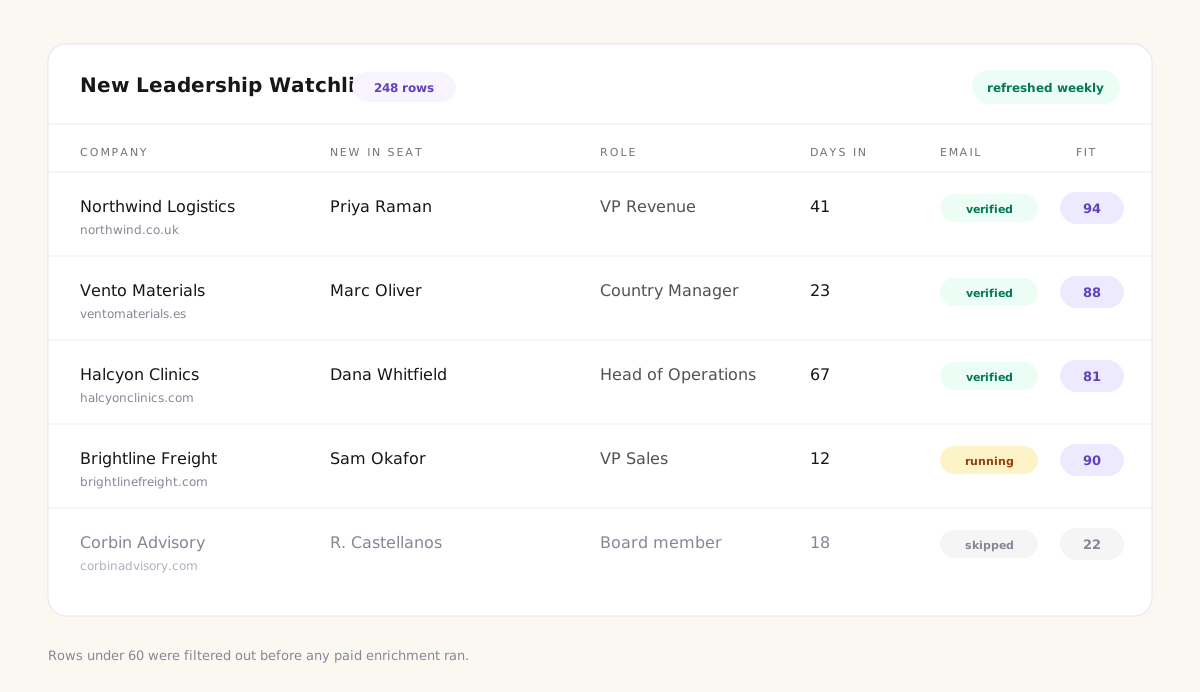
The shape you want is one row per appointment, with enough enrichment that a rep can write an opener without opening another tab.
The columns that earn their place
- Company, domain, headcount and country, so the ICP filter can run.
- The person, their new title, and the date the appointment was announced.
- Days in seat, calculated from that date, because it decides urgency.
- What their predecessor did, where you can find it, because a replacement hire and a newly created role are different conversations.
- A verified work email and a personal profile link, added only after the row has passed scoring.
- One line of evidence with a link, so the claim in your opener is checkable.
Score before you enrich, not after
This is the step that decides whether the whole exercise is affordable. Scoring a row against your ICP is cheap. Finding and verifying a contact for that row is not. If you enrich first and filter second, you have paid for every name you were going to throw away.
Run the fit score across the raw list, cut everything below your threshold, and only then go looking for contact details. On a typical leadership watchlist that is the difference between paying for four hundred rows and paying for two hundred and fifty.
Writing to someone in their first ninety days
The signal gets wasted more often in the opener than in the list. Two mistakes account for most of it.
Do not congratulate them
Every vendor who spotted the same announcement opened with congratulations. By week three the word is a filter, not a greeting. It marks your message as automated before the second sentence.
Do not pretend you know their problem
You know they are new. You do not know what they found when they arrived. Claiming otherwise reads as presumptuous to exactly the kind of person who is currently forming opinions about who is worth listening to.
What works instead
Reference the situation, not the person. Something specific and true about what a person in that seat at that company is likely working through, offered as an observation rather than a diagnosis. Then make it easy to reply with one word. New executives are busy, not unreachable, and they read more cold email in their first quarter than they ever will again, because they are actively looking for options.
Where this goes wrong
- Tracking every appointment instead of the ones with budget over your category. Volume without a filter is why teams abandon this signal.
- Acting on stale data. An appointment you find six months late is not a signal, it is a firmographic.
- Treating a promotion like a new hire. The window comes from being new to the problem, not new to the title.
- Enriching contacts before scoring fit, which makes the exercise expensive enough that nobody repeats it.
- Running it once. The signal only compounds if the list refreshes, because the value is entirely in catching people early.
How often to refresh
Weekly. Not daily, because announcements cluster and a daily run mostly returns nothing. Not monthly, because a third of your window has closed by the time you see the row.
A weekly refresh on a standing watchlist means the oldest appointment you see is seven days old, everything arrives while the audit is still happening, and the list stays small enough that a single person can work it properly in an hour.
Frequently Asked Questions
How long does the buying window actually last?
Roughly the first ninety days for tools and vendors, stretching to about six months for larger operational or regional decisions. After that the new leader has usually committed publicly to a plan, and changing it carries the same political cost their predecessor faced.
Is tracking executive appointments legal under GDPR?
Appointment announcements are published by the companies themselves, and business contact details processed for a genuine business to business purpose generally sit under legitimate interest in the EU and UK. Keep a record of where each piece of data came from, honour removal requests, and do not collect personal data you have no use for.
Which roles are worth tracking for a software product?
The person who owns the budget line your product sits in, which is usually one level above the person who would use it day to day. For revenue tools that is a VP of Sales, CRO or Head of Revenue Operations. For operational tools it is a Head or Director of Operations.
Can I not just use a job change alert?
You can, and it will tell you that changes happened. What it will not do is filter to the roles that matter for your offer, check that the company fits your ICP, attach a verified contact, or rank the result. That work is the difference between a notification stream and a prospect list.
How many usable prospects should a week produce?
It depends entirely on how wide your ICP is, but for a defined segment in one or two countries, somewhere between eight and forty a week is typical. If you are getting hundreds, your filters are too loose and the quality will show in your reply rate.
What if the company has not announced the hire anywhere?
Then you have found them earlier than your competitors, which is the point. Cross reference a registry filing or a conference speaker listing against the company website. If the site still lists the predecessor, the change is very recent.
Sell to the person, not the company
Almost every signal in B2B describes an organisation. Funding, headcount, expansion, technology, hiring volume. They are all useful and they all share a weakness, which is that organisations do not make decisions. People inside them do, on timelines shaped by their own position rather than the company balance sheet.
A leadership change is the rare signal that points at a named individual, at a moment when that individual is explicitly looking for things to change, with the authority to change them. It is harder to collect than a funding list, which is exactly why the companies on it are not already hearing from everyone else. Build it once, refresh it weekly, and work it while the window is open.