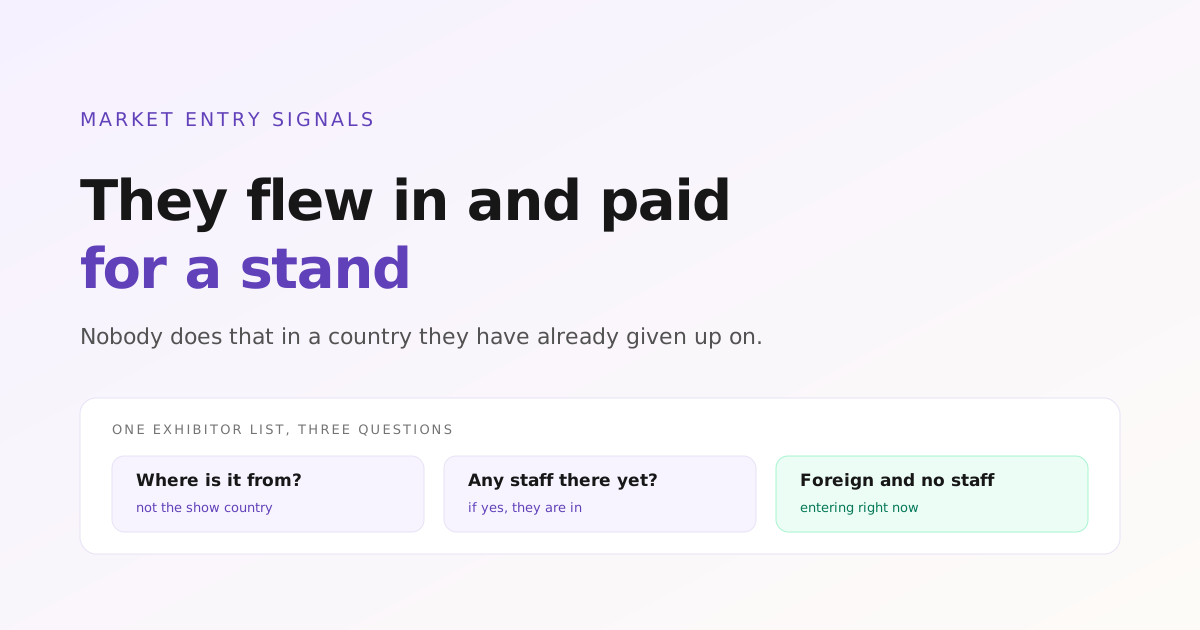
Most buying signals are inferences. A company raised money, so perhaps it is hiring. It posted a job, so perhaps it has a gap. It installed a tool, so perhaps it is unhappy with the old one. Useful, all of it, and all one step removed from the thing you actually care about.
A foreign exhibitor is not an inference. A company whose home is Germany, standing at a show in Bangkok, has booked a stand, shipped product, flown staff and paid for all of it. Months before you ever heard of them, somebody internally approved a budget line called entering Thailand. The signal is not that they might be interested. It is that they have already committed.
This is how to turn that into a list, and more importantly how to cut that list down to the companies that still need what you sell.
Why foreign is the word doing the work
Exhibitor lists are a known source and plenty of people scrape them. What almost nobody does is filter them by where the exhibitor is from, which is strange, because that single field changes what the list means.
A local exhibitor is telling you nothing new
A Thai company at a Thai show is doing business as usual. The stand is marketing. It says nothing about intent, nothing about timing, and nothing about a gap you could fill.
A foreign exhibitor is mid decision
Shipping a stand across a border is expensive and slow. Nobody does it speculatively, and nobody does it in a market they have written off. By the time the exhibitor directory is published, the decision has been made and the money is spent.
The timing is unusually good
Most signals tell you something happened. This one is happening. The directory goes live weeks before the show, which means you can reach a company while the trip is still ahead of them and the plan is still being put together.
Getting the list out
Exhibitor directories come in two shapes, and the right tool depends on which you are looking at.
A live directory page
Most shows publish a browsable exhibitor list, often with a category filter and a stand number. Point the web to table builder at the page that actually lists exhibitors, not the show homepage, and take every field it offers. Stand number, hall, category and sponsorship tier all look like clutter and are all free qualifying signals.
A PDF show guide
Plenty of organisers still publish the real list as a downloadable guide. Kuration will extract companies from a PDF or an image, running OCR first and then structuring what it finds into rows.
One cost detail matters here and catches people out. That builder is charged per page, not per run. A two page PDF costs two credits and a five hundred page show guide costs five hundred. Check the page count before you upload, and if the guide carries the exhibitor list in an appendix, split that section out and extract only those pages.
Cut one: drop everybody local
This is the cut that creates the list, and it needs the exhibitor resolved to a real domain first, because country data hangs off the company rather than off the directory entry.
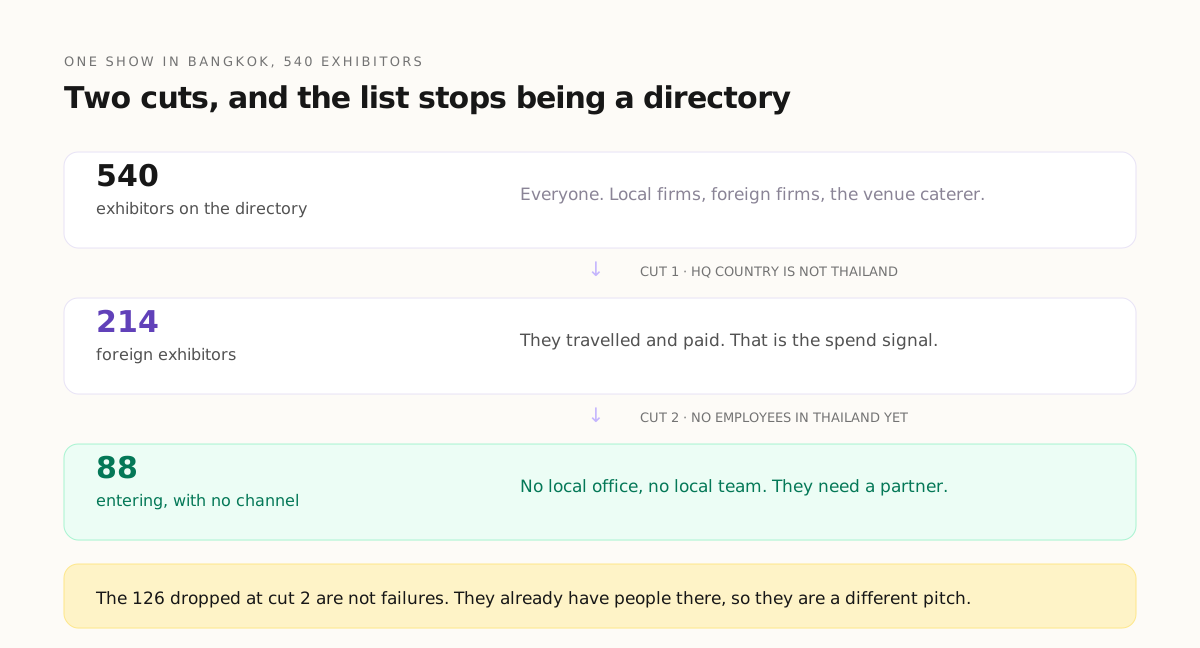
Resolve each exhibitor to its website, enrich the company so you have a headquarters country, then filter to rows where that country is not the show country. On a regional trade show this typically removes somewhere between half and two thirds of the directory, and what is left is the part worth your attention.
Cut two: drop the ones already established
Here is where most people stop too early, and it is the difference between a list of foreign companies and a list of prospects.
A foreign exhibitor with a local subsidiary, a local office and forty staff in the country is not entering the market. They entered years ago, and the stand is ordinary marketing for an established business. If your offer is about helping somebody arrive, they are the wrong audience, and writing to them as though they are new is the kind of mistake that ends a conversation in one line.
The column that answers it
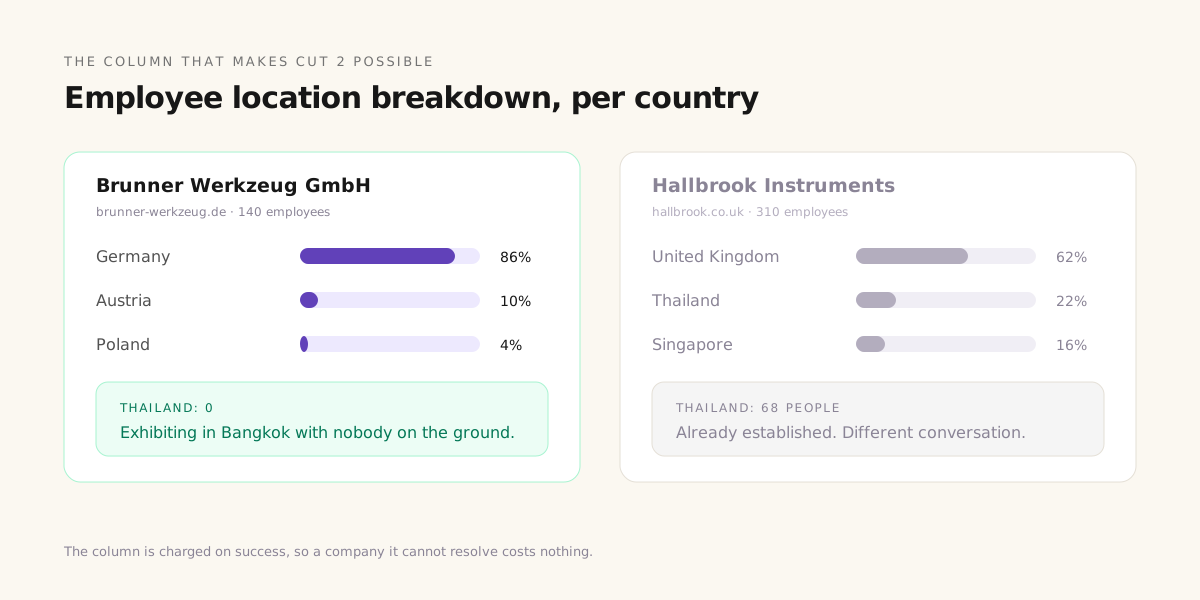
Employee location breakdown takes a company website and returns the headcount distributed by country, as a list of countries with a count and a percentage. So the question becomes arithmetic rather than judgement: how many of this company staff are in the show country? If the answer is zero, they are exhibiting somewhere they have no presence.
It is charged on success, which means a company it cannot resolve costs you nothing, so this is safe to run across the whole foreign set rather than picking rows by hand.
Do not throw the established ones away
They are a second list, not a dead one. A company with people on the ground has budget, a local team and usually a target. If what you sell helps an established operation rather than a new arrival, that is your segment and it just got separated out for free.
What else the directory gives you
The fields people discard are usually the ones that make the outreach specific.
- Stand size and sponsorship tier, which are a rough read on how much they committed and how seriously they are taking it.
- The show category they chose for themselves, which is a better description of what they sell than any industry classifier will produce.
- Whether they are speaking as well as exhibiting, which usually means a named senior person you can look up.
- Whether they were at the same show last year, which separates a first attempt from a sustained push.
That last one is worth building deliberately. Pull two years of the same show and compare: a company exhibiting for the first time is arriving, and a company back for a third year is committed but may still be unhappy with how it is going.
Who to contact once you have the list
The person who owns a market entry is rarely the person who owns the stand.
Look for export manager, international sales, area sales manager, channel manager, distribution manager, or at a smaller company the founder. Avoid the marketing contact listed on the directory entry, because that is usually whoever books the stands rather than whoever decides where the company sells next.
Writing to somebody who has not travelled yet
The timing gives you something unusual: a reason to make contact that is true, specific and currently on their mind.
Reference the show and the fact they are exhibiting, because that is public and they are proud of it. Then ask about the thing that is actually unresolved, which for a company with no local presence is almost always who is going to sell and support the product once the show ends. The useful message is a question about their plan, not a claim about their problem.
And be straight about where the information came from. The exhibitor list is published by the organiser for exactly this kind of attention. Saying you saw they are exhibiting is normal. Implying you have some private insight into their expansion plans is not.
Where it goes wrong
- Pointing the extractor at the show homepage instead of the exhibitor list page, which returns navigation items dressed up as rows.
- Uploading a five hundred page show guide without checking the page count, because that builder charges per page.
- Skipping cut two, then writing to a company with sixty local staff as though they are new to the market.
- Treating the directory contact as the buyer. It is usually the person who books stands.
- Taking one show as the market. One directory is one slice. Three shows across a year, merged and deduplicated on domain, is a view of who keeps coming back.
Frequently Asked Questions
How do I know which country an exhibitor is actually from?
Resolve the exhibitor to a real domain first, then enrich the company for a headquarters country. Directory entries list a stand and sometimes a city, which is not the same thing, and a local sales office will give you the wrong answer if you trust the address on the listing.
What if the company has no employees anywhere that I can measure?
Very small companies and those with a thin online footprint sometimes return nothing. Treat that as unknown rather than as zero, keep them in a separate bucket, and check a handful by hand before deciding how to handle the rest.
Is the exhibitor list still useful after the show has happened?
Yes, though the message changes. Before the show the question is about their plan. Afterwards it is about what came out of it, which is a genuinely good question to ask a company that has just spent a week meeting people in a market where it has no team.
How far ahead of the show should I reach out?
Early enough that the trip is still being planned and late enough that the directory is published. A few weeks out is usually the window. The week of the show itself is the worst time, because everybody involved is busy standing on a stand.
Does this work for virtual or hybrid events?
Much less well, and the reason is the whole point of this article. The signal is the cost. A virtual exhibitor has spent a fraction of what a physical one has, so the commitment that makes the list meaningful is mostly absent.
How many shows should I build this from?
Start with one that is genuinely central to your category, prove the method on it, then add two or three more across the year. The overlap between them is itself a signal, because a company exhibiting at several shows in one region is running a campaign rather than making a single visit.
The money was spent before you arrived
The hardest part of outbound is usually guessing whether anybody is in the market right now. Most of the work goes into reading indirect evidence and hoping the timing is close enough.
An exhibitor directory removes the guessing. Somebody approved a budget, booked a stand and sent people abroad, and then the organiser published a list of everyone who did it. The only question left is which of them still has nobody to sell for them once the show closes, and that is a column, not a hunch.