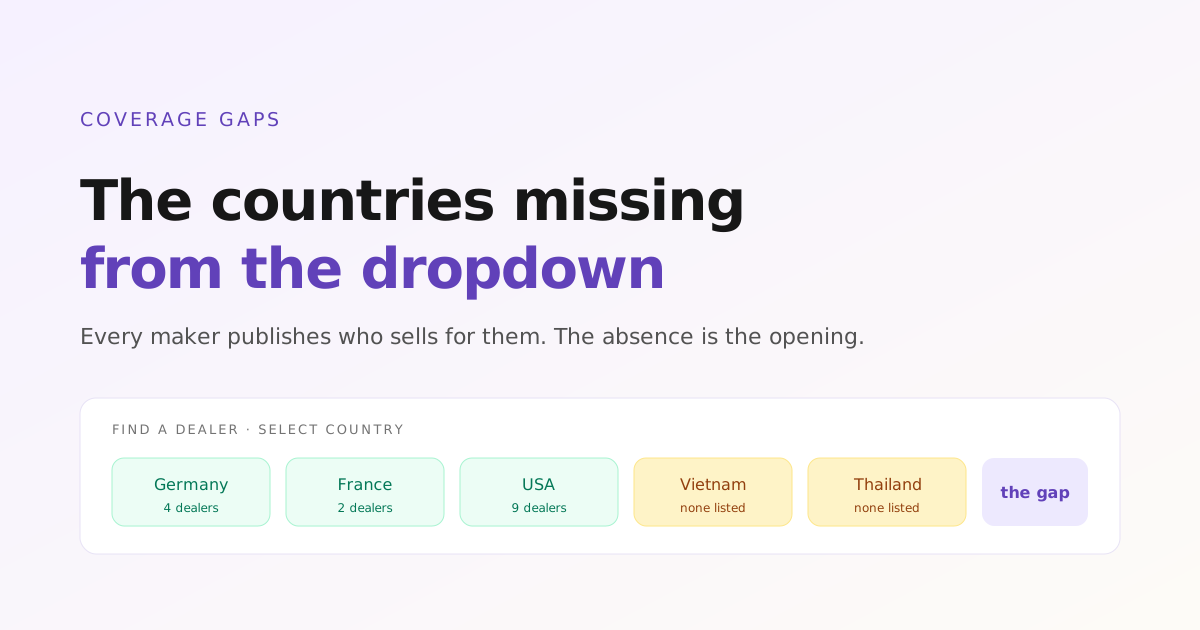
Almost every manufacturer that sells through a channel publishes a page called find a dealer, where to buy, partner locator or something close to it. It exists so a customer in Lyon can find somebody local who stocks the product.
Read it the other way round and it is something else entirely. It is a public, maintained, company authored map of every market where that manufacturer has a channel. Which means it is also a map of every market where it does not.
The absences are the useful part, and this is how to read them at scale rather than one tab at a time.
Why an absence is worth more than a presence
The list of dealers tells you who already won the business. The missing countries tell you where the business has not been won yet, which is the only part you can act on.
It is maintained, because it has to be
A dealer locator that sends customers to a company that no longer represents the brand creates complaints. So manufacturers keep these pages current in a way they do not keep the rest of the site current. The data is fresher than almost anything else you could scrape from the same domain.
It is the company own account of itself
This is not an estimate, an inference or a third party database guess. It is the manufacturer stating, publicly and deliberately, who is authorised to sell its product in each territory.
The gap is specific enough to open with
There is a large difference between writing to a manufacturer about international growth and writing to one about the fact its locator covers nine European countries and nothing in Southeast Asia. The second is a question somebody inside that company has already been asked.
The problem: a locator is a widget, not a page
This is why dealer locators are underused. They rarely sit still as plain text. Usually you get a map, a country dropdown and nothing at all on the page until you choose something, which means an ordinary scrape returns an empty shell.
Kuration browser agent has three modes, and getting this right is mostly a matter of matching the mode to what the page actually makes a human do.
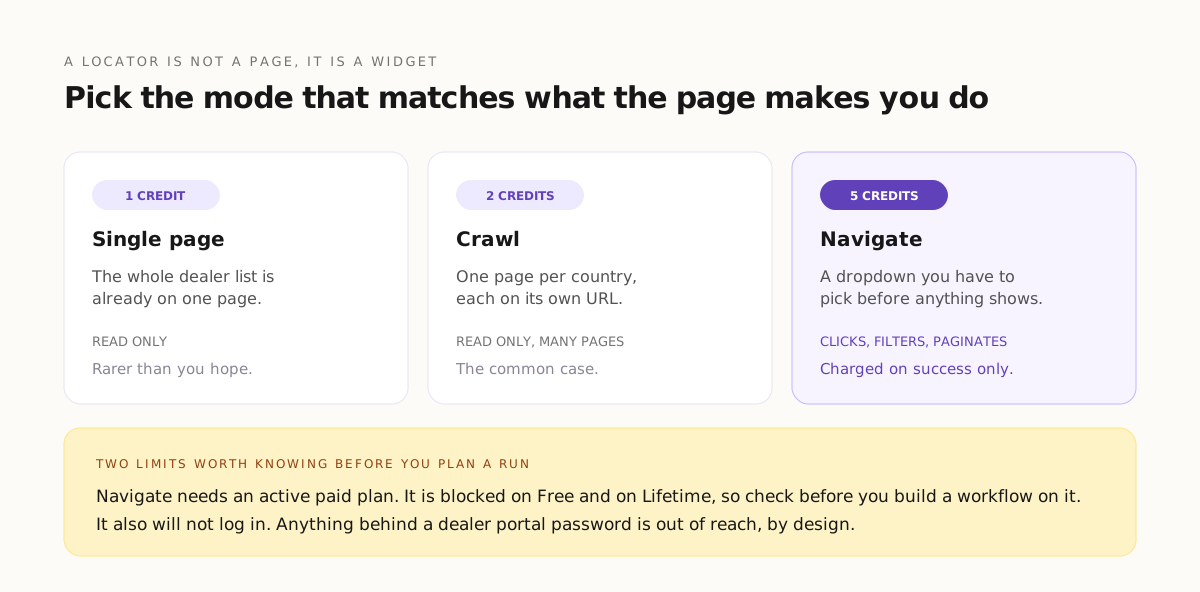
Single page, one credit
The entire dealer list is already rendered on one URL. This happens, it is cheap, and it is rarer than you would like.
Crawl, two credits
Each country has its own page or its own URL parameter. This is the common case and it is worth checking for first, because a locator that looks interactive often just reads the country out of the address bar. Change the country, watch the URL, and if it changes you have a crawl rather than a navigation.
Navigate, five credits
A genuine interface: a dropdown that must be clicked, a filter applied, results paginated. The agent will do that, and this is the mode to reach for when the first two return nothing.
Two real limits before you plan a workflow around it. It needs an active paid plan and is blocked on the free and lifetime tiers. And it will not log in, so anything behind a dealer portal password is out of reach by design. On the other hand it is charged only on success, so a page it cannot crack costs nothing.
Building the coverage matrix
One locator is an anecdote. The value appears when you put thirty of them side by side against the countries you care about.
- List the manufacturers in your category. Trade association member lists and exhibitor directories are the fastest way to assemble this.
- Find each one locator page. It is almost always linked from the footer or from a where to buy item in the main navigation.
- Extract the dealers per country, with the mode that matches the page.
- Normalise the country names, because one site will say UAE, the next United Arab Emirates and a third Middle East.
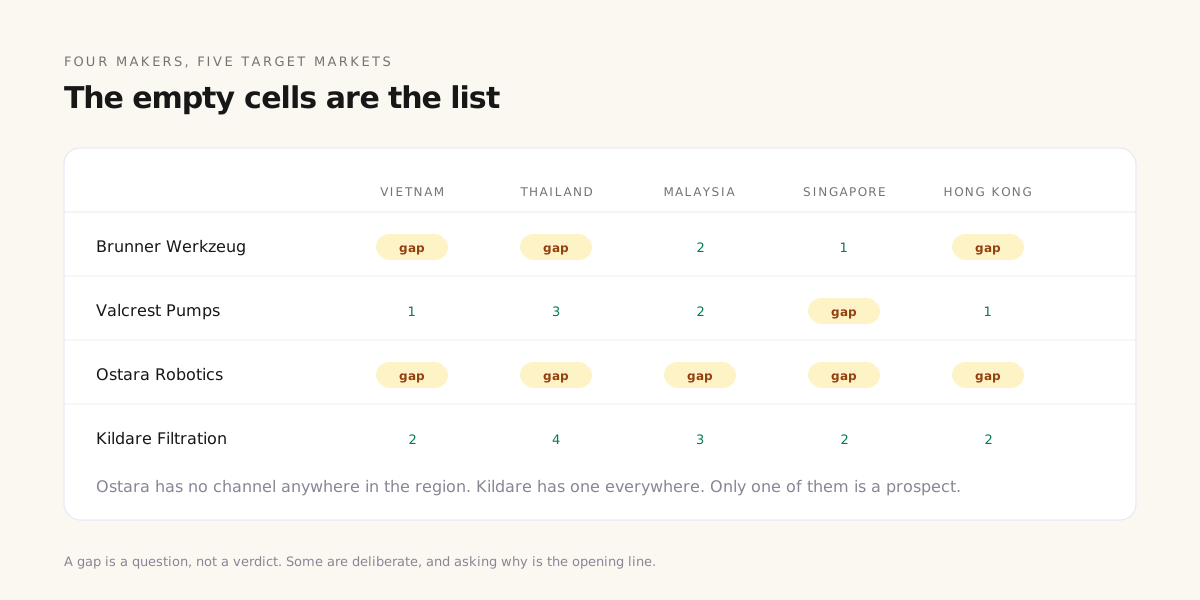
- Lay it out as manufacturers down the side and your target countries across the top, then count.
Read the rows, not the cells
A single gap might be deliberate. A row of gaps across an entire region means the company has not built a channel there at all, which is a strategy question rather than a vacancy. A company with coverage everywhere except one market is the sharpest prospect of the three, because the pattern shows they do build channels and this one is missing.
A gap is a question, not a verdict
This is the part to be careful about, because the data is good enough to make you overconfident.
A country can be missing from a locator for reasons that have nothing to do with opportunity. The product may not be certified there. A distribution agreement may be in progress and not yet published. The market may have been tried and abandoned. The locator may simply be out of date in that one region.
So treat the gap as the reason to ask rather than the answer. The strongest opener here is close to literal: your locator lists partners across Europe and nothing in Vietnam, is that deliberate? It is specific, it is checkable, it is obviously researched rather than guessed, and it invites a real answer instead of a yes or no.
Who this list is for
- Distributors and importers looking for brands to represent, where the gap is the vacancy they are applying for.
- Market entry consultancies, whose clients ask exactly this question and who usually assemble the answer by hand.
- Anyone selling services into channel expansion, from logistics to certification to localisation, because a gap about to be filled creates all three needs at once.
- Manufacturers themselves, mapping their own coverage against rivals, which is the same matrix read down the column rather than across the row.
The second read: who already has the slot
Turn the same data around and the filled cells become their own list. Every named dealer is a confirmed distributor in that category, confirmed by the manufacturer with the strongest reason to be accurate about it.
That is one of the cleanest ways there is to build a distributor list, because it skips the identification problem entirely. You never have to work out whether a company is a distributor. The brand it sells has already said so.
Where it goes wrong
- Reaching for the interactive mode first. Check whether the country sits in the URL, because the cheaper mode often does the job.
- Skipping country normalisation, which quietly creates gaps that are not real when one site says UAE and another says United Arab Emirates.
- Treating every gap as an opportunity. Certification, an agreement in progress and a market deliberately abandoned all look identical from outside.
- Scraping one locator and calling it research. The matrix is where the meaning is.
- Letting the data age. These pages change precisely because they are maintained, so a six month old matrix is describing a channel that has moved.
Frequently Asked Questions
How do I find the locator page on each manufacturer site?
Check the footer first, then the main navigation for where to buy, find a dealer, partners or distributors. If none of those exist, the company most likely sells direct, which is itself a useful answer and a reason to drop the row.
What if the locator only shows results near a postcode?
Pick a handful of major cities per country and run those as separate queries, then merge and deduplicate. It is more work than a country dropdown and it still beats reading the map by hand.
Is scraping a dealer locator acceptable?
These pages are published to be read, and the information is business information about companies rather than anything personal. Respect what the site asks of automated visitors, pull at a sensible pace, and do not go behind a login. The browser agent will not log in anyway.
How many manufacturers do I need before the matrix is useful?
Twenty or so starts to show a pattern, because you can see which markets are generally well covered and which are generally not. Below about ten you cannot tell whether a gap is unusual or completely normal for the category.
How often does this need rebuilding?
Twice a year for most categories, and the comparison against the previous run is the most valuable output. A country that appeared since last time means somebody just signed a distributor, and a country that disappeared means an agreement ended.
What if the company sells only through marketplaces?
Then there is no locator and no channel to have a gap in, so it is not a prospect for this particular motion. That is a quick disqualification rather than a dead end, and it costs you one page view to learn.
Read the map for what is not on it
Prospecting usually means building a description of a company and hoping it matches somebody real. This inverts that. The companies have already described themselves, deliberately and publicly, in a format designed to be read.
All anyone has to do is read it for the opposite of what it was written for. The page is there to tell a customer where to buy. Lined up against thirty others, it tells you where the brand cannot be bought yet, and that is a far more interesting list.