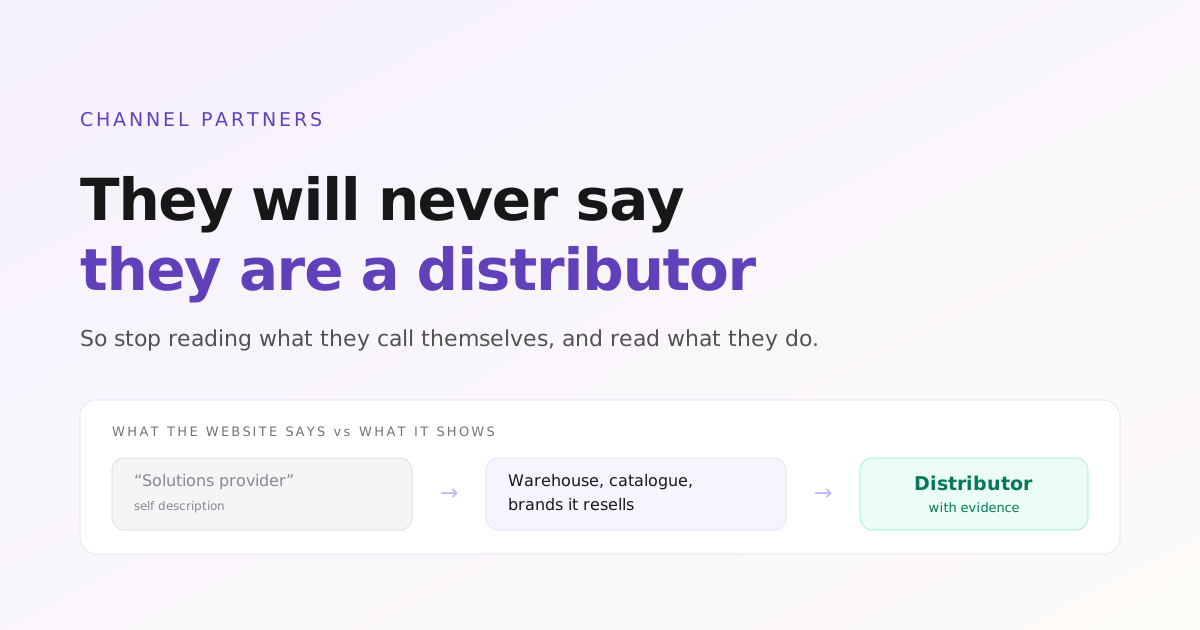
Try to build a list of distributors and you hit the same wall within an hour. Almost nobody uses the word. They are solutions providers, technology partners, specialists, representatives, trading companies, or simply the company name and nothing else. The word distributor appears on a small minority of the websites of companies that are, in fact, distributors.
This is why distributor lists are so hard to buy. A database can only file a company under the label it gave itself or the label an algorithm guessed from its homepage, and both of those go wrong here in the same direction. So the filter returns a thin, obvious slice and misses the rest of the market.
The way through is to stop treating it as a filtering problem and start treating it as a classification problem. You are not looking for companies that say a word. You are looking for companies that behave a particular way, and that behaviour is visible on their own website.
Why the label is missing in the first place
It is worth understanding why, because it tells you where the evidence will be instead.
Distributing is what they do, not what they sell
A company that resells industrial pumps does not think of itself as being in the distribution business. It thinks of itself as being in the pumps business. Its website is written for someone who wants pumps, so it talks about pumps, applications and service. The commercial arrangement behind it is invisible because it is irrelevant to the buyer.
The word sounds like a middleman
Distributor carries a whiff of markup. Solutions provider, technology partner and systems integrator all say the same thing while claiming more value. So the language drifts upmarket even when the model has not changed.
Many of them are genuinely hybrid
A company can manufacture two of its own lines, resell eight others and integrate the lot. Which label is correct depends on what you are selling to them, and a single industry field cannot hold that.
What to read instead of the label
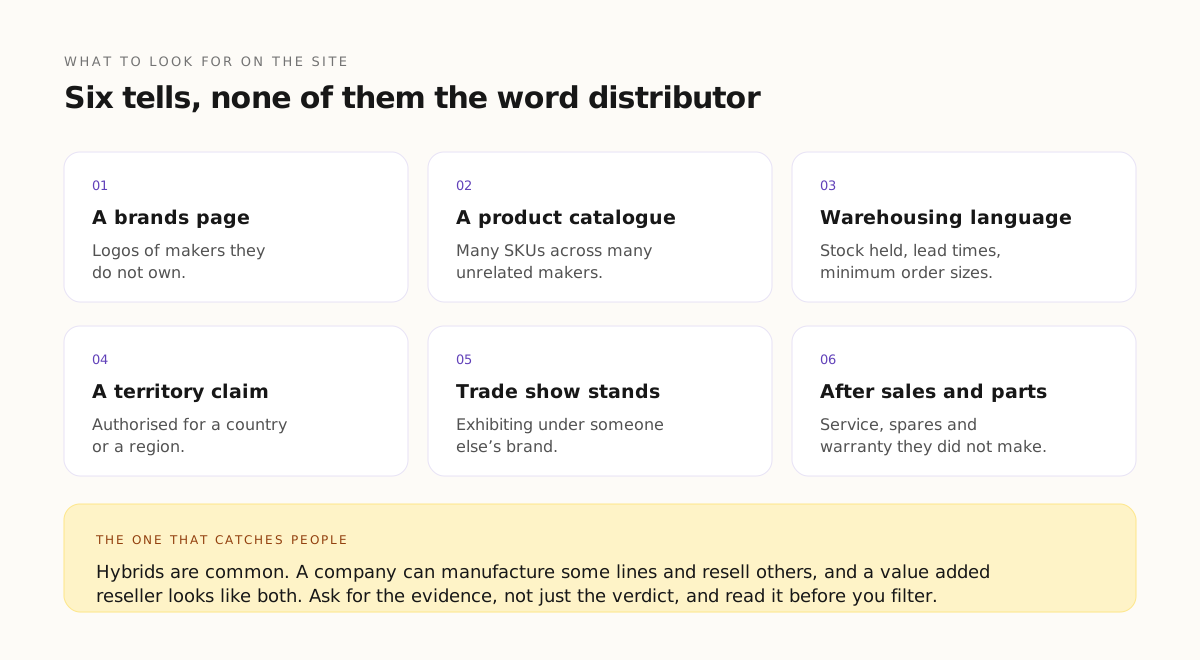
Every one of these is visible to anyone who opens the site, and none of them is the word you were looking for.
A brands page
The single strongest tell. A page of logos belonging to companies they do not own means they represent those companies. Manufacturers do not display other makers on their own site. This one alone catches a large share of the market.
A catalogue that is too broad to be their own
Hundreds of products across unrelated makers is not something a factory produces. It is something a warehouse holds.
The language of holding stock
Lead times, minimum order quantities, ex stock, next day dispatch, available from our warehouse. Manufacturers talk about production. Distributors talk about availability, because availability is the thing they actually sell.
A territory
Authorised for a country or a region is the sentence that gives it away completely. Authorisation only means something if somebody else owns the product.
After sales and spares for products they did not make
Servicing, warranty handling and parts for another company name is a distribution agreement in everything but name.
Turning the tells into a column
Reading six signals on one website takes a minute. Doing it on four hundred is the whole job, and it is the part worth automating rather than the part worth thinking about.
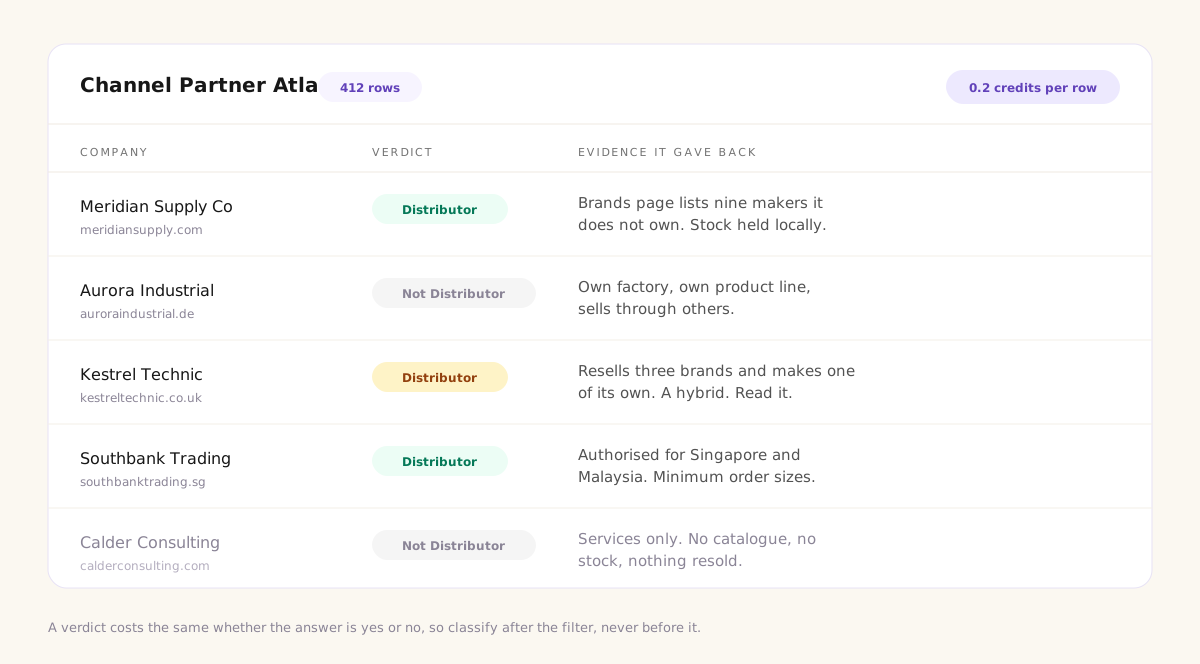
Kuration has a Check Distributor Status column for exactly this. You point it at the website column and it returns Distributor or Not Distributor, with one or two pieces of evidence for the verdict. It reasons from resale, logistics and catalogue cues rather than from the label, which is the same thing you would do by hand.
Read the evidence, not just the verdict
The evidence is the part people skip and the part that earns its keep. A verdict of Distributor backed by nine brands and local stock is a different prospect from one backed by a single reseller mention buried in a footer. Keep the evidence as a visible column and scan it before you act on the classification.
It charges on every row, so filter first
This is a classifier, which means deciding a company is not a distributor is as much work as deciding it is. A no costs the same as a yes. Run it after your geography, size and sector filters have already cut the list, never across a raw source dump.
Hybrids need a human glance
The tool itself flags this: a value added reseller can look like both, and it returns a best fit. If your offer depends on the difference, treat the hybrid rows as a separate bucket to look at rather than folding them into either side.
Where to get the raw list before you classify it
Classification tells you which companies are distributors. It does not produce the companies. Four sources do that, and they work because distributors have to be visible somewhere even when their website is coy.
Trade shows, which is where the model shows itself
This is the best source and the least used. At any industry show a large share of the stands are held by distributors exhibiting somebody else brand, because being seen with the product is the point of the stand. The exhibitor directory names them, categorises them and often states which brands they carry. That last field is the brands page, handed to you.
Manufacturer where to buy pages
Work backwards. Pick the makers whose products sit next to yours and read their find a distributor or partner locator page. Every name on it is a confirmed distributor, confirmed by the party with the strongest reason to be accurate, and usually sorted by territory.
Trade bodies and chambers
Importer associations, chambers of commerce and sector federations publish member directories, and in many markets importing and distributing is exactly what membership signals.
Government and licence registers
Regulated categories, and medical devices, food, chemicals and machinery are all regulated somewhere, require the importer or authorised representative to be on a public register. That register is a distributor list with legal force behind it.
The order that keeps it affordable
- Source the raw companies from an exhibitor list, a where to buy page, a member directory or a register.
- Resolve every row to a real domain, because the classifier reads the website and a row without one cannot be judged.
- Cut on the cheap, obvious things first: country, size, sector.
- Classify the survivors, then read the evidence column rather than trusting the verdict blindly.
- Only then find the people, and only at the companies that came back as distributors.
Every reordering of that costs more and teaches you less. Classifying before filtering is the expensive mistake, and finding contacts before classifying is the expensive and embarrassing one.
Who this list is actually for
Three groups need it, and they need slightly different versions of it.
- Manufacturers entering a market, who need the distributors already carrying adjacent products in that territory.
- Market entry and trade consultancies, who are asked to produce exactly this map for clients and usually build it by hand.
- Anyone selling to distributors rather than through them, from warehouse software to freight to insurance, for whom the classification is the qualification.
Where it goes wrong
- Searching for the word. It returns the small minority who use it and hides the rest, and it feels like the market is smaller than it is.
- Classifying an unfiltered list. The tool charges on every row it reads, so a raw dump of four thousand costs four thousand rows of classification to find the few hundred you wanted.
- Trusting the verdict without the evidence. Two companies can both read Distributor and be nothing alike.
- Discarding hybrids. They are often the best prospects, because they already understand both sides of the arrangement.
- Treating a where to buy page as the whole market. It is one maker view of it. Three or four of those pages, merged and deduplicated, is a market view.
Frequently Asked Questions
Why can I not just filter a database for distributors?
Because the filter reads a label, and most distributors do not carry that label. A database can only file a company under what it or an algorithm called it, so you get the visible minority and no way of knowing what you missed.
What is the single best signal if I only check one thing?
A brands page. Logos of manufacturers the company does not own, displayed on its own website, is close to conclusive. Manufacturers do not promote other makers on their own site.
How do I handle companies that both make and resell?
Put them in their own bucket rather than forcing a side. Whether a hybrid is a prospect depends entirely on what you are selling, and the answer is usually visible in the evidence rather than in the verdict.
Does classifying a company cost credits even when the answer is no?
Yes. A classifier does the same work either way, so a no is charged like a yes. That is the reason the order in this article puts filtering before classification rather than after it.
Where do trade shows fit if I cannot attend one?
You do not need to attend. The exhibitor directory is published online, it stays up long after the show, and it names the companies, their categories and often the brands they represent. That is the useful part, and it costs nothing to read.
How often does a distributor list go stale?
Slower than a contact list and faster than you would hope. Agreements change, territories get reassigned and companies are acquired. Once or twice a year is a sensible rebuild, and comparing it against the previous version tells you who just picked up a new brand.
Read the behaviour, not the badge
Most prospecting starts by describing companies and hoping the description matches reality. That works when the category is one a company is happy to claim. It breaks completely when the category is one they have quietly decided not to mention, and distribution is the clearest example of that in B2B.
The companies are not hiding. They are publishing a brands page, quoting lead times, claiming a territory and standing at a trade show under somebody else logo. All of it is public. It just is not filterable, which is exactly why the list is worth having.