Every industry has a body that represents it. A federation, a chamber, a guild, a council, a standards association. Most of them publish a list of who belongs, because that list is the product members are paying for.
That page is one of the best prospect lists on the open internet, and almost nobody uses it. It is vetted, because somebody had to be accepted. It is current, because membership lapses. It is segmented, because associations organise members by discipline and region. And it does not appear in any shared sales database, because it sits on a few hundred individual websites rather than in one place worth an aggregator buying.
This is how to find the right associations, pull the member list out, and turn it into rows a sales team can actually work.
Why a member list beats a database filter
When you filter a shared database, you are describing companies from the outside. Industry code, headcount band, revenue estimate, country. Those are labels applied by a data vendor, and they are wrong often enough that everyone who prospects at volume has stories about it.
A membership list is different in kind. It is a list of companies that chose to identify themselves as belonging to a category, and then paid an annual fee to stay on it. That is self declared, verified by a third party, and backed by money.
Four things membership tells you that a filter cannot
- The company considers this industry its actual identity, not a side activity a classifier picked up from its website.
- Somebody there approved a recurring spend, which tells you a budget process exists.
- They care about standards, accreditation or peer visibility, which is a useful thing to know before you write to them.
- They are reachable through a shared context, because their peers are on the same list.
For anything sold into a specific trade, the member list is a better starting universe than any filter you can build. For anything sold horizontally, it is a good way to build one vertical at a time.
Finding the right associations
The hard part is not extracting the list. It is knowing which bodies exist, because they are named inconsistently and rarely rank well for obvious search terms.
Search the words the industry uses, not the words you use
An industry body almost never calls itself an association in its own name. It will be a federation, a chamber, a council, a society, a guild, an institute, a board or a union. Search each of those words alongside the trade and the country, and you will surface bodies that a single search for the word association misses entirely.
Work backwards from a company you already know fits
Take three customers or three ideal prospects and look at the footer of their websites. Companies display membership badges because membership is a trust signal for their own buyers. Each badge is an association you did not know about, and each one links to a directory of their peers.
Follow the accreditation, not just the trade
Certification bodies keep public registers of who currently holds the certificate, which is a stricter and more useful list than general membership. If your product is relevant to companies that hold a particular standard, the register of holders is the sharpest list available anywhere.
Check the umbrella body
National associations are usually members of a regional or global federation, and that federation publishes its own member list. One page can give you the association for every country in a region, which turns one market into twelve.
Getting the list out
Association websites are built on small budgets, which is good news and bad news. Good, because the data is usually plain HTML with no serious protection. Bad, because the formats are wildly inconsistent and there is no such thing as a reusable scraper.
The four shapes you will meet
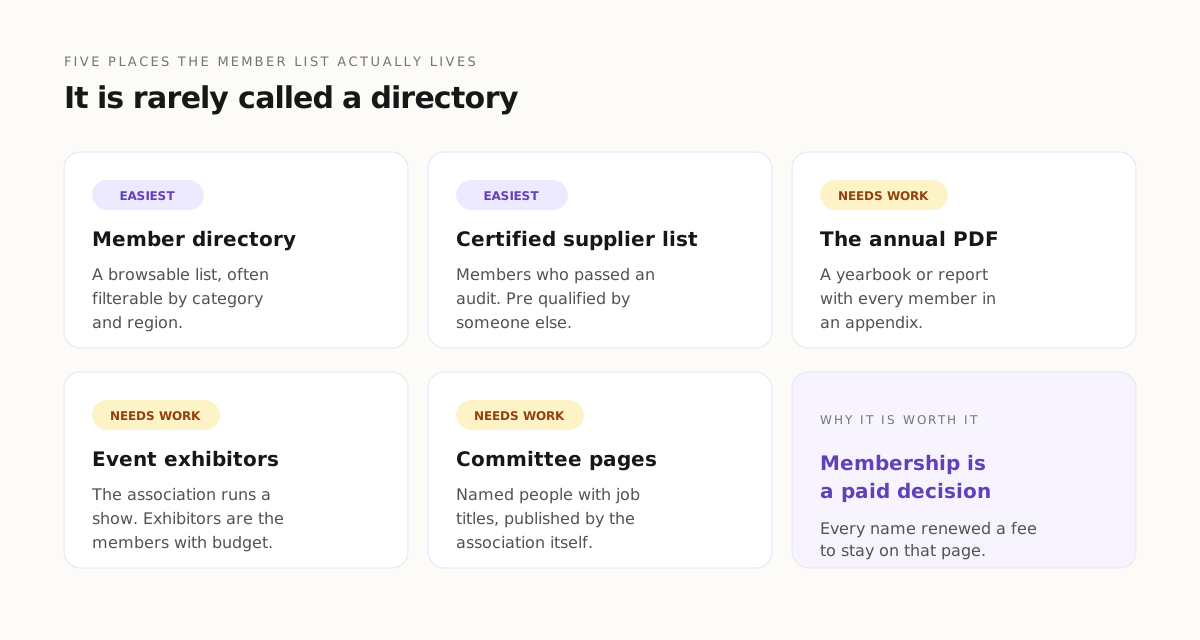
- A paginated list of member cards. The easiest case. Company name, category, sometimes a website link and a location.
- A searchable database that only shows results after you pick a filter. Usually solved by picking every filter in turn and collecting each result set.
- A map with pins. The underlying data is nearly always a single file the map loads, which is more complete than what the map displays.
- A PDF yearbook or annual report with members in an appendix. The most work, and the most likely to be untouched by anyone else.
What is usually missing, and how to fix it
Member directories are built for humans looking up a company they already heard of, so they are thin by design. Expect a name, a category, and maybe a town. Expect no domain, no headcount, no contacts, and no consistency in how the company name is written.
The name to domain step is the one that matters most and the one people skip. A member list without domains cannot be deduplicated, enriched or checked against your CRM, so it stays a document rather than becoming a list. Resolve names to real websites first, before anything else, and everything downstream becomes possible.
The pipeline, step by step
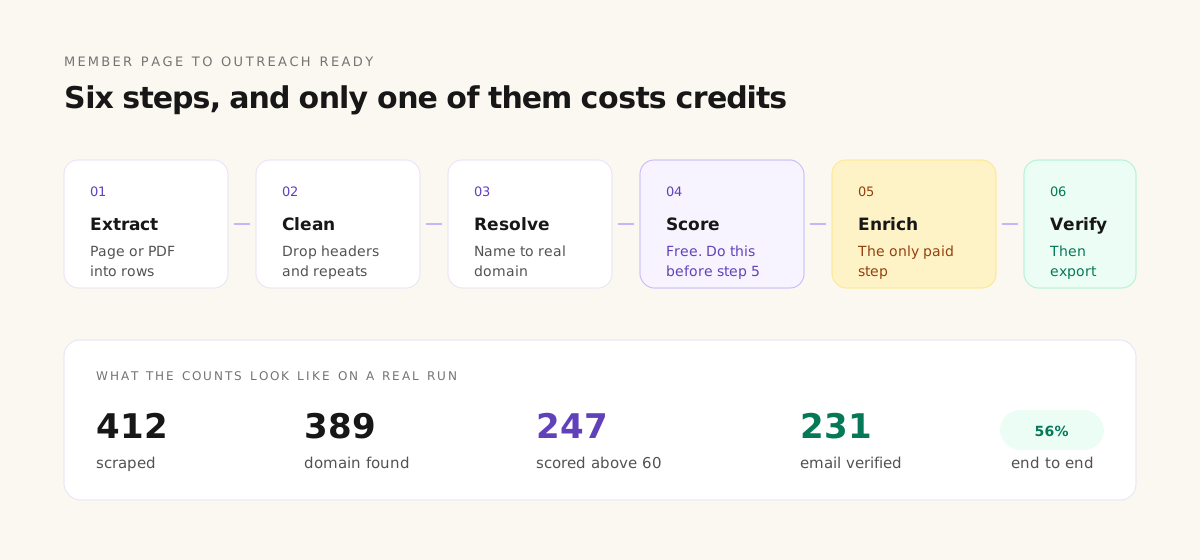
The order matters more than the tooling. Six steps, and only one of them should cost you anything.
Step one, extract
Pull the page or the PDF into rows. Take everything the source gives you, even the fields that look useless, because association categories are often the most accurate segmentation you will ever get for that industry.
Step two, clean
Strip repeated headers, navigation text and page furniture that came along with the extract. Normalise the company names, removing the legal suffixes and the inconsistent capitalisation that will otherwise break every match you attempt later.
Step three, resolve the domain
Turn each company name into its real website. This is the spine of the whole list. Expect to lose a few percent, usually dissolved companies and sole traders, and treat the loss as free cleaning rather than a failure.
Step four, score before you spend
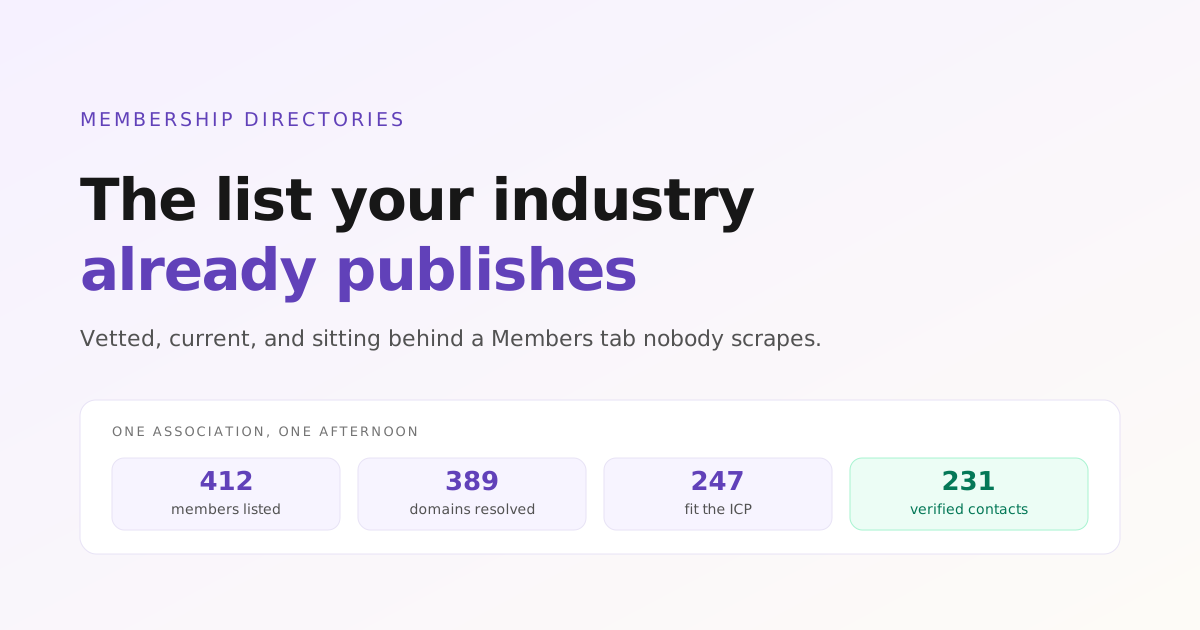
Run your ICP criteria across the resolved list while it still costs nothing. Membership means they are in the industry, it does not mean they are the right size, the right region or the right business model. A member list of four hundred typically contains two hundred and fifty companies you would genuinely sell to, and scoring is what separates them.
Step five, enrich only what passed
Now find the decision makers and their contact details, for the qualified rows only. This is the one step with a real cost attached, which is exactly why it comes after the filter and not before it.
Step six, verify then export
Check every email before it reaches a sending tool. Association directories skew towards older, smaller companies, which means a higher rate of dead addresses than a database export, and a higher bounce risk if you skip this.
Reading the categories properly
The single most valuable field in a member directory is the one people discard: the category the association assigns each member. It is worth more than it looks.
Industry classification codes are applied from the outside by an algorithm reading a website. Association categories are chosen by the member and approved by a body that understands the trade. When a company lists itself under a specific sub discipline rather than a general one, that is a deliberate statement about what they do and who they serve.
Keep those categories as a column. They will segment your outreach better than anything you could infer, and they give you language the recipient recognises as their own.
The committee page, the part almost everyone misses
Most associations publish a committee, board or working group page, listing named people with their job titles and the companies they work for. This is a page of senior, engaged people who have volunteered time to their industry, published by a source they trust.
It is small, usually ten to thirty names, and it is the highest quality slice of the entire directory. These are the people whose opinion moves the rest of the membership, and they can be referenced credibly because their involvement is public and something they chose.
Staying on the right side of it
Member directories are published deliberately, to be read. That does not make every use of them acceptable, so a few things are worth holding to.
- Respect what the site asks of automated visitors, and pull at a human pace rather than hammering a small server.
- Take business information. Leave anything that is obviously a personal address or a private mobile.
- Under the EU and UK rules, business to business contact for a genuine and relevant purpose generally sits under legitimate interest, but you must record where the data came from and act on removal requests promptly.
- Do not imply the association endorses you, gave you the list, or introduced you. It did not, and members will check.
- If the directory sits behind a member login, it is not public. Leave it.
Where this goes wrong
- Stopping at the biggest national body. The specialist regional associations are smaller, less contested and often better matched to a niche offer.
- Skipping domain resolution, which leaves you with a document rather than a list and makes deduplication impossible.
- Enriching before scoring, which makes a repeatable process expensive enough that it becomes a one off.
- Throwing away the association category, which is the best segmentation in the whole file.
- Never refreshing. Membership lists change every year as companies join, lapse and merge, and a list from two years ago carries a meaningful share of dead rows.
Frequently Asked Questions
Is scraping a trade association member directory legal?
Collecting publicly published business information is generally permissible, and these directories are published specifically to be read. Respect the site terms and what it asks of automated visitors, take business rather than personal data, record the source, and handle removal requests properly. Anything behind a member login is not public and should be left alone.
How many usable prospects does one association produce?
A national association in a defined trade typically lists between two hundred and two thousand members. After domain resolution and ICP scoring, expect somewhere around half to sixty percent to be genuinely relevant, which is a far better hit rate than a broad database filter.
What if the directory is only a PDF?
That is usually good news. A PDF member list has almost certainly never been used as a prospect list, because the effort involved stops most people. Extract it into rows, resolve the names to domains, and treat it like any other source from there.
How often should the list be rebuilt?
Once or twice a year for most associations, since membership renews annually. The more useful trick is to rerun it and compare against your previous version, because the new names are companies that just joined the industry body, which is a small signal in its own right.
Are association members not too small to sell to?
Some will be, which is what the scoring step is for. Directories cover the full size range of a trade, from sole traders to national operators, and the larger members are often the ones sitting on the committee. Filter on size rather than dismissing the source.
Can I use the association name in my outreach?
You can reference that a company is a member, because that is public and they chose to publish it. You must not imply the association endorsed you, shared the list with you, or is involved in any way. Members talk to each other and to the association, and that claim gets found out.
The list is already written, it just is not collected
Prospecting usually means assembling a list of companies from scratch and hoping the criteria you chose describe something real. Association directories invert that. The list already exists, it was assembled by people who understand the trade, and every company on it paid to be there.
All that is missing is the collection, the domains, the scoring and the contacts. That is a few hours of structured work for a list your competitors are not looking at, in a category where the word member means something specific to the person reading your email.