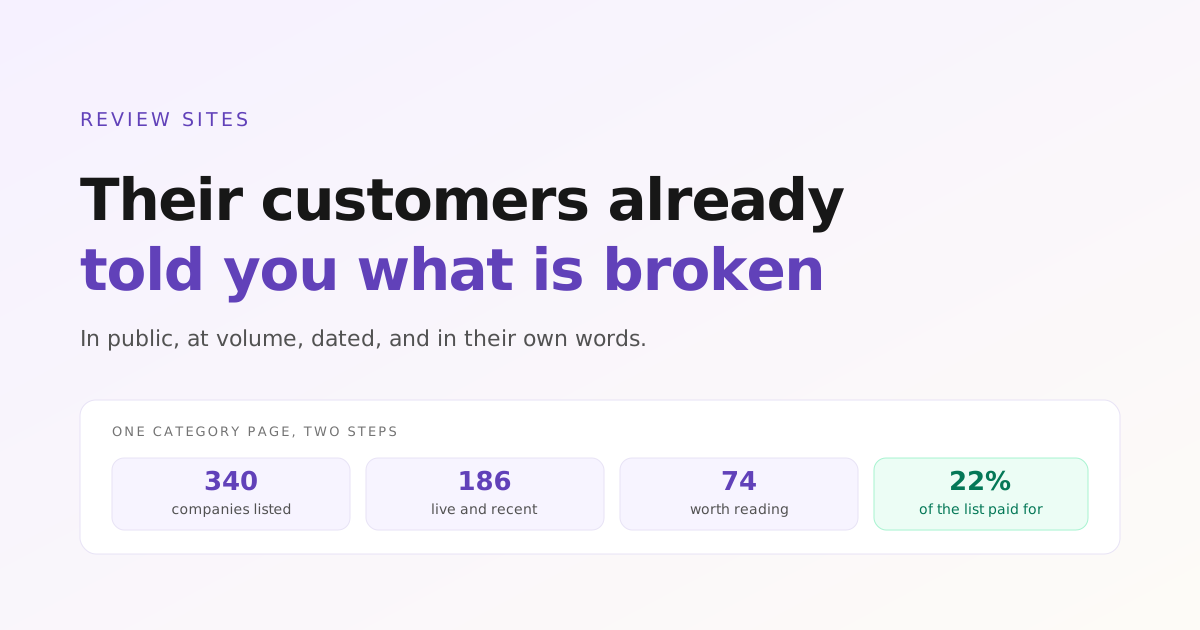
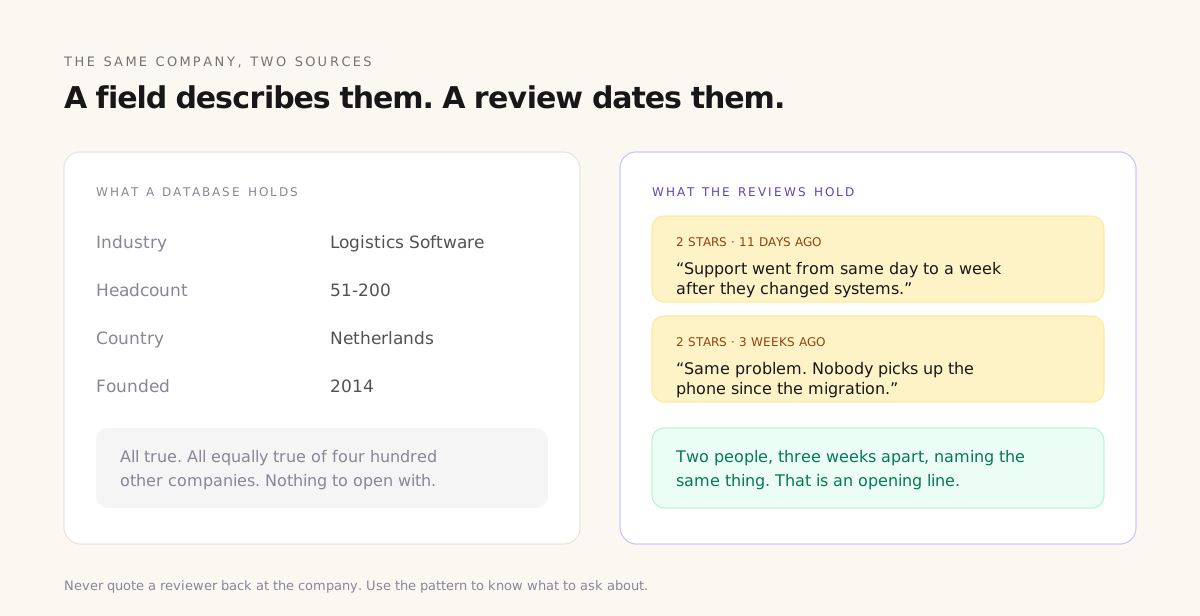
Most prospect research tells you what a company is. Industry, headcount, country, founding year. All of it true, all of it equally true of hundreds of other companies, and none of it a reason to write to anybody this week.
Review sites are different in kind. They publish what a company customers are unhappy about, with a date on it, in the customer own words, in public. That is not a description of a company. It is a running account of where it is under strain.
This is a guide to using that properly: how to get a list out of a category page, which free filters to run before you spend anything, what the reviews actually tell you, and the line you should not cross when you write to them.
What a review gives you that a field cannot
Four things, and the fourth is the one people miss.
Recency
A review carries a date. A complaint from eleven days ago is a live situation. The same complaint from three years ago is history, and probably fixed.
Specificity
People do not write reviews about categories. They write about the thing that happened to them, which means you get the actual failure rather than a general dissatisfaction.
Repetition
One angry customer is noise. Four describing the same failure across two months is a pattern, and a pattern is a problem the company itself is almost certainly aware of.
A comparison set
Reviewers name who they switched from and who they are considering instead. That is competitive intelligence nobody sells, given away in passing.
Getting the list out of a category page
Review sites organise companies into categories and searches, and those pages are the list. In Kuration the Trustpilot builder takes a category or search URL and a number of result pages, and imports what it finds.
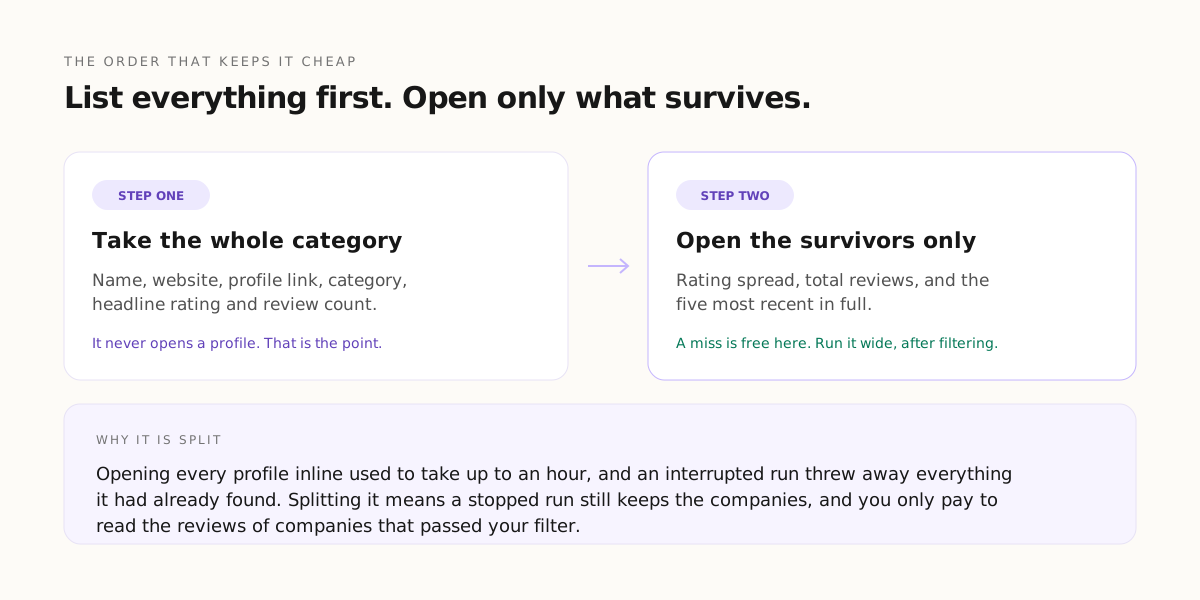
What comes back per company is the name, the website, the profile link, the categories it sits in, and the headline rating and review count as the search page shows them.
It deliberately does not open each profile
This surprises people, and it is the right decision. Opening every company profile inline used to take up to an hour on a full category, and an interrupted run lost everything it had already found. Splitting it means a stopped run still keeps the companies.
Which means the rating you get first is a snapshot
The rating and review count come from the search page, not from the full profile. That is enough to sort and cut on. It is not enough to reason about, and the next step is where you get the real picture.
Two free filters to run before you spend anything
A raw category page is mostly companies you do not want. Two filters, neither of which costs a credit, remove a large share of them.
Review volume
A profile with four reviews tells you nothing, because four people is not a pattern. Set a floor. What the floor should be depends on the category, but anything under about ten leaves you reading noise.
Recency
A company whose last review is from two years ago is either dead, tiny, or not a place where customers have strong feelings. None of those is your prospect.
Between them these two usually cut a category roughly in half, and they cut precisely the rows that would have cost you money and taught you nothing.
Opening the profiles that survived
Now the second step earns its money. The reviews column takes the profile URL and returns the overall rating, the distribution across stars, the total review count, and the five most recent reviews in full with their dates, ratings and author locations.
Two things to know about how it charges. It is charged on success, so a company with nothing to return costs you nothing. And because of that you can run it wide across your filtered list rather than picking rows by hand.
Read the distribution, not the average
A 4.1 average made of mostly fives and a hard tail of ones is a company with a specific failing affecting a specific group. A flat 4.1 spread across threes and fours is a company that is merely adequate. Those are completely different prospects and the average hides the difference.
Five recent reviews is the right amount
Enough to see whether a complaint repeats, few enough to actually read. If the same thing appears twice in five, you have your angle.
Turning the reviews into a column you can sort on
Raw review text is not a filter. A paragraph per row is something a person has to read, and nobody reads four hundred of them.
So add one more column that reduces the reviews to something sortable. Ask for a single value from a fixed short list, naming the dominant complaint theme, with an option for none and an option for unclear. Support, pricing, reliability, onboarding, none, unclear. Now it is a filter, and you can work the support bucket as one motion rather than reading everything.
Always give it an unclear option
A column forced to choose on a row with weak evidence will pick something, and a guess in a field you are about to sort on is worse than an admission. Let it say it does not know, then treat that bucket as rows to read or drop.
Which categories this works in, and which it does not
This is a source with a shape, and pretending otherwise wastes a morning.
- It works where buyers are numerous and vocal: agencies, software, finance, insurance, travel, logistics services, anything with a subscription and a support queue.
- It works badly where buyers are few and contracts are large. A company with nine customers has no meaningful review presence and never will.
- It works badly in markets where the review site has no local adoption, which is most of the world outside a handful of countries.
- It is not a full reputation search. It is one site. Treat its absence as absence of evidence, not evidence of absence.
The line not to cross when you write
This is the part that decides whether the whole exercise helps or backfires, and it is simple.
Never quote a review back at the company. Do not name a reviewer, do not paste their words, do not say you saw their rating dropped. It reads as surveillance, it embarrasses the person you are writing to, and it forces them to defend rather than engage.
Use the pattern to know what to ask about, then ask about it like somebody who understands the category. If four customers in two months described a support backlog, the useful opener is a question about how they are handling support volume, not a citation. The research shapes the question. It does not become the question.
Where it goes wrong
- Enriching the whole category before filtering. The two free filters exist precisely so you do not pay to open profiles you were going to discard.
- Sorting on the average rating. It hides the distribution, which is where the actual signal is.
- Treating a low rating as the qualification. Plenty of badly rated companies have no budget and no intention of changing anything. Fit still has to pass first.
- Reading the reviews and ignoring what they say. Sourcing from a review site and then sending generic copy wastes the only advantage the source gave you.
- Quoting the reviews in outreach. Covered above, and worth repeating, because it is the mistake that turns a good list into a bad reputation.
Frequently Asked Questions
Is scraping public reviews allowed?
Reading publicly published pages is generally fine, and these pages are published to be read. Respect what the site asks of automated visitors, take the business information rather than anything personal about reviewers, and never republish a review as though it were yours.
How many companies does one category page give me?
It depends on the category and how many result pages you ask for, and the builder accepts between one and twenty. After the volume and recency filters, expect roughly half of what you imported to be worth carrying forward.
Does opening a profile cost me if the company has no reviews?
No. That step is charged on success, so a row that returns nothing is free. This is exactly why it is safe to run it across your whole filtered list instead of choosing rows one by one.
Should I target the badly rated companies or the well rated ones?
It depends on what you sell. If you fix the thing they are being criticised for, the tail of one star reviews is your list. If you sell growth to companies already doing well, a strong rating with rising volume is the better signal. Decide which before you sort.
What if my market has no presence on review sites at all?
Then this is not your source, and that is a useful thing to learn in ten minutes rather than a morning. Industrial, offline and emerging market categories usually need registries, exhibitor lists or association directories instead.
How often should I rebuild the list?
Quarterly is sensible for the company list. The reviews themselves age much faster, so if the complaint pattern is what you are acting on, refresh that column monthly on the accounts you are actually working.
The research shapes the question
The reason this source works is not that it finds companies. Plenty of things find companies. It works because it arrives with a reason to make contact attached, dated and specific, written by the people the company is meant to be serving.
Handled carelessly that becomes a creepy email quoting a stranger. Handled properly it becomes the rarest thing in outbound: a first message that sounds like it came from somebody who already understands the category, asking about the thing that is actually on the recipient mind this month.