Finding companies hiring for a particular role is one of the fastest ways to learn what a business is about to spend money on. A job post is one of the few pieces of information a company publishes voluntarily, in public, at the exact moment it decides to commit budget to something.
That makes hiring one of the most useful buying signals available to a B2B sales team, and one of the least used. This guide covers how to find companies hiring for the roles that matter to you, how to clean the results into something trustworthy, and how to turn a pile of job posts into a ranked list of accounts worth contacting.
One clarification before we start. This is not about recruiting. The goal here is not to fill the role. It is to notice that the role exists, and to work out what its existence tells you about the company that posted it.
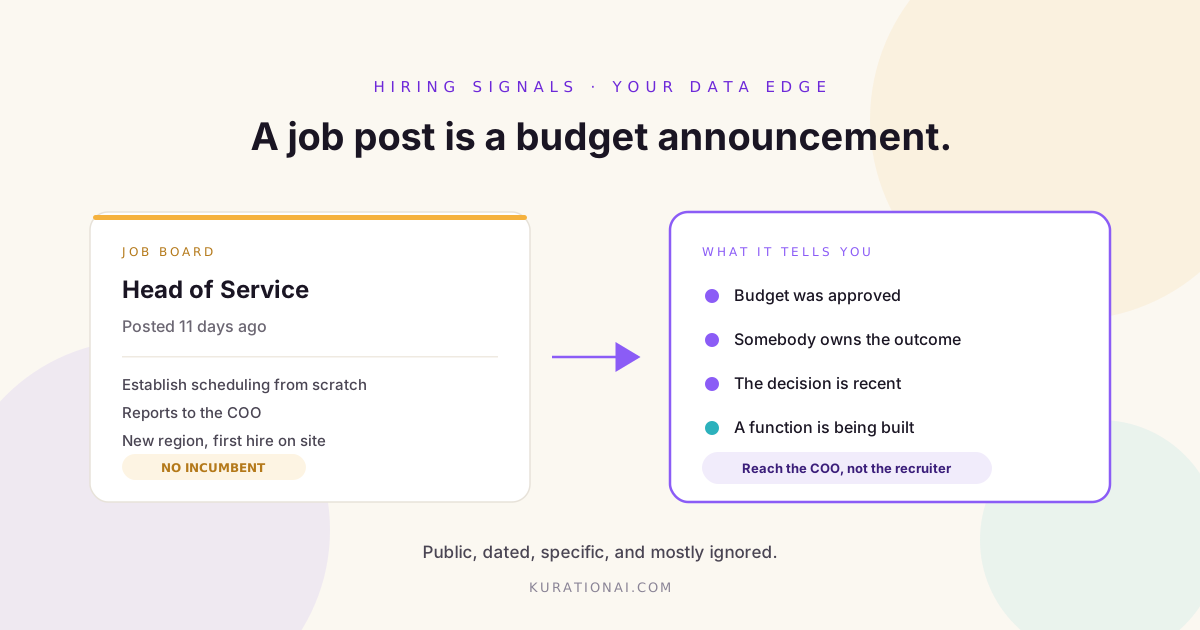
A Job Post Is a Budget Announcement
Hiring is expensive and slow, so companies rarely do it casually. A published role means somebody built a case, somebody approved the cost, and somebody now owns the outcome that role is meant to deliver.
That is three pieces of information most prospecting sources cannot give you. A database can tell you a company has two hundred employees. A job post can tell you that the company decided last week that two hundred was not enough, in a specific function, for a specific reason it has written down for you.
The role also implies its supporting costs. A first data analyst implies somewhere for the data to live. A first field service engineer implies scheduling, parts and vehicles. Companies rarely hire a function and then leave that function without tools.
What Hiring Tells You That a Database Cannot
Standard company databases describe a steady state. They are accurate about what a company is and quiet about what it is doing. Hiring activity fills in the second half.
- Direction, because the functions a company staffs show where it is investing
- Timing, because a role posted this month is a decision made this quarter
- Ownership, because the reporting line in the description names the person accountable
- Scale, because the number and seniority of open roles show how serious the commitment is
- Geography, because a role in a new location often precedes any announcement about that market
Decide Which Roles Actually Matter to You
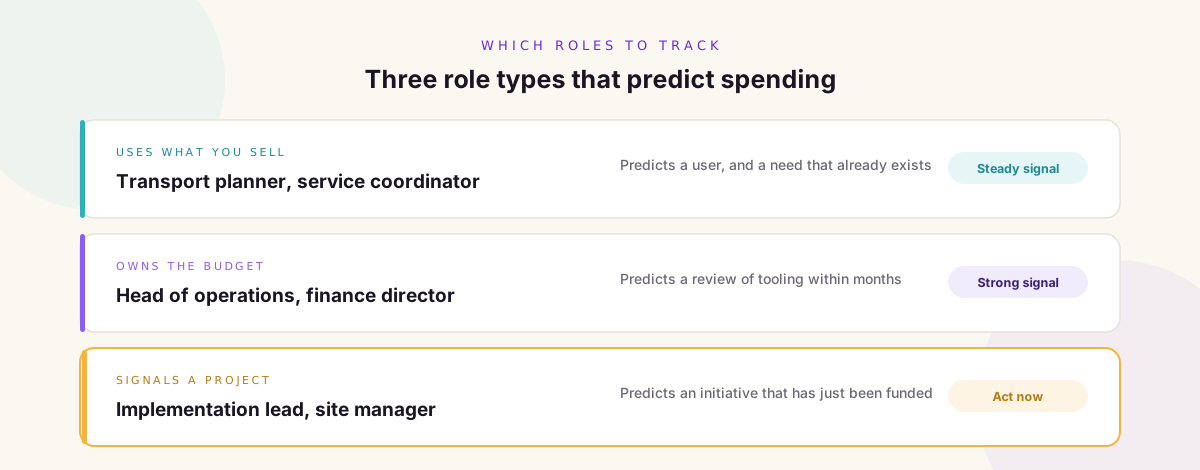
The mistake that ruins most hiring based prospecting is tracking too many roles. Every company is always hiring somebody. Relevance comes from choosing the small set of roles that genuinely predict demand for what you sell.
Roles that use what you sell
The most direct connection. If you sell logistics software, a transport planner or distribution manager is a person who will use it. When a company hires its first one, it has just acquired the need and the person to own it at the same time.
Roles that own the budget for it
A step above the user. A new head of operations, a first finance director, a head of revenue operations. These hires often arrive with a mandate to fix something, and new leaders review tooling early because reviewing tooling is a visible way to show progress.
Roles that signal a project starting
Roles that only exist when something specific is happening. An implementation manager, a compliance lead before an audit cycle, a market entry manager, a site manager for a facility that does not exist yet. These are the highest value roles to track because they are tied to an initiative rather than to steady growth.
Where to Look for Hiring Activity
Hiring data is spread across sources with very different coverage and reliability, so the source you choose shapes the list you end up with.
General job boards
Broad coverage and easy to search, which also means heavy duplication and a large share of agency listings. Good for volume, poor for precision without cleaning.
Company careers pages
The most reliable source available. If a role is on the company careers page it is real, current and owned by that company. The tradeoff is that you have to know which companies to check, so this works best as a verification step rather than a discovery step.
Niche and industry boards
Sector specific boards run by trade bodies and industry publications carry roles that never reach the large aggregators, especially in manufacturing, healthcare, construction and logistics. Lower volume, much higher signal.
Regional and local boards
For market entry work these are often the only place a role appears. A company opening in a new country frequently posts locally months before anything is announced in English.
What to Extract From Every Job Post
Decide your fields before you start collecting, because a scrape without a schema turns into a folder of text nobody can filter.
- Company name and the domain it belongs to
- Job title, and the function you have mapped it to
- Location, including whether it is a new location for that company
- Date posted, which becomes your freshness measure
- Seniority and the reporting line if the description states it
- Any tools, systems or certifications named in the requirements
- The source URL, so a person can verify the claim before outreach
That last field matters more than it looks. Nothing damages a conversation faster than referencing a role the company filled two months ago, and the only defence is a link somebody can check.
Clean the List Before You Trust It
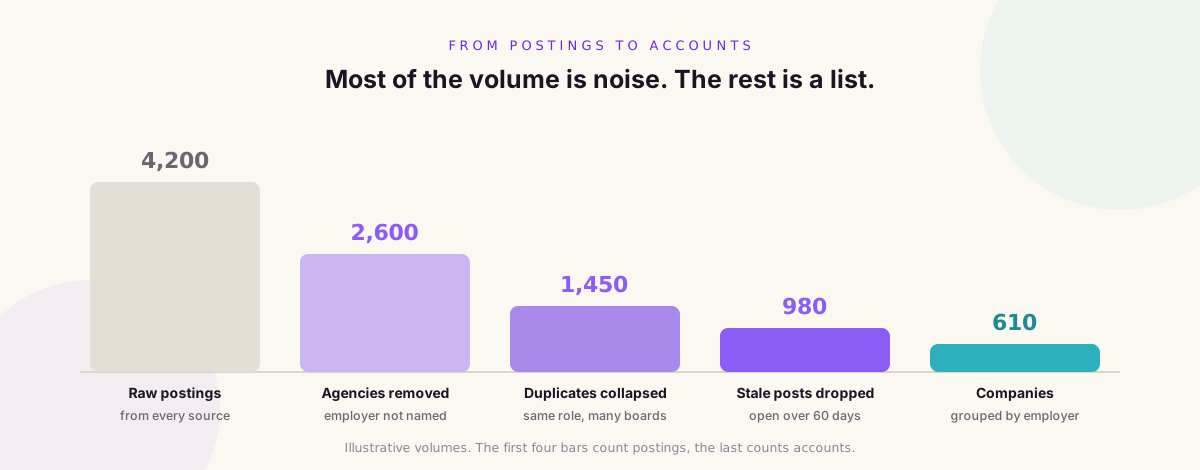
Raw job board data is dirty in predictable ways, which is good news, because predictable problems can be cleaned systematically.
Remove staffing agencies and job aggregators
A large share of listings are posted by recruiters on behalf of an unnamed client. These are worse than useless for prospecting, because the company attached to the post is not the company with the need.
Collapse duplicate posts
The same role commonly appears on several boards with slightly different titles. Deduplicate on company plus role plus location, otherwise one opening looks like an aggressive hiring spree.
Drop evergreen listings
Some companies keep roles permanently open to collect applications. A post that has been live for eight months carries no timing information at all and should not be scored as fresh.
Turn Postings Into Companies, Not Jobs
Your pipeline works on accounts, so the unit of your list has to be the company. Group every remaining post by employer and let the group carry the evidence.
A company with one open role is mildly interesting. A company with four open roles in the same function is building a team, and that is a different conversation with a different level of urgency. You only see the difference once the data is grouped.
Read the Job Description for Buying Clues
The body of a job description is the part almost everyone skips, and it is where the useful detail sits.
- Named tools in the requirements tell you the current stack, and what you would replace or sit beside
- Phrases about building or establishing a function mean nothing exists yet, which is the easiest kind of sale to justify
- A reporting line names the buyer, or at least the person who influences them
- Mentions of a new site, region, product or certification are separate signals hiding inside the first one
- Volume language such as scaling or growth targets hints at the size of the problem
A description that asks for somebody to establish a process from scratch is telling you there is no incumbent supplier. That is worth more than most paid intent data.
Score Companies by Hiring Urgency
Once the list is grouped and enriched, rank it. A simple weighting works better than a complicated model nobody maintains.
- How many relevant roles are open at once
- How senior those roles are, since seniority correlates with budget
- How recently they were posted, measured against a short expiry
- Whether the roles are new functions rather than replacements
- Whether any other signal, such as a new facility or a funding round, agrees with the hiring
Hiring is a short life signal, so recency should carry real weight. A role posted eleven days ago and a role posted eleven months ago are not the same fact, and a list that treats them the same will quietly rot.
Enrich the Company Before You Reach Out
A job post gives you a company and a reason. It rarely gives you a person you can contact, and it never gives you the firmographics you need to qualify.
Resolve the domain, add size, industry and location, then find the decision maker for the function that is hiring. Frequently the most useful contact is not the recruiter but the person the new hire would report to, because that is the person who identified the gap in the first place.
Write the Outreach Around the Role, Not the Job Post
There is a tone problem to avoid here. Opening with a line about noticing a specific job advertisement reads like monitoring, and it makes the reader wonder what else you are watching.
Write about the situation instead of the surveillance. Companies building a distribution function for the first time hit the same three problems, and you can open on those problems without reciting the posting back to somebody who wrote it. The signal decides who you contact and what you talk about. It does not need to be the first sentence.
Keep It Running on a Cadence
Hiring signals decay quickly, so a list built once is a list that expires. Re run the search on a weekly or fortnightly cycle, keep the date each company entered the list, and let companies age out automatically when their roles close or go stale.
The compounding benefit is that after a few months you are no longer looking at a snapshot. You can see which companies hire continuously, which ones started suddenly, and which functions across your market are growing fastest.
A Worked Example
Suppose you sell field service management software to companies with engineers working on customer sites.
You track three role types: field service engineer, service coordinator and head of service. You pull them from two general boards, one trade association board and the careers pages of companies you already know. You remove agency listings, deduplicate by company and role, and drop anything posted more than sixty days ago.
What remains is a few hundred companies. You group by employer, and one company stands out with a head of service and two coordinator roles posted inside three weeks, in a region where it had no presence last year. The description says the successful candidate will establish scheduling processes for a growing engineer base.
That is a company building a service function from nothing, with a named leader arriving to own it, in a new territory. It goes to the top of the list, and the outreach is about standing up scheduling for a growing team rather than about the advertisement itself.
Common Mistakes
- Tracking every open role instead of the few that predict demand for your product
- Leaving staffing agency listings in the data, which attributes the need to the wrong company
- Counting duplicate posts across boards as separate hiring activity
- Ignoring the post date, so long expired roles keep ranking as fresh signals
- Contacting the recruiter rather than the manager who owns the function
- Quoting the job advertisement in the first line of the email, which reads as monitoring
How Kuration AI Helps
Kuration AI collects hiring activity across job boards, careers pages and industry sources, resolves each posting to a real company and domain, removes agency listings and duplicates, and groups everything by employer so you are working with accounts rather than adverts.
From there it enriches each company with firmographics and verified decision maker contacts, and combines hiring with other public signals such as new facilities, registrations, certifications and event participation. The output is a scored list of companies with a reason and a date attached to every one.
Frequently Asked Questions
How do I find companies hiring for a specific role?
Search job boards and company careers pages for the job titles that map to your product, then clean the results by removing staffing agencies, collapsing duplicates and dropping stale listings. Group what remains by employer so you are looking at companies rather than individual postings.
Is hiring a reliable buying signal?
It is one of the more reliable public signals, because hiring requires approved budget and creates an owner for the outcome. It is strongest when several relevant roles appear at once, or when the role is a new function rather than a replacement.
How recent does a job post need to be?
Hiring is a short life signal. Roles posted in the last thirty to sixty days carry the most timing value, and anything older should be treated as background information rather than a reason to reach out this week.
Should I contact the recruiter named in the job post?
Usually not. The recruiter owns filling the role, not the budget or the problem behind it. The better contact is the manager the role reports to, since that person identified the gap and will own the tooling decision.
How do I filter out recruitment agency listings?
Check whether the posting company is a staffing firm, whether the same account posts across many unrelated industries, and whether the employer is named at all. Listings that hide the employer cannot be attributed to a real account and should be removed.
Can this be automated?
Yes. Collection, deduplication, company resolution, enrichment and scoring can all run automatically on a cadence. The judgement worth keeping human is which roles to track in the first place, because that choice determines whether the whole list is relevant.
Hiring Is the Cheapest Signal Most Teams Ignore
Job posts are public, dated, specific and free. They name a function, imply a budget, point at an owner and arrive at the moment a company decides something needs to change. Very little else in prospecting offers that combination.
The reason hiring stays underused is not that it is secret. It is that the data is messy, scattered and tedious to clean, which is exactly why it is still an advantage for the teams willing to do the work properly.
Turn Hiring Activity Into a Ranked Account List
Kuration AI finds companies hiring for the roles that matter to you, strips out agency listings and duplicates, groups postings into accounts, and enriches each one with firmographics and verified contacts. Combine hiring with facilities, registrations, certifications and event data to build a prospect database where every company has a reason and a date attached.