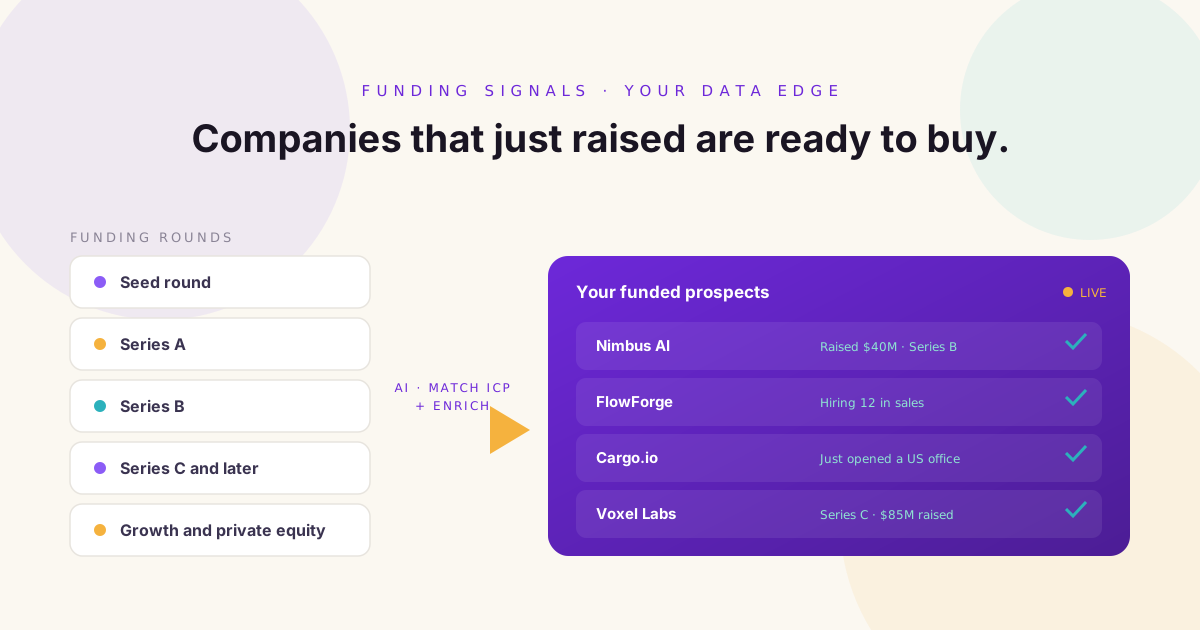
If you have ever worked in B2B sales, you have probably heard the advice: target companies that recently raised funding. It is not bad advice. In fact, it is one of the strongest buying signals available.
The problem is that most teams stop there. They download a generic list of funded companies, send the same outreach as everyone else, and wonder why response rates are low. The issue is not the strategy. It is the execution.
Funding announcements are only valuable if you know what happens after the investment, and how to identify the companies most likely to become customers. The best outbound teams do not just track funding rounds. They use funding as the starting point for a smarter, more targeted prospect database.
Why Funding Is Such a Powerful Buying Signal
When investors put millions into a business, they expect growth. That growth usually requires investment in people, technology, operations, and infrastructure. Depending on the company, newly raised capital may be used to:
- Hire new employees
- Enter international markets
- Open regional offices
- Launch new products
- Expand manufacturing capacity
- Improve customer support
- Invest in marketing
- Upgrade internal systems
- Acquire other businesses
All of these changes create opportunities for vendors. If your solution helps companies grow, funding should immediately move a prospect higher up your priority list.
Not Every Funding Round Creates the Same Opportunity
A common mistake is treating every funding announcement equally. A small seed investment and a large late stage round usually indicate very different business priorities. Understanding funding stages helps you tailor your outreach.
Seed Funding
Early stage companies are validating their products and building their first teams. Typical priorities include accounting software, CRM platforms, HR tools, recruitment, marketing agencies, and legal services. Budgets are often limited, so value and speed matter.
Series A
Companies begin to scale. You will often see investment in sales technology, marketing automation, customer success, cloud infrastructure, and data platforms. These businesses are building repeatable processes.
Series B and Beyond
Growth accelerates. Businesses may expand internationally, build larger sales teams, invest in enterprise software, or acquire competitors. This stage often creates opportunities for ERP systems, cybersecurity, compliance, logistics, procurement, analytics, and enterprise consulting. Knowing the funding stage helps you understand what problems the business is likely trying to solve.
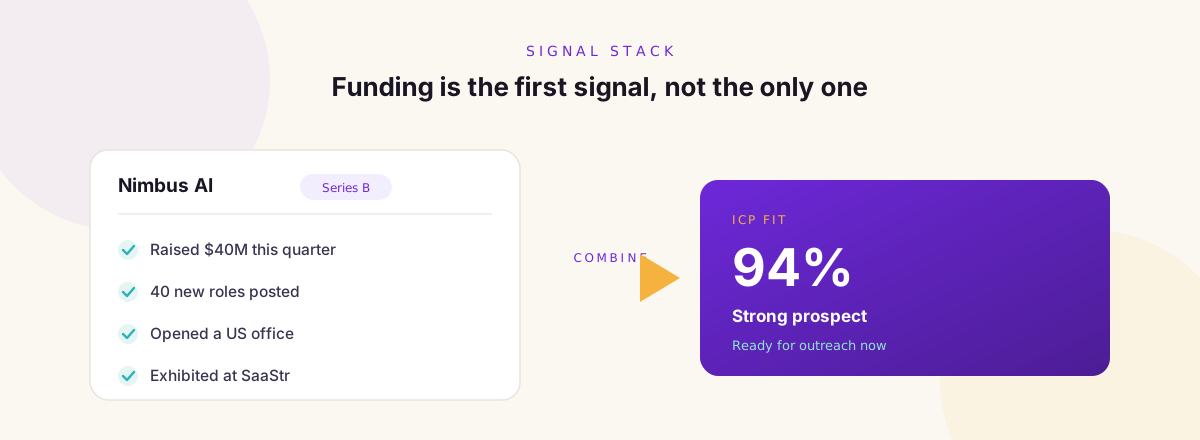
Funding Is Just the First Signal
The funding announcement itself does not tell the whole story. The strongest opportunities appear when funding is combined with additional business signals. A software company that raised a large round, posted forty new job openings, opened a US office, and exhibited at a major conference is a far stronger prospect than a company that simply announced funding six months ago. The more signals you identify, the more confident you can be that the business is actively investing.
Where to Find Newly Funded Companies
Many revenue teams rely on commercial databases alone. That works, but it also means every competitor is seeing the same information. To build a stronger prospect database, combine multiple sources:
- Venture capital announcements
- Startup accelerator portfolios
- Company press releases
- Investor websites
- Business news publications
- Government business registries
- Company careers pages
- Industry newsletters
- Trade show exhibitor lists
Each source provides additional context beyond the funding announcement itself.
Build a Prospect Database Around Growth
Rather than collecting every funded company, focus on businesses that match your Ideal Customer Profile. Suppose you sell cybersecurity software. Your database might prioritise companies that have:
- Raised Series A or Series B funding
- More than 50 employees
- Open cybersecurity job openings
- Expanded internationally
- Recently migrated to cloud infrastructure
That is a far more valuable prospect list than a list of all funded companies.
Enrich Every Company Before Outreach
Raw funding data is not enough. Before launching campaigns, enrich each company with decision makers, verified business email addresses, LinkedIn profiles, employee growth, revenue estimates, technology stack, office locations, and industry classifications. This gives your team meaningful context before the first conversation.
Timing Matters More Than Volume
Many businesses contact funded companies weeks, or even months, after the announcement. By then, inboxes are already full. The goal is not simply to know who raised funding. It is to know when to reach out. Combining funding announcements with live business signals helps identify the best timing. Instead of writing:
Congratulations on your funding.
You might write:
Congratulations on your recent Series A. I also noticed you have opened roles across Germany and the Netherlands. Many companies at this stage begin reviewing their customer support infrastructure as they expand internationally.
That demonstrates genuine research. More importantly, it connects your outreach to the prospect's current priorities.
How AI Makes Funding Prospecting Smarter
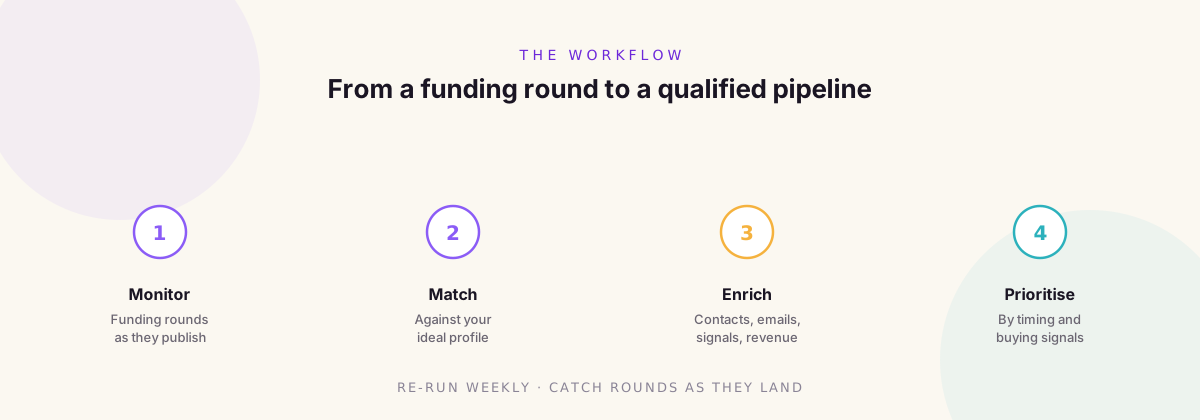
Tracking funding manually can become overwhelming. Every week brings hundreds of announcements across different industries and regions. Modern AI can simplify the process by:
- Monitoring funding announcements
- Identifying companies that match your ICP
- Detecting hiring activity
- Tracking expansion signals
- Enriching company records
- Identifying decision makers
- Removing duplicate companies
- Continuously updating prospect databases
Instead of spending hours researching, teams receive a curated list of companies already showing multiple buying signals.
A Practical Example
Imagine you sell HR software. Rather than emailing every technology company, you identify businesses that have raised a significant round, increased headcount by thirty percent in six months, opened offices in two new countries, and advertised multiple recruiter positions. Those companies are likely investing heavily in hiring and workforce management. Your outreach becomes relevant because it addresses a real business challenge, not a generic sales pitch.
Common Mistakes to Avoid
Targeting Every Funded Company
Funding alone does not mean a company is a good fit. Always compare opportunities against your Ideal Customer Profile.
Ignoring Growth Signals
The funding announcement is just the beginning. Look for hiring, expansion, partnerships, certifications, and operational changes.
Waiting Too Long
The sooner you identify qualified opportunities, the easier it is to stand out before competitors begin reaching out.
Skipping Data Enrichment
A funding list without decision makers or company intelligence is difficult to use effectively. Always enrich your database before launching campaigns.
Why Proprietary Data Creates Better Opportunities
Most businesses purchase access to the same commercial funding lists. The highest performing revenue teams combine those lists with proprietary data from public sources, such as government registries, hiring platforms, trade shows, company websites, business directories, procurement portals, and certification databases. Together, these sources provide a much richer understanding of each prospect. Instead of seeing a funding announcement, you see the full picture of a company's growth journey.
Frequently Asked Questions
Why are recently funded companies good prospects?
Funding often enables businesses to hire, expand, launch products, and invest in new technology, making them more likely to evaluate new vendors.
Should every funded company be contacted?
No. Focus on companies that match your Ideal Customer Profile and show additional buying signals.
What other signals should I combine with funding?
Hiring activity, international expansion, trade show participation, government registrations, certifications, procurement activity, and technology changes all provide valuable context.
Can AI identify funded companies automatically?
Yes. Modern AI platforms can monitor funding announcements, enrich company records, identify decision makers, and continuously update prospect databases based on your ICP.
How does Kuration AI help?
Kuration AI helps revenue teams discover newly funded companies from multiple public and commercial sources, enrich them with company and contact data, and combine funding with additional business signals like hiring, expansion, trade show participation, and government records. The result is a custom prospect database built around real buying intent, not just static company information.
Final Thoughts
Funding is one of the clearest indicators that a business is preparing for change. But funding alone is not enough. The real opportunity comes from understanding what happens next. Companies that have just raised capital are hiring, entering new markets, launching products, and investing in technology. Those are the moments when meaningful conversations begin.
The future of outbound is not about downloading another funding list. It is about combining funding with real world business signals to identify the companies most likely to become customers. Better signals lead to better conversations, and better conversations build better pipeline.
Turn Funding Signals Into Qualified Pipeline
Kuration AI helps you build custom prospect databases by combining funding announcements with hiring data, government registries, trade shows, certifications, company websites, and hundreds of other public data sources. Instead of competing over the same static lead lists, discover businesses at the exact moment they are growing, and reach them with outreach that is timely, relevant, and backed by real business intelligence.