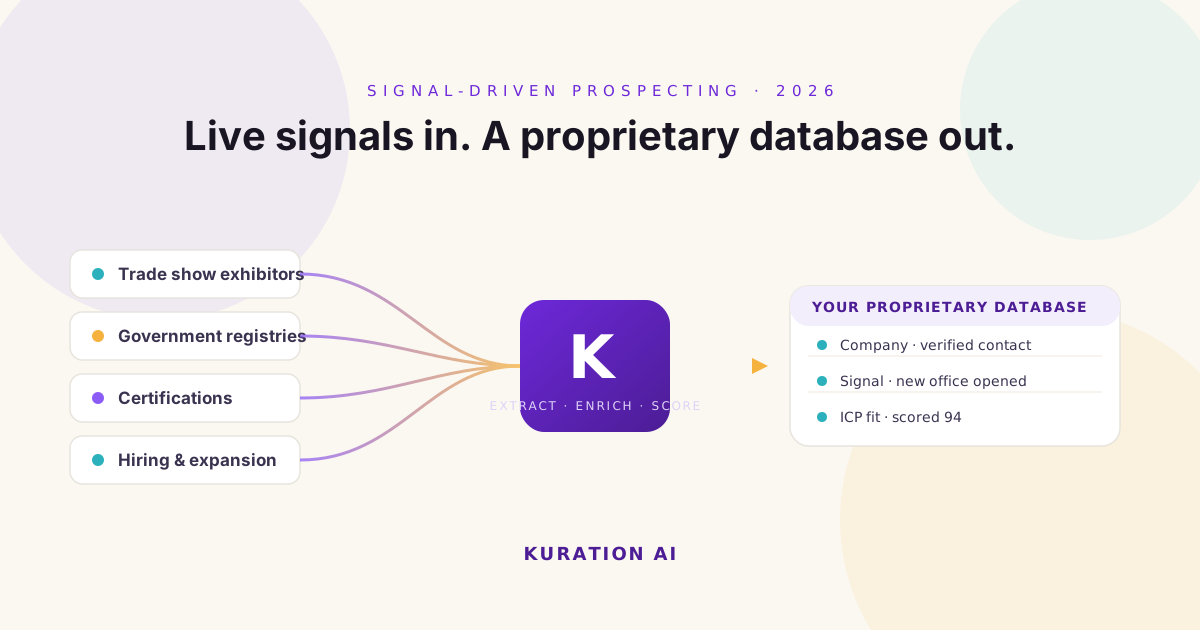
For years, outbound success depended on having access to the biggest database. Today, that advantage is disappearing. The next generation of revenue teams is building proprietary databases powered by live signals, giving them access to prospects their competitors have not even discovered.
For years, outbound sales followed a familiar formula. Buy access to a database, apply a few filters, export thousands of contacts, launch a sequence, and repeat. That playbook helped thousands of businesses build predictable outbound pipelines.
But there is one problem. Everyone is using the exact same playbook. The same databases, the same filters, the same job titles, and the same outreach frameworks.
The result is something every sales team has experienced. Decision makers receive dozens of nearly identical emails every week. Everyone has access to contacts. Very few companies have access to unique opportunities. That is why outbound is entering a new era. Not one built around bigger databases, but one built around proprietary databases powered by live business signals.
The Database Arms Race Is Over
For years, software companies competed by advertising the size of their database. Twenty million contacts. One hundred million contacts. Five hundred million contacts. The assumption was simple. More contacts meant better prospecting.
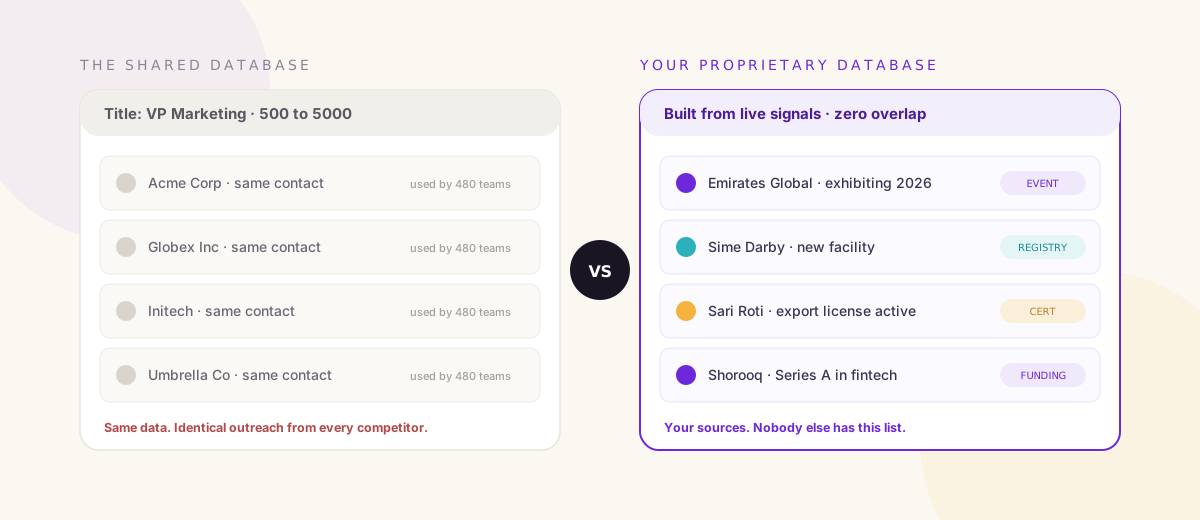
But size stopped being a competitive advantage the moment everyone bought access to the same datasets. If five hundred companies can purchase the exact same information, then the database itself is no longer creating differentiation. It has become infrastructure. The real advantage now comes from building a database that only your business has.
Why Shared Data Creates Shared Problems
Shared databases are not inherently bad. In fact, they are incredibly useful. They help sales teams move quickly, they reduce research time, and they simplify prospecting. The challenge is that they also create shared competition. Imagine every SDR searching for the same thing:
- Manufacturing companies
- 200 to 500 employees
- United Kingdom
- Operations Director
Those searches often produce nearly identical prospect lists. Eventually, everyone is emailing the same people. Reply rates fall. Inboxes become saturated. Sales teams assume they need to send more emails. In reality, they often need better data.
The Shift from Contacts to Context
One of the biggest changes in modern outbound is the move away from static company profiles toward business context. A company profile tells you the industry, location, employee count, and revenue. Useful information. But context tells you something much more valuable. It tells you what is happening right now.
- Are they exhibiting at a trade show?
- Have they opened a new office?
- Did they recently receive a certification?
- Are they expanding internationally?
- Have they announced a major project?
- Are they actively hiring?
- Have they entered a new market?
Those signals reveal timing. And timing often determines whether outreach succeeds or fails.
What Are Live Business Signals?
Live signals are indicators that something meaningful is happening inside a company. Instead of relying only on static information, sales teams can monitor activities such as event participation, government registrations, procurement activity, certifications, and geographic expansion.
Event participation
Companies exhibiting at trade shows are actively investing in growth. That creates opportunities for software vendors, logistics providers, marketing agencies, manufacturers, and service providers.
Government registrations
New registrations can indicate business expansion, facility openings, or operational changes. These are often early buying signals.
Procurement activity
Government tenders and procurement portals reveal organisations actively sourcing suppliers. For many industries, that is one of the strongest intent signals available.
Certifications
Receiving certifications often signals operational maturity, export readiness, regulatory compliance, and investment in quality. For businesses selling specialised products or services, certification data can become an incredibly effective prospecting filter.
Geographic expansion
Opening a new office. Launching in a new country. Expanding into a new region. These are all moments when companies often evaluate new vendors.
Why Generic Prospecting Is Becoming Less Effective
Modern outbound has become incredibly efficient. Almost too efficient. Automation allows businesses to contact thousands of prospects every day. The problem is that most of those prospects came from the same sources. That creates crowded inboxes, lower reply rates, declining engagement, and weaker personalization. The issue is not automation. The issue is that automation is often applied to shared data. Unique outreach starts with unique data.
Building a Proprietary Prospect Database
This does not mean abandoning traditional databases. They still have an important role. Instead, leading revenue teams combine them with proprietary data. Think of it as adding a competitive layer. Instead of relying only on commercial datasets, they also build prospect databases using sources such as:
- Industry associations
- Trade shows
- Government registries
- Supplier directories
- Certification databases
- Google Maps
- Procurement portals
- Conference speakers
- Exhibitor lists
- Regional business directories
The result is a database tailored to their business rather than everyone else's.
Why AI Is Changing Everything
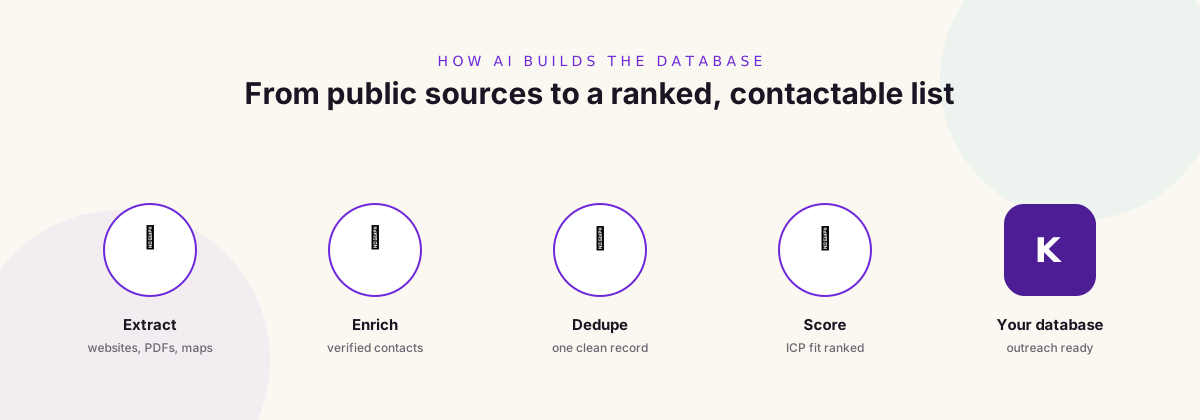
Ten years ago, building a proprietary database required researchers, spreadsheets, interns, manual copy and paste, and weeks of work. Today, AI dramatically changes that process. Modern AI can extract structured information from websites, identify companies inside PDFs, monitor business changes, enrich missing contact data, classify companies automatically, remove duplicates, and score ICP fit. Instead of spending weeks researching, teams can spend more time selling.
A Practical Example
Imagine two cybersecurity companies. Company A buys a list of 10,000 manufacturing companies. Everyone else has access to that same list.
Company B builds a database of manufacturers that exhibited at industrial automation events, opened new production facilities, hired cybersecurity engineers, and received ISO certifications within the last 12 months.
Which company is likely to have better conversations? The second list is smaller, but it is significantly more relevant. That is the power of proprietary data.
Better Data Creates Better Outreach
When your data improves, everything downstream improves too. Better prospecting leads to better personalization, higher response rates, shorter research time, more relevant conversations, and stronger conversion rates.
Instead of writing, “I came across your company,” you can write, “I noticed your team is exhibiting at Hannover Messe next month,” or “Congratulations on expanding into Singapore.” That context immediately makes outreach more relevant.
The Competitive Advantage Is Not AI
There is a common belief that AI itself is becoming the competitive advantage. It is not. AI is becoming accessible to everyone. The real advantage comes from what AI enables. It enables companies to build proprietary data assets faster than ever before. Technology becomes the tool. The data becomes the moat.
What This Means for Revenue Teams
The best performing sales organisations over the next few years will not necessarily have the largest SDR teams, the biggest email volume, or the most automation. They will have the strongest market intelligence. They will understand who is growing, who is investing, who is expanding, and who is entering new markets. And they will build prospect databases around those signals.
Frequently Asked Questions
Are traditional databases becoming obsolete?
No. They are still valuable for broad prospecting. However, relying on shared databases alone is becoming less effective as competition increases.
What is a proprietary prospect database?
It is a custom database built specifically around your business, your ideal customer profile, and your preferred data sources. Rather than renting access to the same information as everyone else, you create a competitive advantage through unique data.
What are examples of live business signals?
Examples include event participation, hiring activity, certifications, permits, procurement, business expansion, funding announcements, and regional growth.
Can AI build proprietary databases automatically?
AI can dramatically accelerate the process by extracting, structuring, enriching, and maintaining data from multiple public sources. Human oversight is still important, but AI removes much of the manual work.
Why does this matter for outbound?
Because better data leads to better targeting. Better targeting leads to more relevant conversations. And more relevant conversations generate stronger pipeline.
Final Thoughts
Outbound is not becoming harder because cold email stopped working. It is becoming harder because everyone has access to the same information. The next generation of revenue teams will stand out by building proprietary databases powered by live signals instead of relying solely on shared contact lists.
That shift does not replace traditional databases. It strengthens them. Because the future of prospecting is not about collecting more contacts. It is about discovering better opportunities.
Build Your Own Data Edge
The best opportunities are not always sitting inside a commercial database. Kuration AI helps revenue teams discover companies from trade shows, government registries, Google Maps, certification databases, supplier directories, procurement portals, PDFs, and regional business ecosystems. Then enrich, score, and organize them into a custom prospect database built specifically for your business. Stop competing for the same contacts. Start building a database your competitors cannot replicate.