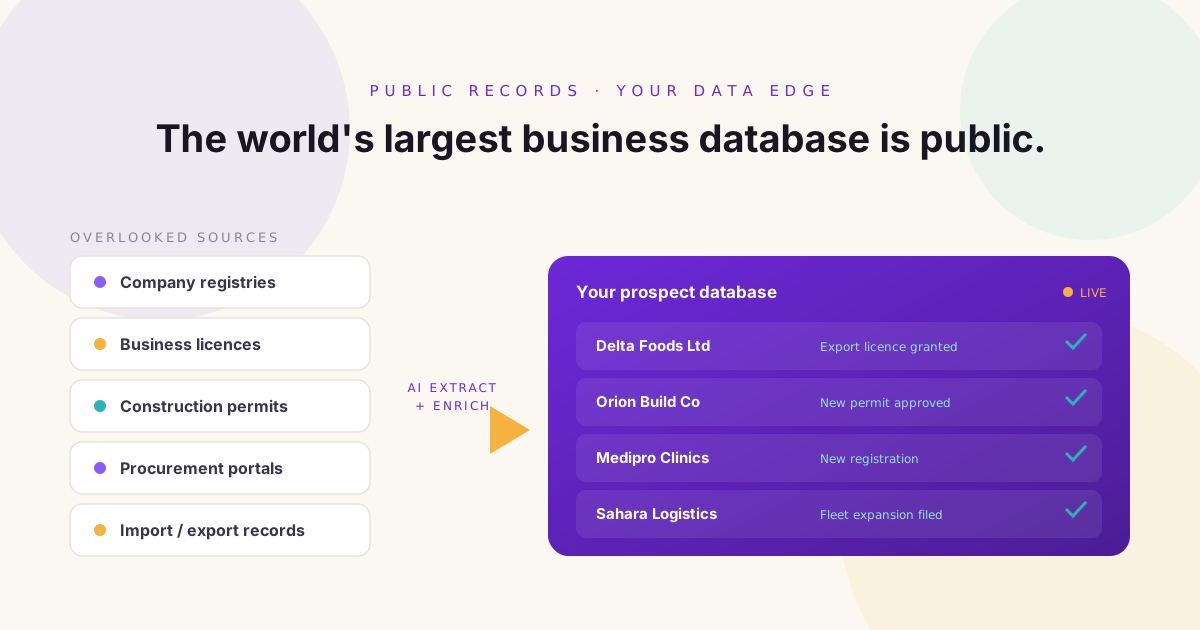
Most sales teams rely on the same commercial databases to find prospects. But some of the highest quality opportunities are hiding in public records, government registries, licensing databases, and procurement portals. Here is how modern revenue teams use AI to transform public data into a competitive advantage.
Ask ten outbound sales teams where they get their leads, and you will probably hear the same answers. Apollo. ZoomInfo. LinkedIn Sales Navigator. Maybe a few niche databases depending on the industry.
These platforms have become the foundation of modern prospecting, and for good reason. They are fast, familiar, and easy to use. But they are also shared. Your competitors have access to the same companies, the same contacts, and often the same filters. That means you are not just competing with your own outreach. You are competing with everyone else using the same datasets.
The highest performing sales teams are starting to think differently. Instead of asking, “Which database should we buy?” they are asking, “Where can we find companies our competitors have not discovered yet?” One of the best answers is surprisingly simple. Government registries and public records.
The World's Largest Business Database Isn't Owned by a Sales Platform
Every day, governments around the world publish enormous amounts of business information.
- New companies are registered
- Business licences are issued
- Construction permits are approved
- Importers and exporters are recorded
- Professional certifications are granted
- Public contracts are awarded
- Environmental permits are updated
- Healthcare providers receive new registrations
- Financial institutions publish regulatory filings
Most of this information is public. Very little of it ever makes its way into a traditional sales database. That is exactly what makes it valuable.
Why Public Records Matter for Prospecting
Government data is not marketing data. It exists because businesses have legal or regulatory obligations. That means it is often:
- more accurate
- more current
- verified
- difficult to fake
- highly structured
More importantly, it contains signals that many commercial databases simply do not track. For example, a company applying for a construction permit may be preparing to expand. A food manufacturer obtaining an export licence may be entering international markets. A logistics company registering additional vehicles could be growing its operations. A healthcare provider opening a new clinic may need new software, equipment, or suppliers.
These are not just company records. They are business events. And business events create buying opportunities.
Types of Government Data Worth Prospecting
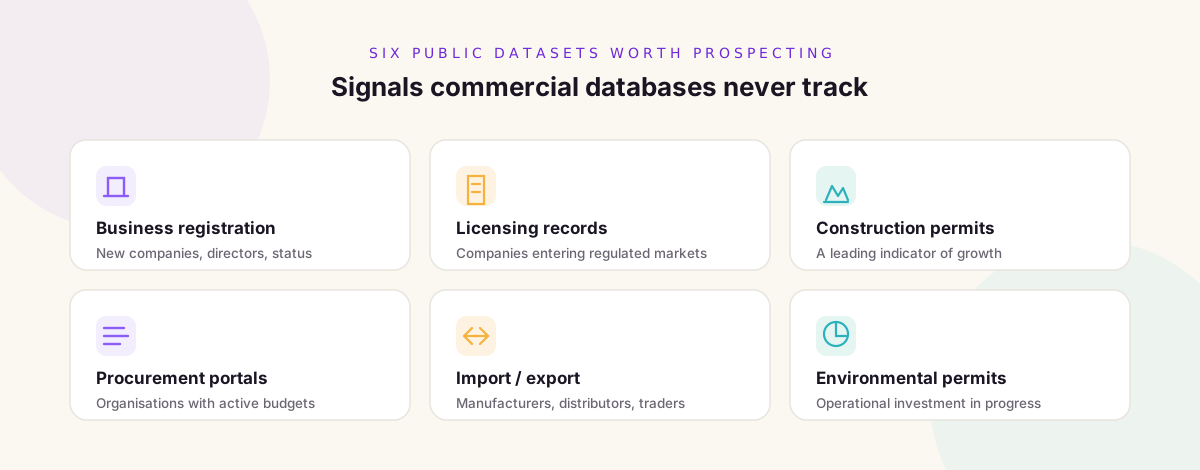
Not every registry is useful for outbound. The goal is to identify datasets that reveal business activity. Some of the most valuable include the following.
Business Registration Databases
Almost every country maintains an official registry of incorporated businesses. These databases often include company name, registration number, legal status, incorporation date, registered address, directors, and industry classification. Newly registered businesses can be excellent prospects for accounting firms, legal services, insurance providers, HR platforms, and financial software.
Business Licensing Records
Many industries require operating licences, including healthcare, food manufacturing, transportation, education, construction, and financial services. Licence data often reveals companies entering regulated markets. That timing can be incredibly valuable for sales teams.
Construction Permits
Construction permits are one of the strongest indicators of growth. Businesses investing in new factories, warehouses, retail stores, offices, hotels, or industrial facilities are often purchasing additional technology, equipment, security systems, logistics services, and operational software. Rather than targeting every construction company, you can focus specifically on organisations actively building something new.
Procurement Portals
Government procurement websites publish thousands of opportunities every year. These platforms identify organisations purchasing software, equipment, consulting, maintenance services, infrastructure, and healthcare solutions. Even if you do not bid directly, procurement activity often highlights organisations with active budgets and purchasing initiatives.
Import and Export Records
International trade databases provide valuable insights into companies moving products across borders. These records can reveal manufacturers, distributors, exporters, wholesalers, and logistics companies. For businesses selling supply chain, freight, customs, or trade related services, this data is particularly valuable.
Environmental and Compliance Records
Companies applying for environmental permits, emissions approvals, or compliance certifications are often investing in operational improvements. These records can help identify prospects in manufacturing, energy, mining, chemicals, and construction.
Why Traditional Databases Miss This Information
Commercial databases are designed to serve broad audiences. That means they focus on common data points like employee count, industry, company size, website, and contact information. Those fields are useful. But they rarely explain what the business is doing today.
Government records provide that missing context. Instead of simply knowing a company exists, you learn that it is expanding, hiring, investing, exporting, opening facilities, winning contracts, or entering regulated markets. That is a much stronger foundation for outbound.
Turning Public Records Into a Prospect Database
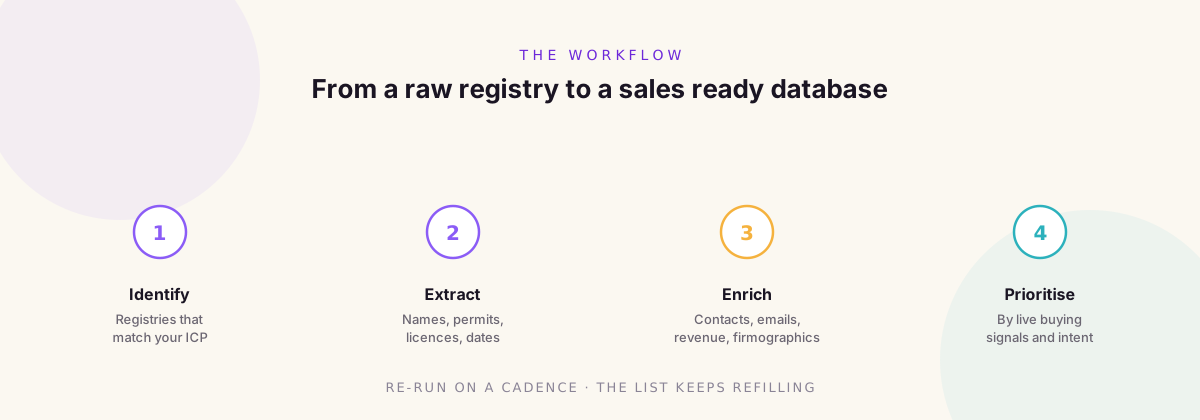
Finding public records is only the first step. The real value comes from organising and enriching them. A modern workflow looks something like this.
Step 1: Identify Relevant Registries
Start with registries that align with your ICP. For example, food safety databases, construction permit systems, company registries, healthcare licensing portals, procurement websites, and import or export databases. Focus on quality rather than quantity.
Step 2: Extract Company Information
Collect information such as business names, registration IDs, websites, addresses, licence details, permit information, and approval dates. This becomes the foundation of your database.
Step 3: Enrich the Companies
Next, enrich each company with employee estimates, revenue ranges, decision makers, verified email addresses, LinkedIn profiles, technology stack, and firmographic information. Now you have a sales ready prospect list instead of a raw government dataset.
Step 4: Prioritise Based on Intent
Not every business deserves immediate outreach. Prioritise companies showing strong buying signals, such as newly licensed businesses, recent permit approvals, active procurement opportunities, expansion projects, and regulatory filings. These companies are often in periods of change, making them more receptive to new solutions.
How AI Changes the Process
A few years ago, collecting public records meant hours of manual work. Sales teams copied company names into spreadsheets, searched for websites one by one, and spent days cleaning data. AI has transformed that process. Today, AI can:
- extract information from government websites
- process downloadable PDFs
- structure unformatted data
- identify duplicate companies
- enrich business records
- classify industries
- monitor registries for updates
Instead of building databases manually, teams can continuously generate fresh prospect lists with minimal effort.
A Practical Example
Imagine you sell industrial safety software. You could purchase a database of manufacturing companies and send the same message to all of them. Or you could identify manufacturers that have received permits to build new production facilities within the past six months.
Which list is more likely to generate meaningful conversations? The second one. Because those businesses are actively investing. Timing makes all the difference.
Common Mistakes to Avoid
Treating Every Registry the Same
Some registries are updated frequently, while others may only change once a year. Understand how often your data source is refreshed.
Ignoring International Markets
Many organisations focus only on US or UK data. Some of the best opportunities exist in emerging markets where public registries are rich but underused.
Prospecting Without Enrichment
Government records rarely include everything needed for outreach. Always enrich your data before launching campaigns.
Building Static Lists
Public records change constantly. Create workflows that monitor updates and continuously add new opportunities to your pipeline.
Why Proprietary Data Wins
Anyone can purchase access to a commercial database. Far fewer businesses invest in building proprietary datasets. That is where the advantage lies. When your prospect list comes from unique public sources, your outreach naturally becomes more relevant and less competitive. Instead of chasing the same contacts as everyone else, you are identifying businesses based on real world activity. That is a much stronger way to build pipeline.
Frequently Asked Questions
Are government registries public?
Many are. Availability varies by country, but business registries, licensing databases, procurement portals, and regulatory records are often publicly accessible.
Why use government records instead of traditional databases?
Government data provides unique business signals that many commercial databases do not capture, including licences, permits, registrations, and procurement activity.
Can AI extract data from public registries?
Yes. Modern AI can extract, organise, enrich, and monitor structured and semi structured public records from websites, PDFs, and online databases.
Which industries benefit most?
Businesses selling into construction, manufacturing, healthcare, logistics, food production, finance, education, and government related sectors often see the greatest value.
How does Kuration AI help?
Kuration AI helps teams discover companies from public registries, government websites, procurement portals, licensing databases, and other overlooked sources. It then enriches those records with company and contact data, turning raw public information into a sales ready prospect database.
Final Thoughts
The best prospecting opportunities are not always hidden behind expensive subscriptions. Sometimes they are sitting in plain sight. Government registries and public records contain a wealth of business intelligence that most sales teams overlook, not because the information is not valuable, but because it takes time to collect and organise.
With AI, that barrier is disappearing. Revenue teams can now transform public records into living prospect databases that surface growing companies, expansion projects, procurement activity, and new market entrants before competitors even know they are there.
The future of outbound is not about buying access to the biggest database. It is about building the smartest one.
Build Your Own Proprietary Prospect Database
Kuration AI helps you discover companies from government registries, procurement portals, licensing databases, public records, and hundreds of other data sources. Turn overlooked public information into enriched, searchable, sales ready prospect databases powered by AI. Find opportunities before they become everyone else's leads.