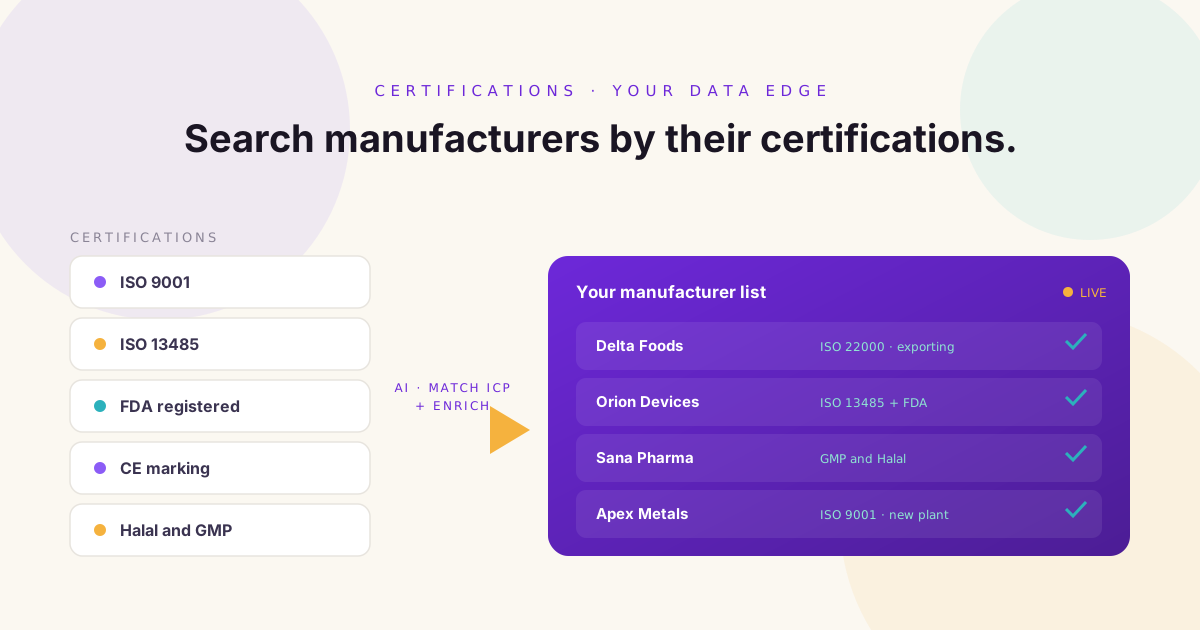
Finding manufacturers sounds simple. Search for food manufacturers or electronics manufacturers in your favourite sales database, apply a few filters, and start reaching out. Unfortunately, that is exactly what everyone else is doing. The same companies receive the same outreach from dozens of vendors every week.
If you want to stand out, you need a different way of finding prospects. One of the most overlooked approaches is searching by certification instead of industry. Why? Because certifications tell you much more than what a company makes. They reveal how a business operates, which markets it serves, what regulations it follows, and often where it is planning to grow.
Why Certifications Matter in B2B Prospecting
Certifications require time, investment, and commitment. Companies do not pursue them unless they have a business reason. A manufacturer that earns ISO 9001 certification has invested in quality management. A food producer with Halal certification is likely serving Muslim consumers or exporting into Islamic markets. A medical device manufacturer with FDA registration has entered one of the world's most regulated industries. Each certification provides valuable business context that helps you identify companies with specific operational needs and growth ambitions.
Certifications Reveal Business Intent
Think of certifications as business signals. They often indicate that a company is:
- Expanding into new markets
- Improving operational standards
- Preparing for export
- Selling into regulated industries
- Winning larger contracts
- Investing in compliance
- Scaling production
Those activities frequently lead to new purchasing decisions. Rather than targeting every manufacturer, you can focus on businesses that are actively evolving.
The Most Valuable Certifications for Prospecting
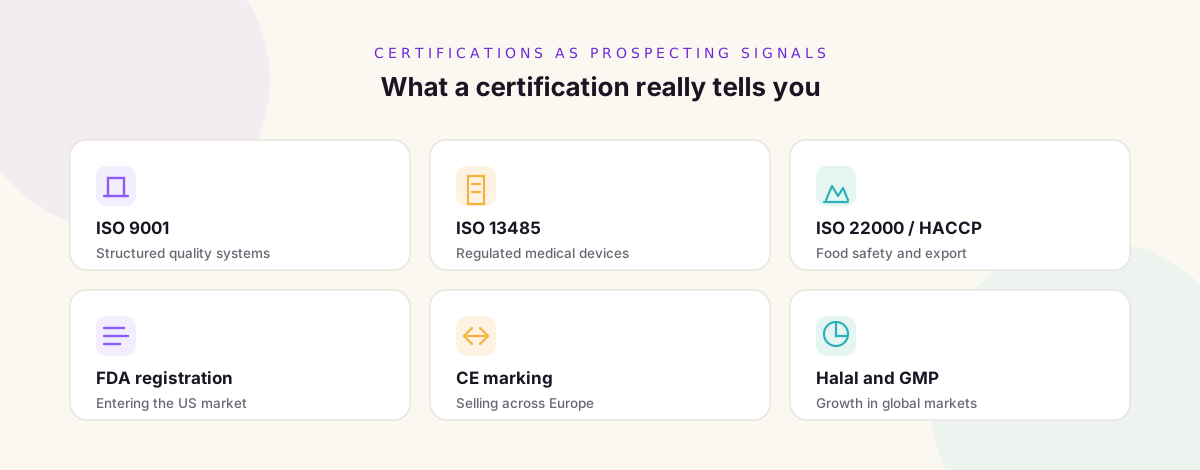
Different certifications reveal different opportunities. Here are some of the most useful for building targeted prospect databases.
ISO 9001, Quality Management
ISO 9001 is one of the most widely recognised quality certifications in the world. Businesses holding it often have structured operational processes and formal quality systems, across manufacturing, engineering, construction, logistics, and professional services. These organisations often invest in ERP software, document management, quality management platforms, automation tools, and operational consulting.
ISO 13485, Medical Devices
ISO 13485 applies to medical device manufacturers. Companies holding this certification typically require strict compliance and quality control, which creates opportunities for regulatory software, manufacturing systems, laboratory equipment, compliance consulting, and validation services.
ISO 22000 and HACCP, Food Safety
Food manufacturers frequently obtain ISO 22000 or HACCP certification to demonstrate food safety standards. These companies often require supply chain software, traceability systems, warehouse management, packaging solutions, and food safety consulting. They are also more likely to export products internationally.
FDA Registration
Manufacturers registered with the US Food and Drug Administration often operate in highly regulated sectors such as pharmaceuticals, medical devices, food production, and cosmetics. FDA registration can indicate international growth and entry into the US market.
CE Marking
Products carrying the CE mark meet European regulatory requirements. Manufacturers with CE certified products often export throughout Europe, work with distributors, attend international trade shows, and expand into new markets. These businesses frequently require logistics, compliance, marketing, and localisation support.
Halal Certification
Halal certification represents far more than food production. Today it applies to food, cosmetics, pharmaceuticals, personal care products, and nutraceuticals. Businesses obtaining Halal certification often expand into Southeast Asia, the GCC, and other fast growing global markets.
GMP Certification
Good Manufacturing Practice certification is common across the pharmaceutical, healthcare, food, and cosmetics industries. Companies with GMP certification often invest heavily in production technology, compliance systems, quality assurance, and digital manufacturing.
Organic Certifications
Organic certifications reveal businesses targeting premium consumer markets. These organisations frequently require export support, retail partnerships, supply chain software, marketing services, and sustainability reporting.
Why Certifications Create Better Prospect Lists
Imagine you sell manufacturing software. Option A is to search for every manufacturer with more than one hundred employees. Option B is to search for manufacturers that recently achieved ISO 9001 certification, export products internationally, operate multiple production facilities, and exhibit at industry trade shows. Which list is more likely to contain companies actively investing in operational improvements? The second one. Certification provides context that generic databases often miss.
Combine Certification Data with Other Buying Signals
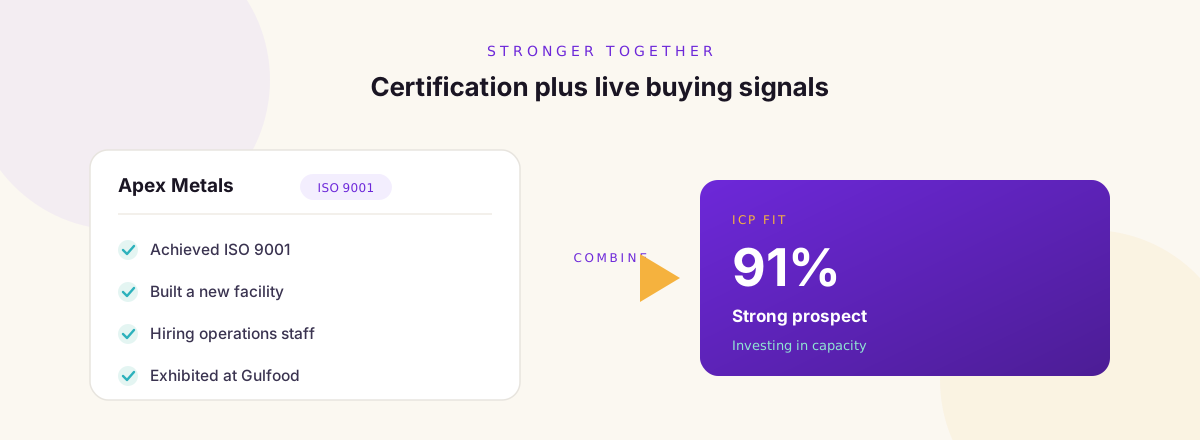
Certification alone is valuable. Combined with other signals, it becomes even more powerful. Look for manufacturers that also recently expanded facilities, opened new offices, increased hiring, raised funding, entered new countries, participated in international exhibitions, or added new distributors. Multiple signals create stronger confidence that a business is actively growing.
Where to Find Certification Data
Many organisations publish certification records publicly. Useful sources include certification bodies, government regulators, industry associations, standards organisations, public business registries, company websites, trade show exhibitor lists, and import and export databases. Each source contributes another piece of the prospecting puzzle.
Build a Certification Based Prospect Database
Instead of downloading generic manufacturing lists, build a custom database around your Ideal Customer Profile. A company selling industrial automation software might target manufacturers that hold ISO 9001 certification, employ more than two hundred and fifty people, export internationally, recently expanded production, and exhibit at automation trade shows. A business selling compliance software might prioritise FDA registered manufacturers, GMP certified facilities, pharmaceutical producers, and companies entering European markets. The same certification data can support completely different strategies depending on your product.
How AI Simplifies Certification Prospecting
Collecting certification data manually is time consuming. Teams often spend hours searching certification websites, reviewing company records, checking regulatory databases, cleaning spreadsheets, removing duplicates, and looking up decision makers. AI can automate much of this work. Modern AI platforms can:
- Extract certification records
- Match companies across multiple data sources
- Identify newly certified businesses
- Enrich company information
- Find decision makers
- Monitor updates over time
- Build continuously refreshed prospect databases
Instead of researching for days, teams can focus on engaging qualified prospects.
A Practical Example
Imagine you sell warehouse automation software. Rather than targeting every food manufacturer, you identify businesses that recently achieved ISO 22000 certification, export products internationally, built a new production facility, hired operations managers, and exhibited at a major food trade show. Those companies are likely investing in production capacity and operational efficiency. Your outreach becomes more timely, more relevant, and more likely to generate meaningful conversations.
Common Mistakes to Avoid
Treating All Manufacturers the Same
Manufacturing is an enormous sector. Certification helps narrow your focus to businesses with similar operational characteristics.
Ignoring Smaller Certification Bodies
Not every valuable certification comes from a global organisation. Regional certification programmes can reveal excellent niche opportunities.
Using Certification Data Without Enrichment
Certification records rarely include everything needed for outbound. Always enrich your data with decision makers, business email addresses, revenue estimates, employee counts, and technology information.
Building One Off Lists
New certifications are issued every week. Monitor updates continuously to keep your prospect database fresh.
Why Certification Data Creates a Competitive Advantage
Most outbound teams search by industry. Very few search by operational maturity. Certification allows you to identify companies that have already invested in improving their processes, meeting regulatory requirements, or expanding into new markets. Those businesses often have larger budgets, clearer operational goals, and a stronger need for specialist solutions. Instead of competing over the same manufacturing list as everyone else, you build a prospect database based on meaningful business characteristics. That is far more difficult for competitors to copy.
Frequently Asked Questions
Why should I prospect using certifications?
Certifications reveal important information about a company's operations, compliance standards, and growth strategy, making it easier to identify businesses that match your Ideal Customer Profile.
Which certifications are most useful?
Some of the most valuable include ISO 9001, ISO 13485, ISO 22000, HACCP, FDA registration, CE marking, GMP, Halal, and organic certifications. The right one depends on your target market.
Can AI collect certification data?
Yes. AI can extract publicly available certification information, combine it with other business data, enrich company records, and create searchable prospect databases.
Is certification better than filtering by industry?
Not necessarily. But combining industry, certification, and buying signals produces much stronger prospect lists than using industry filters alone.
How does Kuration AI help?
Kuration AI helps revenue teams discover certified manufacturers from public certification bodies, regulatory databases, government records, trade shows, company websites, and industry directories. It enriches that information with decision makers, company intelligence, and additional buying signals to create a custom prospect database tailored to your Ideal Customer Profile.
Final Thoughts
The best prospect databases are not built by applying the same filters everyone else uses. They are built by understanding what makes your ideal customers different. Certifications provide valuable insight into a company's quality standards, regulatory environment, export readiness, and growth ambitions. Combined with AI and additional business signals, they become a powerful way to identify manufacturers that are far more likely to need your products or services.
The future of prospecting is not about finding more manufacturers. It is about finding the right manufacturers.
Find Qualified Manufacturers with Kuration AI
Kuration AI helps revenue teams build custom prospect databases using certifications, government registries, trade show exhibitor lists, Google Maps, import and export records, supplier directories, and hundreds of other public data sources. Enrich every company with verified contacts, business intelligence, and live buying signals to create outreach campaigns that are more targeted, more relevant, and more effective.