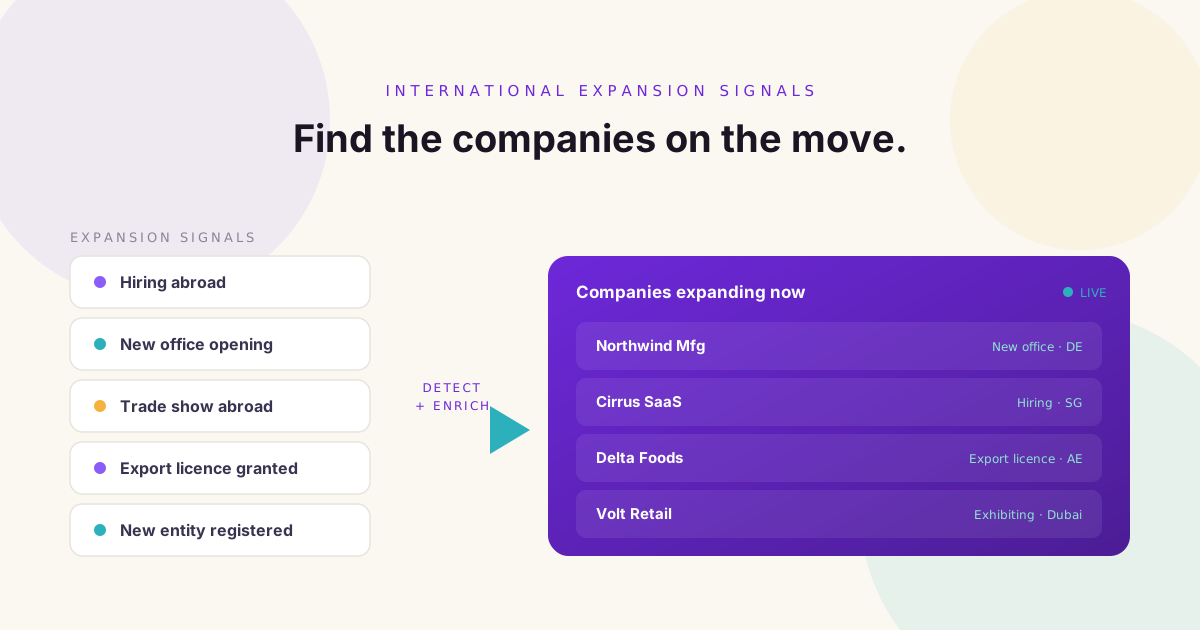
When companies expand into new countries, they often invest in new suppliers, software, logistics, compliance, and local partnerships. Learn how modern revenue teams identify international expansion before competitors do, and how to turn those signals into qualified pipeline.
Most outbound sales teams are looking for the same thing: companies that are ready to buy. The challenge is that very few businesses publicly announce, “We're actively looking for new vendors.” Instead, they leave clues.
A manufacturer opens a warehouse in Germany. A SaaS company starts hiring salespeople in Singapore. A food producer receives export certifications for the Middle East. A retailer exhibits at a trade show in Dubai for the first time.
Individually, these events may seem unrelated. Together, they tell a much bigger story. The company is expanding. And expansion is one of the strongest buying signals in B2B sales.
Organizations entering new markets often need new suppliers, new software, new partners, and new infrastructure. If you can identify those businesses before everyone else, you're no longer competing for stale leads, you're engaging companies at exactly the right moment. This is where modern prospecting is changing. Instead of relying only on shared contact databases, leading revenue teams are building custom prospect databases around real world business signals.
Why International Expansion Creates Buying Opportunities
Growth creates complexity. When a business enters a new country, it faces challenges it may never have encountered before. It might need:
- Local payroll providers
- HR software
- CRM platforms
- Cybersecurity solutions
- Legal advisors
- Logistics partners
- Marketing agencies
- Compliance software
- Translation services
- Payment providers
- Tax consultants
- Cloud infrastructure
The larger the expansion, the greater the operational demands. This makes expanding businesses some of the most valuable prospects for B2B companies.
Why Traditional Databases Miss Expansion Signals
Most commercial sales databases are excellent at telling you what a company is. For example: industry, employee count, revenue, headquarters, website, and contact information. Useful? Absolutely. But these databases rarely tell you what the company is doing today. They often miss signals like:
- Opening offices overseas
- Launching operations in new countries
- Hiring local teams
- Registering international entities
- Exhibiting at overseas trade shows
- Receiving export licenses
- Building regional distribution networks
These activities indicate momentum. And momentum often leads to purchasing decisions.
Seven Signals That Reveal International Expansion
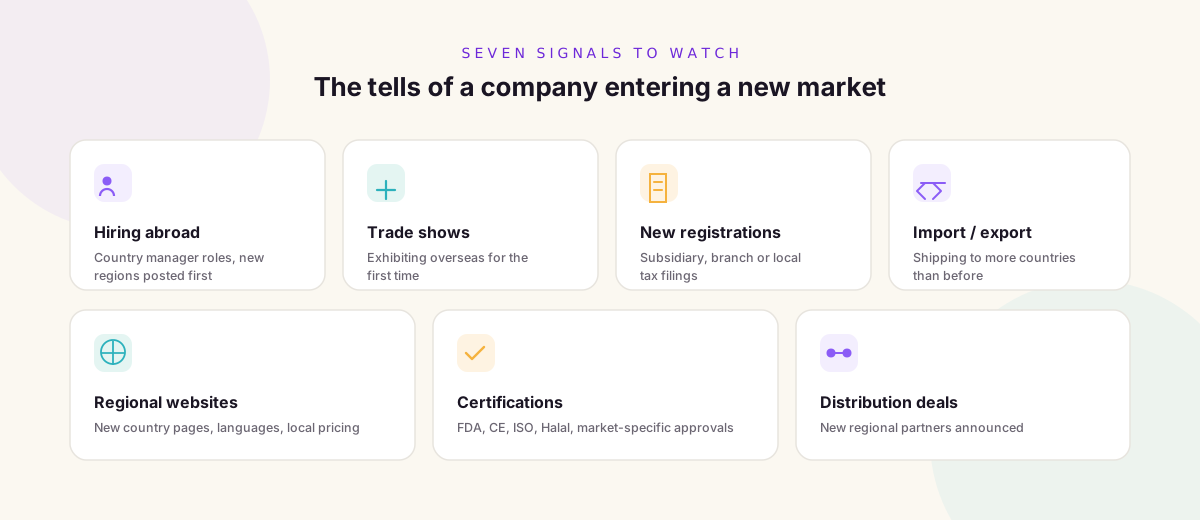
Rather than waiting for press releases, successful prospecting teams monitor business activity across multiple sources. Here are seven of the strongest indicators.
1. Hiring in new countries
Hiring data is one of the easiest expansion signals to identify. Suppose a software company based in London suddenly posts jobs for Country Manager in Germany, Sales Executive in Singapore, and Customer Success Manager in Australia. That tells you something important. The company is investing in those markets. Hiring often happens before official expansion announcements, making it an excellent early indicator.
2. Trade show participation
Trade shows are one of the clearest indicators of market expansion. Imagine a manufacturer from South Korea exhibiting for the first time at a major European industry event. They are unlikely to invest in an international exhibition unless they are actively pursuing customers in that region. Monitoring exhibitor lists can reveal companies expanding long before they appear in traditional databases.
3. New business registrations
Many countries require businesses to register before operating locally. Examples include subsidiary registrations, branch office registrations, local tax registrations, and corporate filings. These public records often reveal international expansion months before sales databases are updated.
4. Import and export activity
Trade data provides another valuable signal. A company exporting products to five countries instead of one is likely growing internationally. Businesses increasing imports or exports may require freight services, supply chain software, customs solutions, warehousing, and financial services. These records help identify companies with expanding global operations.
5. Regional websites
A surprising number of companies reveal expansion through their own websites. Watch for signs such as new country specific pages, additional language options, regional pricing, local offices, new contact numbers, and market specific product pages. These updates often appear before major announcements.
6. Certifications and regulatory approvals
Companies entering international markets frequently obtain new certifications. Examples include FDA approvals, CE marking, ISO certifications, Halal certification, organic certifications, and country specific regulatory approvals. Each certification can indicate entry into a new region or customer segment.
7. Distribution partnerships
Expanding businesses often announce new distributors or regional partners. These announcements provide valuable insight into geographic priorities, target industries, sales channels, and new markets. Partner announcements are often overlooked but can reveal excellent prospecting opportunities.
Building a Database Around Expansion Signals
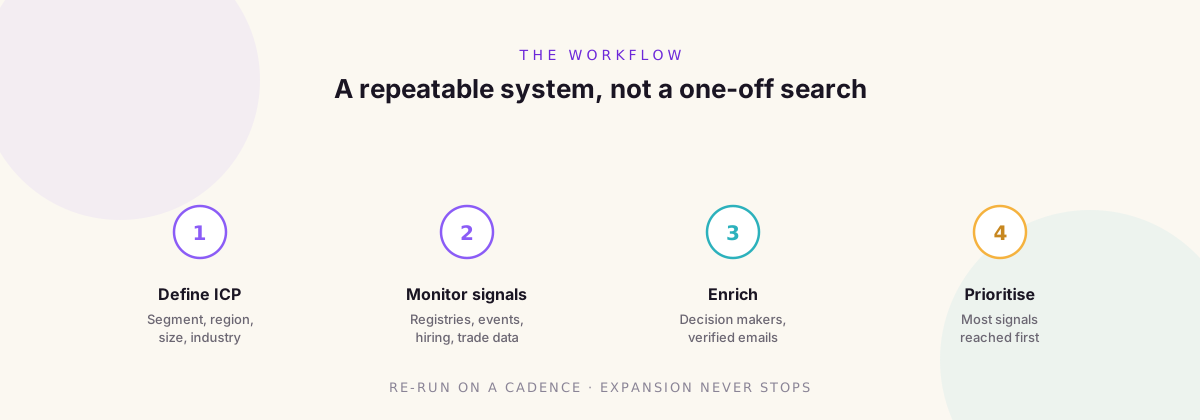
Finding one company is useful. Building a repeatable system is far more valuable. A modern workflow looks something like this.
Step 1: Define your ICP
Start with clear criteria. For example: manufacturers, healthcare providers, SaaS companies, logistics businesses, or retail brands. Then narrow your search by region, company size, or industry.
Step 2: Monitor expansion sources
Instead of relying on one database, combine information from government registries, trade show exhibitor lists, hiring platforms, company websites, business directories, import and export databases, industry associations, and public announcements. Each source reveals a different piece of the puzzle.
Step 3: Enrich the data
Raw company names aren't enough. Enrich every record with decision makers, verified email addresses, LinkedIn profiles, revenue estimates, employee count, technology stack, and industry classification. Now you have a prospect database that's ready for outreach.
Step 4: Prioritize the best opportunities
Not every company expanding internationally should be contacted immediately. Focus on businesses showing multiple signals. For example: hiring internationally, opening offices, exhibiting overseas, registering new entities, and growing exports. The more signals a company shows, the stronger the opportunity.
A Real World Example
Imagine you're selling compliance software. Instead of targeting every food manufacturer in Europe, you identify companies that have recently received Halal certification, registered a Middle Eastern distributor, exhibited at Gulfood Dubai, hired regional sales managers, and expanded exports to GCC countries. Those businesses are much more likely to need regulatory support than companies with no signs of international growth. Timing makes your outreach more relevant.
Common Mistakes to Avoid
Waiting for press releases
Expansion often begins months before a public announcement. Monitor business activity instead of relying on headlines.
Using only one data source
No single platform tells the full story. The strongest prospect databases combine multiple public sources.
Ignoring smaller markets
Not every expansion happens in the United States or Western Europe. Rapid growth opportunities exist across Southeast Asia, the GCC, Eastern Europe, Africa, and Latin America. Many competitors overlook these markets.
Forgetting to refresh your data
Expansion is continuous. Monitor signals regularly so your database reflects current business activity rather than historical information.
Why AI Makes International Prospecting Easier
Tracking expansion manually is difficult. Sales teams often spend hours searching company websites, reviewing trade show lists, monitoring hiring pages, checking business registries, and updating spreadsheets. AI dramatically reduces that workload. Modern AI can:
- Monitor multiple public data sources simultaneously
- Identify expansion signals automatically
- Detect newly registered companies
- Extract exhibitor information
- Organize business records
- Enrich companies with contact information
- Remove duplicate entries
- Keep prospect databases continuously updated
Instead of spending days researching, your sales team can spend more time building relationships with high potential prospects.
Frequently Asked Questions
Why is international expansion a buying signal?
Expanding businesses often invest in new systems, suppliers, partners, and operational infrastructure. That creates opportunities for B2B vendors.
How can I identify companies expanding internationally?
Monitor hiring activity, government registries, trade show participation, import and export records, certifications, distributor announcements, and company websites.
Are expansion signals better than company size?
Often, yes. Company size tells you what a business looks like today. Expansion signals tell you where it's going.
Can AI monitor expansion signals?
Yes. AI can collect information from multiple public sources, identify relevant business events, enrich company data, and keep prospect databases updated automatically.
How does Kuration AI help?
Kuration AI helps revenue teams discover companies expanding into new markets by combining data from public registries, trade shows, hiring platforms, business directories, certifications, import and export records, and other high value sources. The platform then enriches that information with company and contact data to create a custom prospect database tailored to your Ideal Customer Profile.
Final Thoughts
The best outbound campaigns don't begin with a massive contact list. They begin with timing. Companies entering new markets are making strategic investments, building new teams, and solving new operational challenges. That makes them significantly more likely to evaluate new vendors than businesses standing still.
By monitoring expansion signals instead of relying solely on shared databases, revenue teams can identify opportunities earlier, personalize outreach with meaningful context, and build stronger pipelines. The future of prospecting belongs to teams that understand business momentum, not just business demographics.
Find Growing Companies Before Everyone Else
Kuration AI helps you discover businesses expanding into new markets by analyzing trade shows, government registries, hiring activity, certifications, import and export data, Google Maps, public records, and hundreds of other data sources. Instead of competing over the same shared leads, build a proprietary prospect database filled with companies showing real growth signals. Because the best prospects aren't just qualified, they're moving.