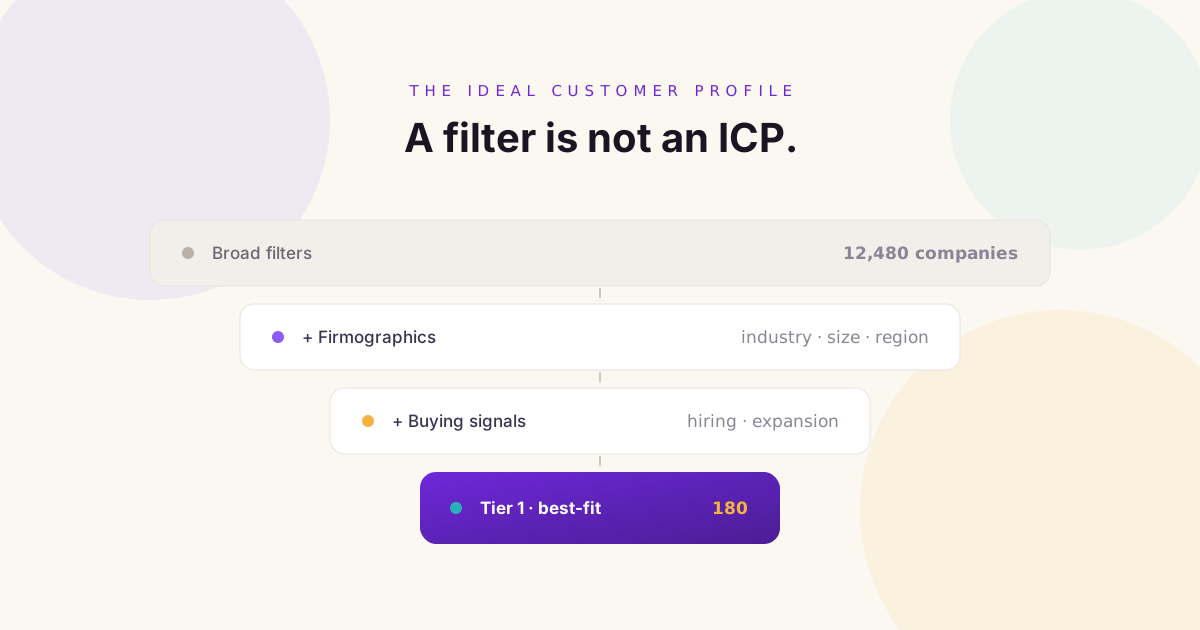
Many companies think they have an Ideal Customer Profile, but in reality they have a list of broad filters. Learn how to build an ICP that helps your sales team prioritize the right companies, improve outreach, and generate more qualified opportunities.
Ask a sales leader to describe their Ideal Customer Profile, and you will usually hear something like this: “We sell to manufacturing companies with between 100 and 500 employees.” Or perhaps: “We're targeting SaaS businesses in North America.”
While these descriptions are a starting point, they are not an Ideal Customer Profile. They are filters.
An effective ICP should help your sales team answer one simple question: “Who should we contact first?” If your ICP includes thousands, or even tens of thousands, of companies, it is probably too broad to guide meaningful prospecting.
Today's highest performing revenue teams aren't winning because they have access to bigger databases. They're winning because they understand exactly which businesses are most likely to become customers. That is what an effective ICP is designed to do.
What Is an Ideal Customer Profile?
An Ideal Customer Profile (ICP) is a detailed description of the type of company that receives the greatest value from your product or service, and is most likely to become a successful, long term customer. Unlike a buyer persona, which focuses on individual decision makers, an ICP focuses on the company itself.
It helps answer questions like:
- Which industries should we prioritize?
- What size companies convert best?
- Which regions perform well?
- What growth signals indicate buying intent?
- Which businesses are worth researching first?
Think of your ICP as the blueprint for every outbound campaign your business runs. Without it, prospecting becomes guesswork.
Why Many ICPs Fail
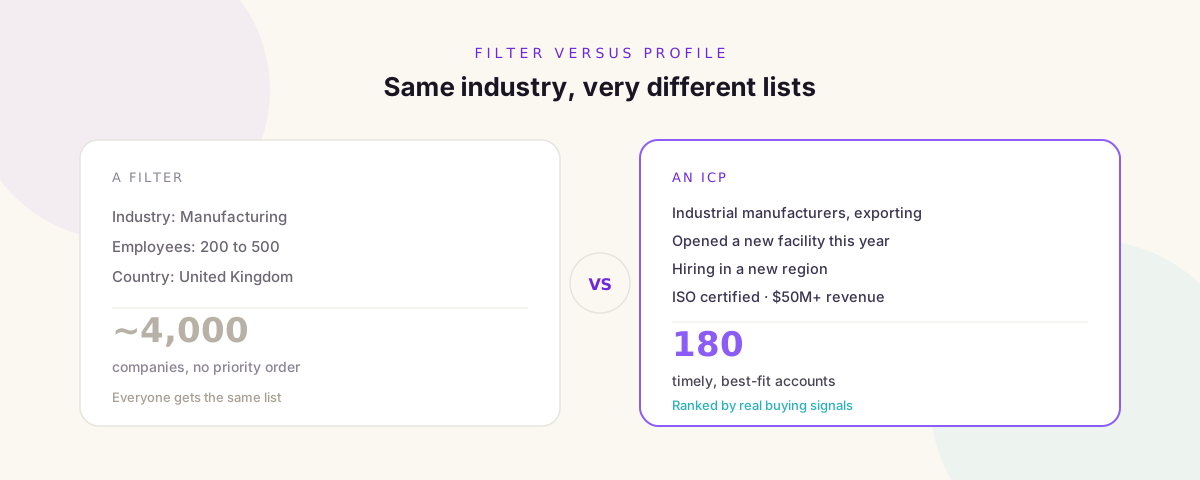
One of the biggest mistakes companies make is confusing an ICP with demographic filters. For example: Industry: Manufacturing. Employees: 200 to 500. Country: United Kingdom. Technically, that is an audience.
But it doesn't explain which manufacturers are growing, which ones are investing, which ones fit your product best, or which are likely to buy this quarter. As a result, SDRs end up contacting hundreds of companies with very different priorities. A better ICP helps your team focus on businesses that are not only qualified, but also timely.
Start With Your Best Customers
The easiest way to build an effective ICP is to study the customers you already have. Look for patterns. Ask questions like:
- Which customers renew consistently?
- Which accounts expanded after purchasing?
- Which customers required the least support?
- Which industries close fastest?
- Which customers generate the highest lifetime value?
You may discover that your best customers aren't simply “manufacturers.” Perhaps they are industrial manufacturers exporting internationally, companies exhibiting at trade shows, businesses operating multiple facilities, or organizations undergoing rapid expansion. Those insights are far more useful than broad filters alone.
Go Beyond Firmographics
Firmographic data remains important. You will still want to define factors such as industry, employee count, annual revenue, headquarters, and geographic markets. But modern prospecting requires another layer. Context.
Knowing that a company has 300 employees is helpful. Knowing that it recently opened a new distribution center is even better.
Add Buying Signals to Your ICP
Buying signals reveal when a business is actively changing. Some of the strongest signals include the following.
Hiring activity
A company hiring sales managers, software engineers, or operations leaders is often investing in growth. That growth may create demand for new vendors and technology.
Geographic expansion
Opening a new office or entering a new country often requires additional software, suppliers, compliance tools, and operational support.
Trade show participation
Businesses exhibiting at trade shows are investing in visibility and growth. These companies are often easier to engage because they are actively expanding their market presence.
Certifications
Receiving certifications such as ISO, FDA, CE, or Halal can indicate operational maturity and entry into new markets. These businesses may soon require new partners to support their growth.
Government registrations
Construction permits, procurement activity, environmental approvals, and business licenses can all indicate meaningful business changes. These are signals that static databases often overlook.
Define Your Exclusions
An effective ICP isn't only about who you target. It is also about who you avoid. For example, you may decide not to target:
- companies with fewer than 20 employees
- businesses operating in unsupported markets
- organizations without dedicated sales teams
- companies outside your pricing range
- businesses in highly regulated industries your solution doesn't support
These exclusions save your sales team valuable time. Sometimes the best prospecting strategy is knowing who not to contact.
Create ICP Tiers
Not every prospect has the same value. Many successful revenue teams organize prospects into priority levels.
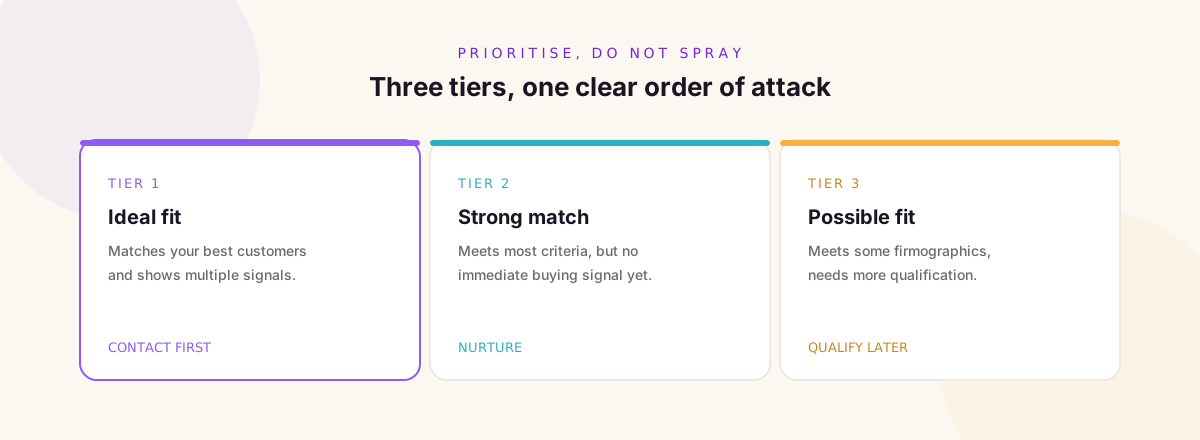
Tier 1
Your ideal customers. These companies closely match your best existing customers and show multiple buying signals. Sales should focus here first.
Tier 2
Strong matches that meet most ICP requirements but lack immediate buying signals. These prospects remain valuable but may require longer term nurturing.
Tier 3
Potential opportunities that meet some firmographic requirements but require further qualification before outreach. This prioritization helps teams spend time where it matters most.
Use AI to Scale Your ICP
Traditionally, building an ICP involved spreadsheets and manual research. Today, AI allows teams to work differently. Instead of manually reviewing thousands of businesses, AI can:
- identify companies similar to existing customers
- detect growth signals
- extract data from public sources
- enrich company records
- group businesses by characteristics
- score ICP fit automatically
The result is a dynamic prospect database that improves over time.
Common ICP Mistakes
Building an ICP once and forgetting it
Markets evolve. Your ICP should evolve too. Review it regularly as customer behavior changes.
Making it too broad
If almost every company qualifies, your ICP isn't helping. Specificity creates better targeting.
Ignoring customer success data
Sales isn't the only source of insight. Customer Success teams often know which customers generate the most value over time. Include their feedback when refining your ICP.
Focusing only on company size
Two companies with the same employee count can have completely different priorities. Growth signals often matter more than size alone.
Not aligning marketing and sales
Marketing may target one audience while Sales pursues another. A shared ICP keeps both teams working toward the same objective.
What a Modern ICP Looks Like
Imagine Kuration is helping a cybersecurity company define its ideal customer. Instead of saying: Manufacturing companies with 200 to 500 employees. The ICP might become:
- Industrial manufacturers
- Operating across multiple countries
- Recently opened new production facilities
- Hiring cybersecurity professionals
- Exhibiting at major manufacturing trade shows
- Holding ISO certifications
- Annual revenue above $50 million
That is no longer just a list of companies. It is a list of businesses that are actively growing, and therefore more likely to buy.
Why Your ICP Should Drive Your Data Strategy
Many businesses start with a database and then search for companies inside it. The most successful teams work in the opposite direction. They define their ICP first. Then they build a prospect database specifically around those characteristics. That means sourcing companies from:
- trade shows
- government registries
- supplier directories
- Google Maps
- certification databases
- procurement portals
- public records
- industry associations
Your data strategy should support your ICP, not define it.
Frequently Asked Questions
What's the difference between an ICP and a buyer persona?
An ICP defines the ideal company. A buyer persona defines the people within that company who influence purchasing decisions. Both are important, but they serve different purposes.
How often should an ICP be updated?
Review your ICP at least every six to twelve months, or whenever your market, product, or customer base changes significantly.
Can AI help build an ICP?
Yes. AI can analyze customer data, identify common characteristics, detect buying signals, and recommend companies that closely match your best customers.
Should startups and enterprises have different ICPs?
Absolutely. The characteristics of an ideal startup customer are often very different from those of an enterprise organization. Your ICP should reflect the segment you're targeting.
Why is an ICP important for outbound sales?
A strong ICP improves targeting, increases personalization, reduces wasted outreach, and helps sales teams focus on companies with the highest likelihood of converting.
Final Thoughts
The best outbound campaigns don't begin with a contact list. They begin with clarity. When you understand exactly which companies benefit most from your solution, and which signals indicate they're ready to buy, you stop chasing every opportunity and start focusing on the right ones.
That is the real purpose of an Ideal Customer Profile. It isn't a document that sits in a folder. It is the foundation of every successful prospecting strategy.
Build Prospect Databases Around Your ICP
Kuration AI helps revenue teams go beyond generic database filters by building custom prospect databases tailored to their Ideal Customer Profile. Discover companies from trade shows, government registries, Google Maps, supplier directories, certifications, procurement portals, and hundreds of other public sources. Enrich every record with decision makers, growth signals, and company intelligence, so your sales team spends less time searching and more time closing. Because the best pipeline starts with the right prospects, not just more prospects.