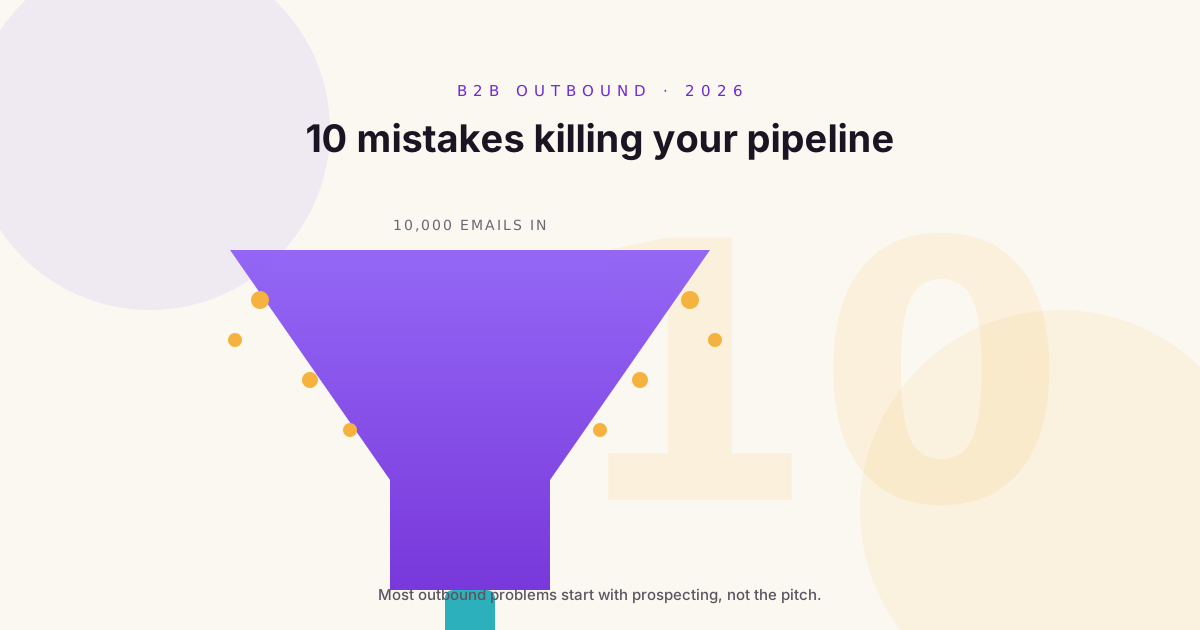
Most outbound problems do not start with poor salespeople. They start with poor prospecting. Learn the ten biggest mistakes holding revenue teams back, and how signal driven prospecting can dramatically improve pipeline quality.
Every sales leader asks the same question eventually. “Why aren't we booking more meetings?” The answers usually focus on execution. Maybe the emails need better copy. Maybe the SDRs need more training. Maybe the call scripts need refining. While those things certainly matter, they are rarely the biggest problem.
In many cases, the issue starts much earlier. It starts with who you are choosing to contact. Modern outbound has become incredibly efficient. Sales teams can launch thousands of emails in a day. AI can generate personalized messaging in seconds. Automation can schedule follow ups without human intervention. But none of those tools matter if you are targeting the wrong companies.
Prospecting has changed dramatically over the last few years. The teams seeing the best results are not simply working harder. They are prospecting smarter. Here are ten mistakes that continue to limit pipeline growth, and what high performing teams do instead.
1. Relying Only on Shared Databases
Platforms like Apollo, ZoomInfo, and LinkedIn Sales Navigator have transformed outbound. They are fast. They are easy to use. They are packed with valuable data. But there is one problem. Everyone else has them too. If every SDR is searching for the same companies using the same filters, everyone eventually reaches the same decision makers. The result is crowded inboxes, lower reply rates, and more competition.
A better approach is to use commercial databases as a starting point, not your entire strategy. Supplement them with proprietary data from trade shows, government registries, Google Maps, supplier directories, certification databases, and public records. The less shared your data is, the less crowded your outreach becomes.
2. Chasing Volume Instead of Relevance
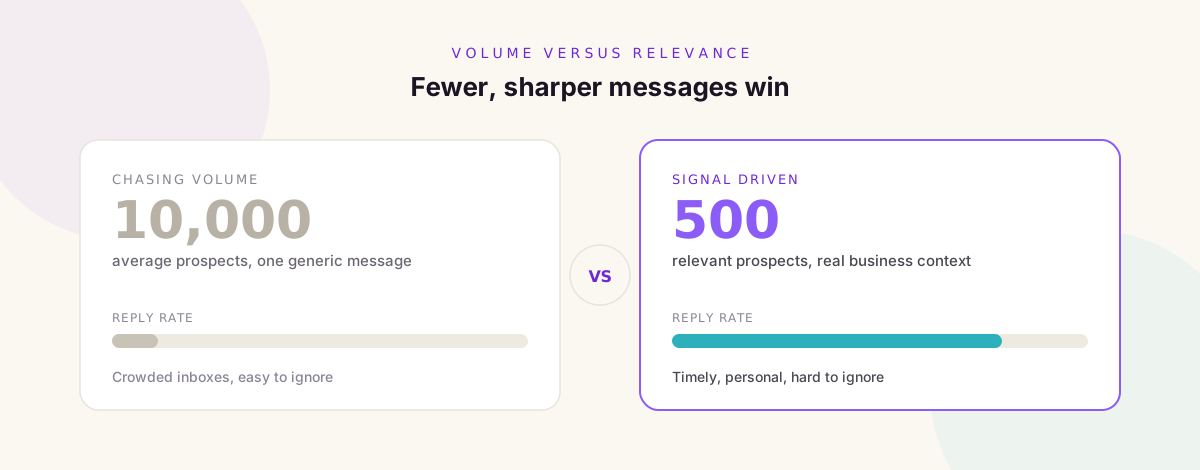
Many outbound teams still celebrate activity metrics. Emails sent. Calls made. Contacts added. Activity is important. But activity alone does not create revenue. Sending 10,000 emails to average prospects rarely outperforms sending 500 highly relevant messages. Quality beats quantity. Every time.
3. Ignoring Buying Signals
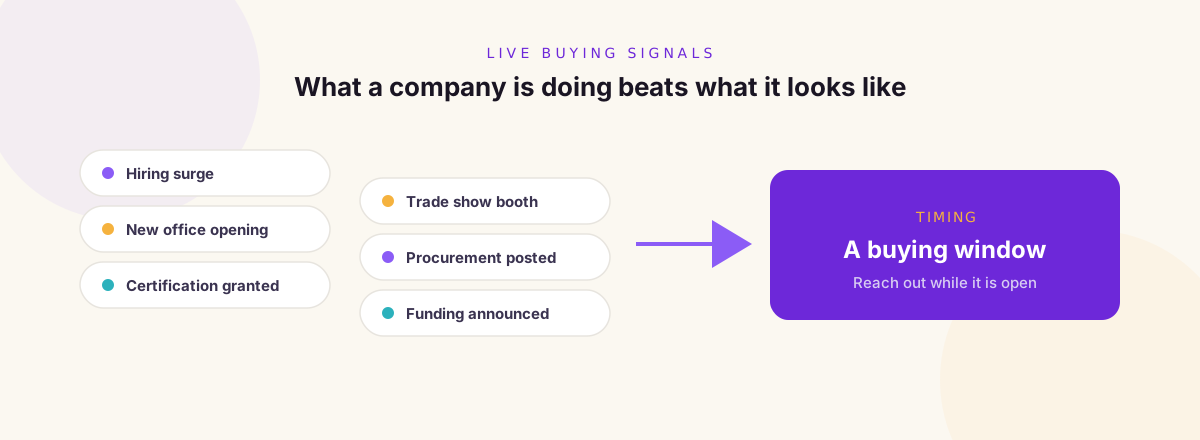
A static company profile tells you what a business looks like. Buying signals tell you what it is doing. Examples include hiring, expansion, new office openings, certifications, trade show participation, procurement activity, and funding announcements. These signals often indicate that a business is changing. And change creates buying opportunities.
4. Treating Every Prospect the Same
Not every company deserves the same amount of attention. Imagine you are selling logistics software. Would you spend equal time contacting a small warehouse with no growth, and a distributor opening three new fulfillment centers? Probably not. Prioritization matters. The best revenue teams score prospects based on ICP fit, growth signals, company size, market activity, and buying intent.
5. Building an ICP That Is Too Broad
One of the most common mistakes is defining an Ideal Customer Profile like this: manufacturing companies with 100 to 500 employees. That describes thousands of businesses. It does not tell your sales team who to prioritize.
A stronger ICP might look like this: food manufacturers in Southeast Asia with export certifications, more than five production facilities, and active participation in international trade shows. That is actionable. The more specific your ICP, the better your prospecting becomes.
6. Letting Your Data Go Stale
Businesses change constantly. People switch jobs. Companies relocate. Phone numbers change. Websites are updated. New offices open. Old locations close. If your database has not been refreshed in months, it is almost certainly costing you opportunities. Treat your prospect database as a living asset, not a spreadsheet that gets updated once a quarter.
7. Over Automating Personalization
AI has made it easier than ever to personalize outreach. But there is a difference between personalization and token replacement. Compare these two opening lines.
Example 1. “I saw you're a manufacturing company based in Texas.” That adds little value.
Example 2. “Congratulations on exhibiting at IMTS this September. I noticed you're showcasing a new automation line, which caught my attention because many manufacturers at that stage begin evaluating new operational software.” The second message demonstrates context. Context creates credibility.
8. Ignoring International Markets
Many companies focus almost exclusively on North America. That is understandable. But it also means competition is intense. High growth opportunities often exist in Southeast Asia, the GCC, Australia, New Zealand, Central Europe, and Latin America. Many of these markets have rich public datasets and less outbound competition. If your product can serve them, they deserve attention.
9. Measuring the Wrong Metrics
Open rates. Click rates. Reply rates. These metrics matter. But they do not tell the whole story. The metrics that deserve the most attention are qualified meetings, sales opportunities, pipeline generated, conversion rates, customer acquisition cost, and revenue influenced. A campaign with fewer replies but higher quality opportunities is often far more valuable.
10. Assuming Better Software Will Fix Poor Strategy
It is tempting to believe the next platform will solve your prospecting challenges. Sometimes it helps. But software cannot compensate for a weak strategy. The best performing teams do not simply buy better tools. They build better systems. They understand who their ideal customers are, where those customers spend time, what signals indicate buying intent, and how to continuously improve their data. Technology supports that strategy. It does not replace it.
What High Performing Revenue Teams Do Differently
Successful outbound teams share several habits. They:
- refresh their data continuously
- prioritize quality over quantity
- monitor live business signals
- build proprietary databases
- define narrow ICPs
- enrich every prospect
- personalize using real business context
- review and improve their prospecting process regularly
None of these practices are revolutionary. Together, however, they create a significant competitive advantage.
Why AI Is Changing Prospecting
AI is not replacing salespeople. It is replacing repetitive research. Instead of spending hours searching websites, cleaning spreadsheets, copying company details, and enriching records, AI can handle much of the manual work. That gives revenue teams more time to focus on strategy, conversations, relationship building, and closing deals. The companies that embrace AI are not simply moving faster. They are making better decisions because they have better data.
Frequently Asked Questions
What is the biggest prospecting mistake?
The biggest mistake is relying exclusively on shared databases without identifying unique sources of high quality prospects.
Why are buying signals important?
Buying signals indicate that a company is actively changing or investing, making outreach more timely and relevant.
How often should prospect data be updated?
Ideally, prospect data should be refreshed continuously or at regular intervals to reflect business changes.
Is AI replacing outbound sales?
No. AI supports outbound by automating research, enrichment, and data organization, allowing sales teams to spend more time selling.
What makes a strong prospect database?
A strong database combines accurate company information, verified contacts, live business signals, and a clear alignment with your Ideal Customer Profile.
Final Thoughts
The future of prospecting is not about sending more emails. It is about sending smarter ones. That starts long before the first message is written. It starts with choosing the right companies, understanding the right signals, and building a prospect database that reflects how businesses actually grow, not just how they are categorized.
The teams that embrace this shift will spend less time chasing unqualified leads and more time having meaningful conversations with businesses that are ready to buy. In 2026, that is what separates average outbound from exceptional outbound.
Stop Prospecting Like Everyone Else
Kuration AI helps revenue teams build proprietary prospect databases using live business signals from trade shows, government registries, Google Maps, procurement portals, certifications, directories, and hundreds of other public data sources. Instead of relying solely on shared databases, discover companies based on what they are doing today, and build outreach campaigns that are more relevant, timely, and effective. Build a pipeline powered by better data, not just more data.