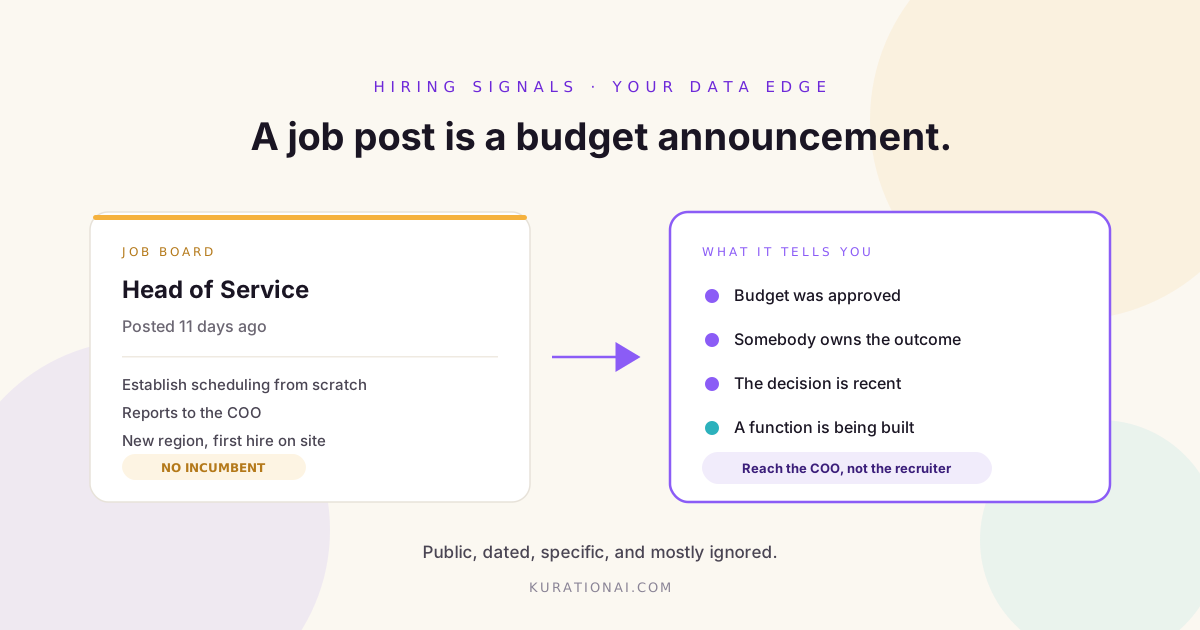
Every database will tell you a company has 400 staff. Almost none will tell you it opened six roles on the revenue team last month, that four of them mention a tool you replace, and that the hiring manager named in the advert is the person who signs your contract.
That gap matters because a job advert is one of the few things a company publishes about its own near future. Headcount is a record of the past. A job advert is a budget that has already been approved, a problem someone has admitted to, and very often a named person who owns it.
This is a practical guide to reading hiring as a buying signal: which roles predict which purchases, what a single advert gives you beyond the job title, where the signal misleads, and how to turn a careers page into a scored list rather than a folder of tabs.
Why a Job Advert Beats Firmographics
Firmographic data describes a company as it was when the record was last touched. Industry, size, location, revenue band. All of it useful for filtering, none of it timely. Two companies with identical firmographics can be six months apart in readiness to buy, and the firmographics will never tell you which is which.
A job advert is different in three ways.
It Is Dated and Self Published
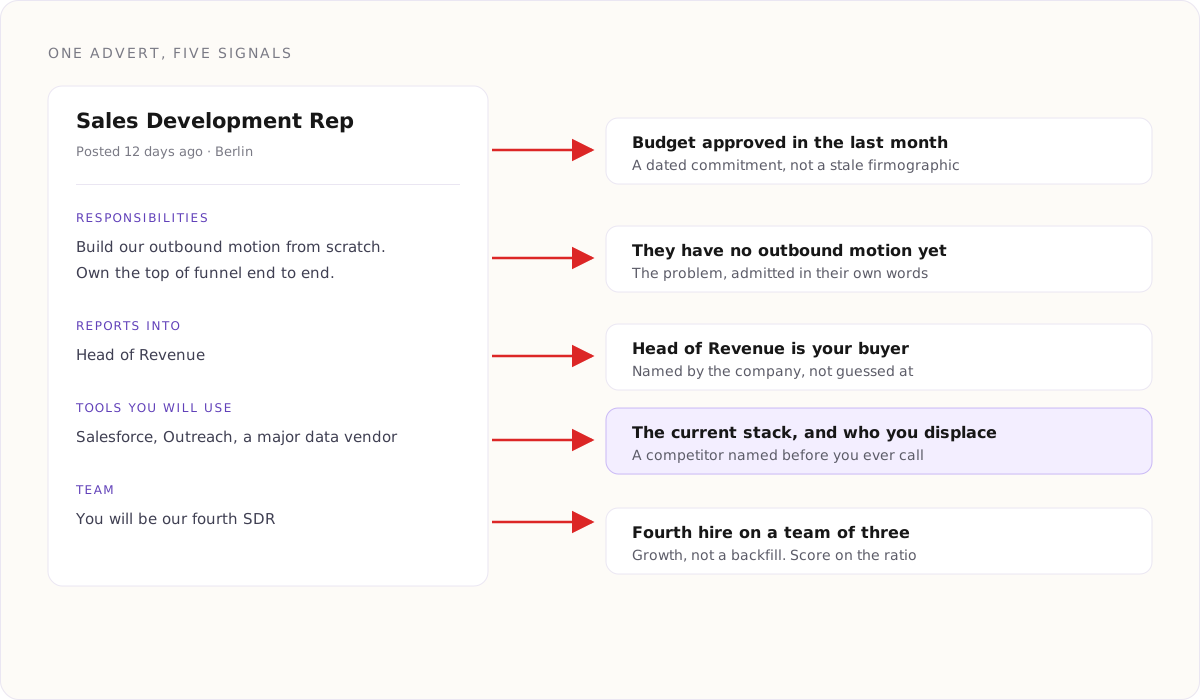
Nobody sells you a job advert. The company wrote it, published it, and put a date on it. When a role appears, you know the budget cleared some internal process in the weeks before. That is a far tighter window than a funding announcement, which is often months behind the decision it reflects.
It Names the Problem
Read past the title into the responsibilities. A company that writes "build and own our outbound motion from scratch" is telling you it has no outbound motion. One that writes "consolidate our data tooling and reduce vendor spend" is telling you a renewal conversation is coming and somebody has been asked to cut.
It Often Names the Buyer
Adverts frequently say who the role reports into. That line is a decision maker, identified by the company itself, in a context where they are already thinking about the area you sell into.
Which Roles Predict Which Purchases
Not every hire is a signal for you. The skill is knowing which roles sit upstream of your product, and ignoring the rest however tempting the volume looks.
Revenue Roles Predict Tooling
An SDR or BDR opening says a company is about to run outbound at volume. That means a data source, a sequencer, a dialler and a deliverability setup, usually bought within a quarter of the person starting. If you sell any part of that stack, the advert is earlier than the buying committee.
Operations Roles Predict Consolidation
A RevOps or Sales Ops hire is rarely about growth. It is about mess. Somebody has decided the current setup cannot scale, and the new person will be handed a list of tools to rationalise. That is a threat if you are incumbent and an opening if you are not.
Engineering Roles Predict Build Versus Buy
A job advert asking for someone to build an internal data pipeline is a company choosing to build. That is a lost deal today and a strong one in eighteen months, when the pipeline needs maintaining and the person who built it has left.
Regional Roles Predict Expansion
A first hire in a new country is the clearest expansion signal there is. It comes before the press release, before the office, and before every competitor who is watching news feeds instead of careers pages.
Reading Volume, Not Just Presence
One open role is noise. The pattern is the signal.
- Count roles in one function, not across the company. Six openings spread across engineering, finance and support is a growing company. Six in sales is a plan.
- Watch the ratio. A team of four SDRs hiring three more is a different story from a team of forty hiring three.
- Track how long a role stays open. A senior role reposted after two months is a company that cannot fill it, which is often when they start looking at tooling that reduces the need for the hire.
- Note the seniority order. A Head of Sales hired before the SDRs means the motion is being designed now. SDRs hired before the leader means somebody is filling a gap in a hurry.
Where the Signal Misleads
Hiring data has three failure modes, and a list that ignores them will waste a quarter of your sends.
Ghost Adverts
Some companies keep evergreen adverts running for roles they are not actively filling, either to build a pipeline of candidates or because nobody took the posting down. A role that has been open for six months with no change is usually not a live budget.
Agency Reposts
The same role appears five times because four recruitment agencies have listed it alongside the company. Deduplicate on the company, not the posting, or your volume counts will be nonsense.
Backfills
A single role opening on an established team is often somebody leaving, not the team growing. It carries almost no buying signal. The way to tell is team size against the number of openings, which is why the ratio matters more than the count.
Turning a Careers Page Into a List
The practical problem is that hiring data lives in the worst possible shape for prospecting. It is one advert per page, spread across job boards, applicant tracking systems and company careers pages, none of which give you a company row with a contact on it.
The workflow that fixes it has four steps, and each one is a column rather than a manual pass.
Step One: Extract the Adverts
Point an extractor at the job board search, the careers page or the applicant tracking system listing. What comes back is one row per advert with the title, the location, the posted date and the body text.
Step Two: Roll Up to the Company
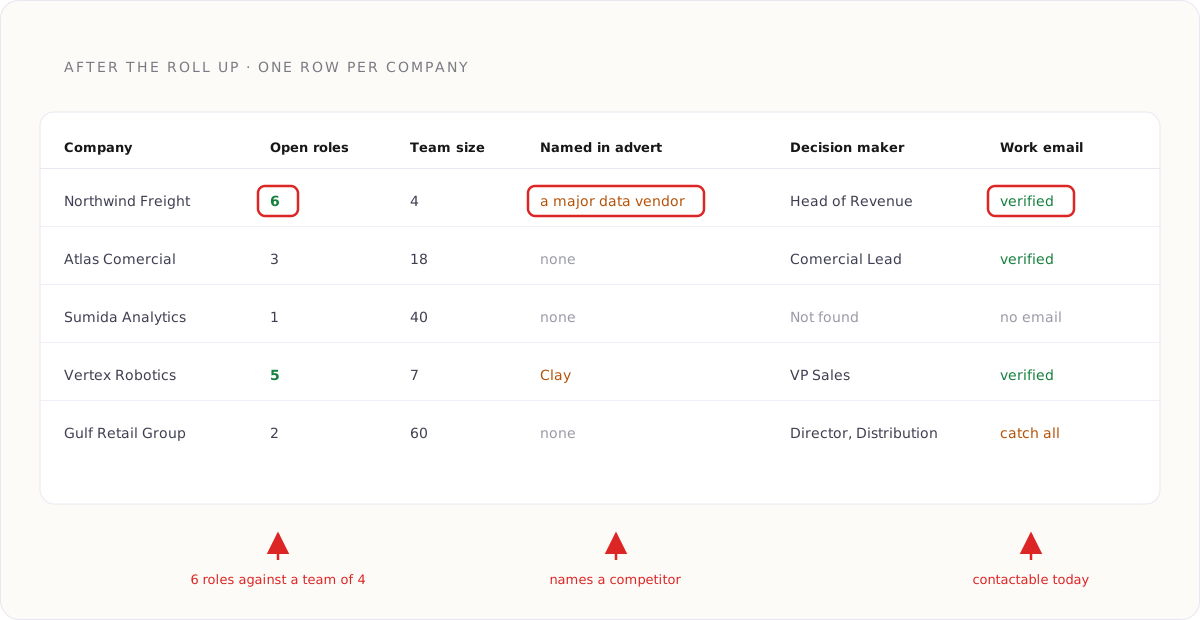
Deduplicate to one row per company and keep a count of open roles by function. This is the step most teams skip, and it is the one that turns a pile of adverts into something you can score.
Step Three: Read the Body Text
Run a research column across the advert text to pull out what actually matters: the tools named, the reporting line, whether the role is a first hire or an addition. This is judgement work that used to require a person reading each advert.
Step Four: Find the Named Buyer
The advert usually names a function rather than a person. Resolve that to the actual individual, then get a verified work email so the row is something you can send to rather than something you can admire.
Scoring a Hiring List
Once the data is in columns, scoring is a rubric rather than a feeling. A workable starting point weights four things.
- Role fit. Does the function sit upstream of what you sell? Weight this heaviest, because a perfect signal on the wrong team is still the wrong company.
- Volume against team size. Three openings on a team of five is a stronger signal than ten on a team of two hundred.
- Recency. A role posted in the last thirty days is worth several times one posted in the last six months.
- Named tooling. An advert that names a competitor, or names the category you sell into, moves a company to the top regardless of the other three.
Set a hard rule as well as weights. If no decision maker can be resolved, the row is not workable, whatever it scores. A high score you cannot contact is a report, not a pipeline.
How This Fits With Other Signals
Hiring rarely arrives alone. It compounds with the signals you are probably already watching, and the combinations are where the real prioritisation lives.
- Funding plus hiring. Money in, then roles opening, is the cleanest sequence in B2B. The gap between the two is your window.
- Expansion plus hiring. A new country in the advert location field, with no office listed anywhere, means the office is being planned now.
- Job change plus hiring. A new leader who then opens roles is rebuilding a team, and new leaders replace tooling far more readily than established ones.
- Event attendance plus hiring. A company exhibiting and hiring in the same function is investing in that function on two fronts at once.
A Cadence That Keeps It Useful
Hiring data decays faster than almost anything else on a prospect record. A role open today may be filled in three weeks, and a list refreshed quarterly will spend most of its life wrong.
Put the extraction on a weekly schedule and let new companies arrive on their own. Refresh the open role count on the same clock, and let the rest of the record, the domain, the firmographics, the contact, sit on a slower one. Different facts age at different speeds and there is no reason to pay to refresh a domain every week.
Suppress anyone already contacted before the refresh spends anything on them. A list that grows itself is only useful if it does not quietly re contact the same people every Monday.
Frequently Asked Questions
Is scraping job adverts legal?
Job adverts are published deliberately and publicly by companies that want them read. Collecting and analysing that public business information is ordinary competitive research. The care needed is around personal data: a named hiring manager is a person, and contacting them falls under the same rules as any other outbound, including a lawful basis under GDPR and an honest way to opt out.
How current does hiring data need to be?
Weekly for the open role count. A role filled three weeks ago is no longer a signal, and a list refreshed monthly will be wrong more often than right on its most valuable column.
What about companies that do not publish adverts publicly?
Some hire entirely through agencies or referrals. Those companies will not show up in this signal at all, which is a real limit rather than something to work around. Use hiring as one input among several, not as your only qualification.
Should I mention the job advert in my outreach?
Mention what it implies, not that you read it. "Saw you are building out the SDR team" is useful context. Quoting three lines back at someone reads as surveillance and gets a worse reply rate than saying nothing.
How many open roles should count as a strong signal?
There is no universal number, because it depends on team size. Three openings against a team of five is strong. Three against two hundred is background noise. Score on the ratio, not the count.
Can hiring signals replace intent data?
They answer different questions. Intent data suggests someone is researching a category. Hiring tells you a company has committed budget to a function. Hiring is slower but far more concrete, and unlike most intent data you can read the underlying evidence yourself.
The Short Version
A job advert is a company writing down its next quarter in public. It carries a date, an admitted problem, a named owner and often the current tooling, which is more than any firmographic record will ever give you.
Read the function rather than the title, count roles against team size rather than in isolation, throw out ghost adverts and agency reposts, and finish every row with a person you can actually reach. Then put the whole thing on a weekly clock, because this is the fastest decaying signal you will work with.