Trade shows have always been one of the best places to meet potential customers. Every year, thousands of companies invest significant budgets to exhibit at industry events, booth space, travel, sponsorships, product launches, and networking, because they're actively looking to grow.
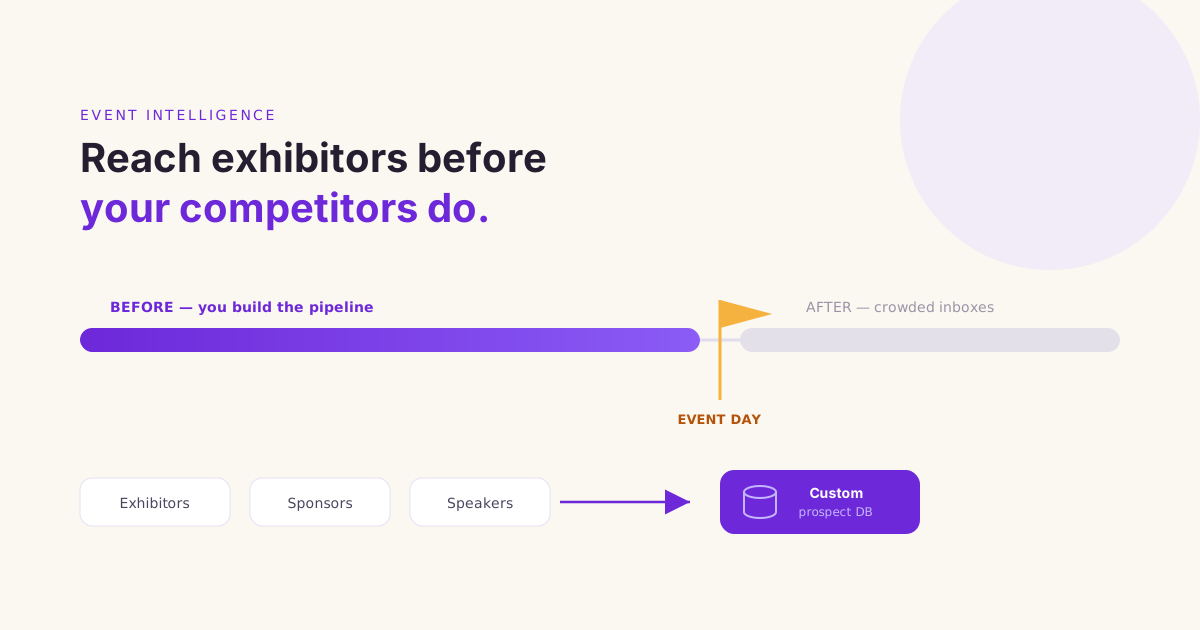
Yet surprisingly, most outbound teams don't start paying attention until the event is over. By that point, exhibitors have already been approached by competitors, their inboxes are full, and the window to stand out is much smaller.
The smartest sales teams work differently. Instead of waiting for the event, they identify exhibitors weeks, or even months, in advance. They build targeted prospect databases before everyone else, giving themselves more time to research companies, personalize outreach, and book meetings before competitors even know who to contact. This is where event intelligence becomes one of the most valuable prospecting strategies available.
Why trade show exhibitors are high intent prospects
Not every company chooses to exhibit at an industry event. Exhibiting requires real investment. Companies typically commit to:
- Booth fees
- Marketing campaigns
- Travel expenses
- Product demonstrations
- Sales teams on the ground
- Promotional materials
They make that investment because they're pursuing growth. That often means they're:
- Launching new products
- Entering new markets
- Looking for customers
- Searching for partners
- Evaluating suppliers
- Expanding their commercial activities
Those are all strong buying and selling signals. Unlike a generic company list, an exhibitor list already contains context about why those businesses are active, and that context makes prospecting far more relevant.
Why most sales teams miss this opportunity
Many sales teams rely almost entirely on commercial databases. When they need leads, they search by industry, company size, employee count, and location.
Those filters are useful, but they don't tell you which companies are actively investing in growth. Trade show participation does. Unfortunately, event data is often scattered across event websites, exhibitor directories, downloadable PDFs, sponsor pages, floor plans, and conference brochures.
Collecting this information manually is slow, so many teams simply ignore it, leaving a valuable source of high intent prospects largely untouched.
Where to find exhibitor data
One of the biggest misconceptions about event prospecting is that exhibitor data is hard to access. In reality, much of it is publicly available. The challenge is organizing it. Some of the best sources include:
Official event websites
Most trade shows publish exhibitor directories, sponsor lists, speaker pages, and partner announcements, often updated regularly as new companies join.
Downloadable exhibitor guides
Many conferences provide PDFs with company names, booth numbers, websites, product categories, and contact information. These are incredibly valuable but rarely structured for prospecting.
Event mobile apps
Large conferences often publish attendee or exhibitor information through official event apps. When publicly accessible, these can provide additional business intelligence.
Industry associations
Trade associations frequently promote participating members, event partners, and featured exhibitors, directories that often reveal companies that don't appear prominently elsewhere.
Building a prospect database from event data
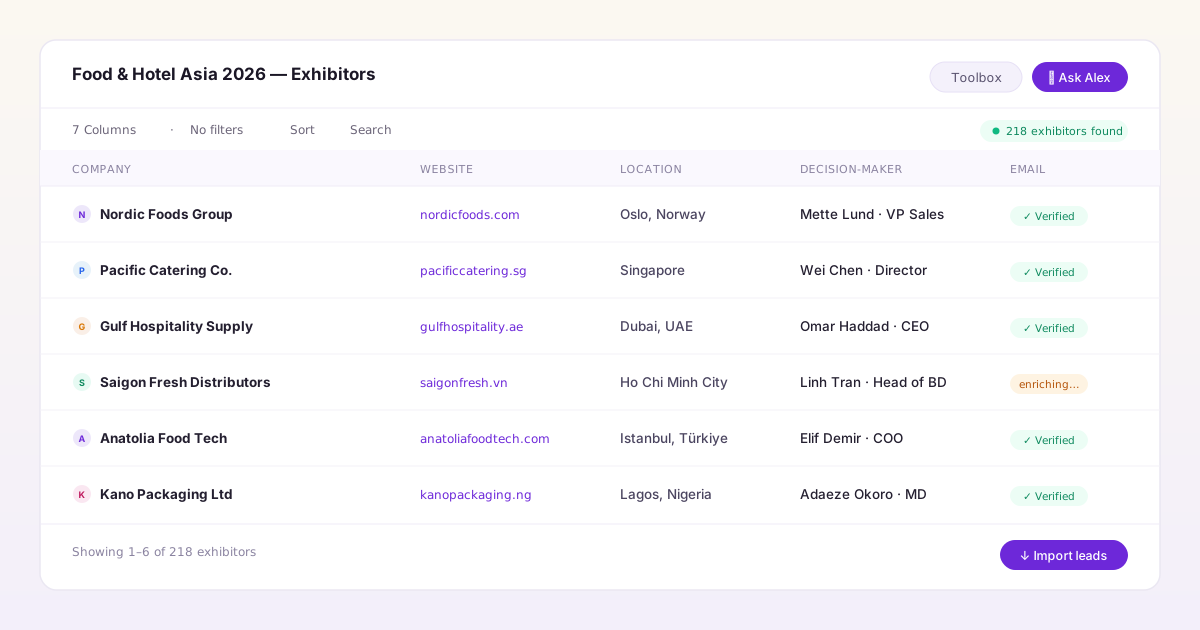
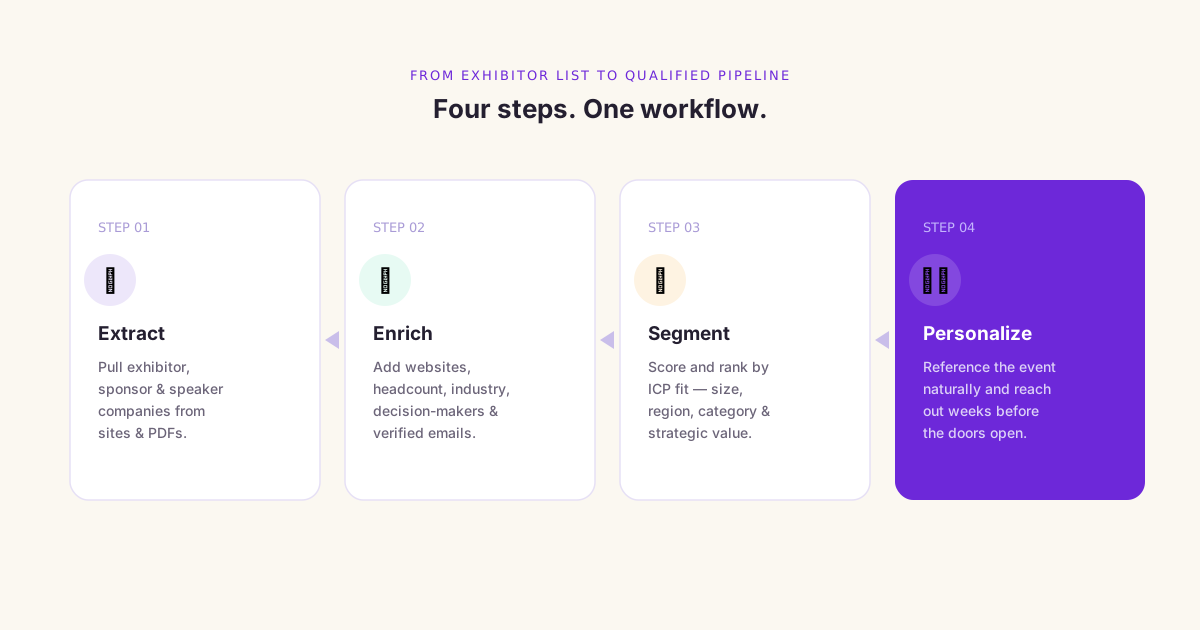
Finding an exhibitor list is only the first step. The real value comes from transforming that list into an actionable prospect database. A typical workflow looks like this.
Step 1: Extract the company list
Start by collecting exhibitor names, sponsor names, speaker companies, and partner organizations. The goal is a clean list of participating businesses.
Step 2: Enrich each company
Once the companies are identified, enrich them with company website, employee count, industry, headquarters, LinkedIn profile, decision makers, and verified email addresses. This turns a simple directory into a sales ready database.
Step 3: Segment by relevance
Not every exhibitor is equally valuable. Segment companies by size, product category, region, technology focus, ICP fit, and strategic importance so your team focuses on the highest value opportunities first.
Step 4: Personalize outreach
One of the biggest advantages of event intelligence is the ability to personalize. Instead of a generic cold email, reference the event naturally:
“I noticed your team will be exhibiting at Food & Hotel Asia next month…”
Small details like that immediately make outreach feel more relevant, and more likely to get a reply.
Don't stop at exhibitors
Many teams focus exclusively on exhibitor lists, but events contain several additional prospecting opportunities.
Sponsors
Sponsors often have larger budgets and stronger commercial goals. They're actively investing in visibility, which makes them excellent prospects.
Speakers
Speakers are frequently senior decision makers or subject matter experts. Depending on your ICP, they can be valuable outreach targets.
Award winners
Many conferences recognize innovation through awards. Award winning companies often experience increased visibility and growth.
Partners
Technology partners, association partners, and ecosystem partners can reveal entirely new prospect segments.
Why AI makes event prospecting scalable
Traditionally, building event databases required hours of manual work, downloading PDFs, copying company names, searching LinkedIn, finding websites, enriching contacts, and cleaning spreadsheets. Modern AI dramatically reduces that workload. AI powered workflows can:
- Extract company data from websites
- Structure information from PDFs
- Identify duplicate records
- Enrich companies with firmographics and contacts
- Classify industries and score ICP fit
- Keep databases updated as exhibitors are added
That lets teams spend less time researching and more time selling.
A practical example
Imagine you sell logistics software. Instead of searching for “manufacturing companies in Germany,” you could identify:
“Companies exhibiting at LogiMAT with more than 200 employees and operations across Europe.”
That's a much stronger prospect list, because those companies are already investing in logistics, industry events, and business development. The context makes every conversation more relevant.
Common mistakes to avoid
Waiting until after the event
By then, many competitors have already started outreach. Begin prospecting before the event whenever possible.
Treating every exhibitor the same
Prioritize based on your ICP instead of contacting everyone. Quality beats quantity.
Ignoring smaller industry events
Large international conferences are valuable, but niche regional events often produce even better prospects because competition is lower.
Using event data once
Trade shows happen every year. Build repeatable workflows that continuously capture new exhibitors and keep your database fresh.
Frequently asked questions
Why are trade show exhibitors good prospects?
Exhibitors are actively investing in marketing, partnerships, and business development, which makes them strong candidates for outbound outreach.
Can AI extract companies from exhibitor PDFs?
Yes. Modern AI can extract company information from PDFs, web pages, directories, and other semi structured documents, turning them into searchable databases.
Should I contact exhibitors before or after an event?
Whenever possible, start before the event. Early outreach provides more opportunities to schedule meetings and avoids crowded inboxes after the conference.
How does Kuration help with event prospecting?
Kuration AI can help teams discover event data, extract exhibitor information, enrich company records, identify decision makers, and build custom prospect databases that are ready for outreach.
Final thoughts
Trade shows aren't just networking opportunities, they're one of the richest sources of high intent B2B data available. Every exhibitor, sponsor, speaker, and partner leaves behind signals that can help sales teams identify growing businesses before competitors do.
The companies generating the best outbound results aren't waiting for attendee lists after the event. They're building prospect databases before the doors even open, which is how they create more relevant outreach, book more meetings, and stay ahead of the competition.