For years, the playbook for B2B prospecting was simple: buy access to the biggest database you could afford, apply a few filters, and start dialing. That era is ending.
The most effective revenue teams are no longer competing on who has the largest list. They're competing on who can find the most relevant companies, often the ones that don't appear in any shared database at all. This guide compares five platforms shaping modern prospecting, and where each one actually fits.
1. Kuration AI
Best for: Building proprietary prospect databases for niche or fragmented markets.
Kuration approaches prospecting differently. Instead of starting with an existing database, it starts with your ideal customer profile. From there, AI research agents source companies from places traditional databases ignore:
- Trade show exhibitor lists
- Government registries
- Google Maps
- Supplier directories
- Certification databases
- PDFs and downloadable guides
- Association memberships
- Procurement portals and niche websites
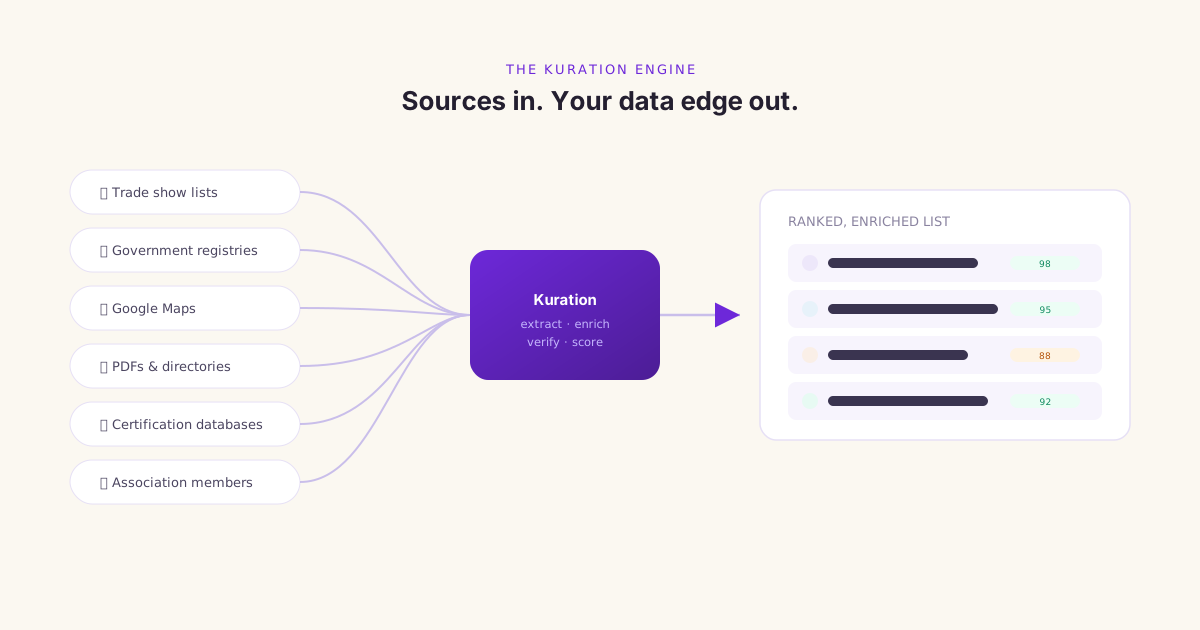
Once companies are discovered, Kuration enriches the data, scores prospects, and prepares them for outreach, turning a raw list into a sales ready database.
Pros
- Custom database creation
- AI powered research agents
- Strong APAC, EMEA, and international coverage
- Built in enrichment workflows
- Event intelligence capabilities
- Google Maps and registry sourcing
- Lower credit costs than many competitors
Considerations
If your prospecting needs are very simple, such as finding standard US SaaS companies, you may not use Kuration's full capabilities. Where it truly shines is when your best prospects don't already exist in a traditional database.
2. Clay
Best for: Workflow automation and enrichment.
Clay remains one of the strongest platforms for teams building sophisticated outbound workflows. Its flexibility lets users connect multiple enrichment providers and automate complex processes.
Pros
- Excellent workflow builder
- Large integration ecosystem
- Flexible enrichment options
- Active community
Considerations
Clay generally assumes you've already identified the companies you want to target. Finding highly specialized companies outside common datasets often requires additional sourcing tools.
3. Apollo.io
Best for: High volume outbound to standard B2B markets.
Apollo combines a large contact database with sequencing and enrichment features. It's a strong option for companies targeting common buyer personas.
Pros
- Large contact database
- Integrated outreach features
- Easy to get started
- Competitive pricing
Considerations
Coverage becomes more limited for niche industries, regional markets, certification based prospecting, and companies that aren't well represented online.
4. Persana AI
Best for: AI assisted outbound workflows.
Persana focuses on helping sales teams automate research and improve personalization. It's a good option for teams experimenting with AI first outbound.
5. Databar
Best for: No code data enrichment.
Databar connects users with multiple external data providers through a simple interface. It's particularly useful for marketers and analysts who need quick enrichment without building complex workflows.
Comparison at a glance
- Kuration AI, Proprietary prospect databases, Teams selling into niche or fragmented markets
- Clay, Workflow automation, Advanced outbound operators
- Apollo, Large contact database, High volume SDR teams
- Persana, AI assisted research, Growing sales teams
- Databar, Data enrichment, Marketing and operations teams
Which platform is right for you?
There isn't a single “best” tool. There is only the best tool for your use case.
Choose Clay if:
- You already know your target companies
- You want flexible workflow automation
- Enrichment is your primary need
Choose Apollo if:
- You target broad B2B markets
- You need a large contact database
- Speed matters more than uniqueness
Choose Kuration AI if:
- Your ICP is difficult to find
- Your competitors already use Apollo or Clay
- Your best prospects live in registries, events, directories, or regional ecosystems
- You want to build a proprietary prospect database instead of relying solely on shared data
The future of prospecting isn't about more data
One of the biggest misconceptions in outbound is that success comes from having access to the largest database. In reality, success increasingly comes from having access to the most relevant data.
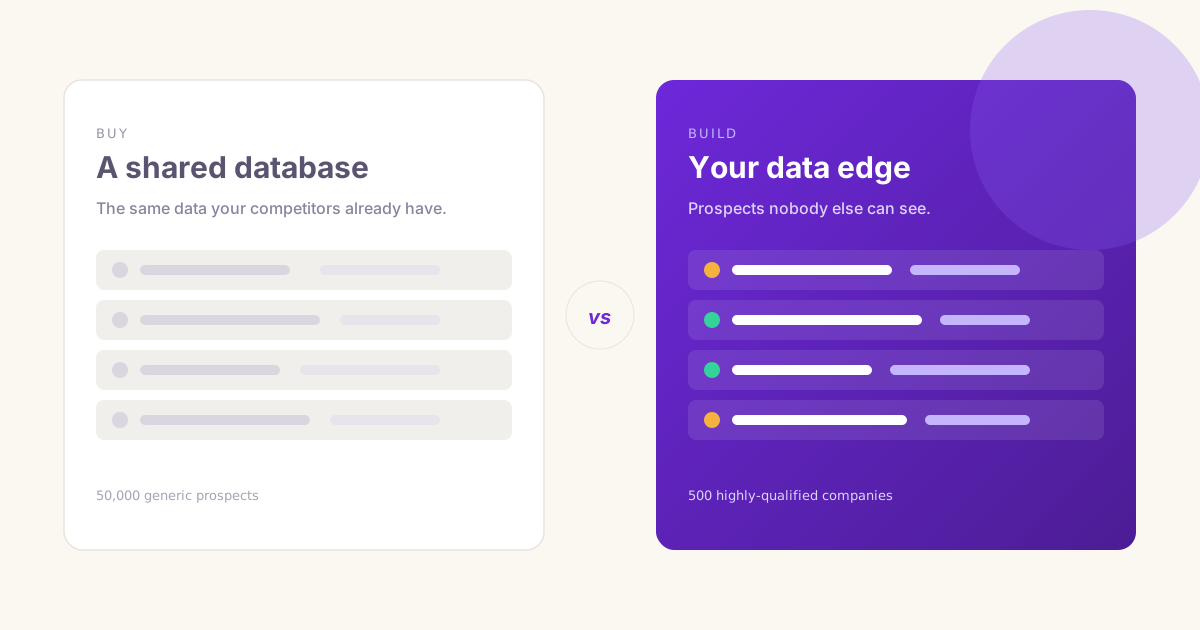
A list of 500 highly qualified companies built around your exact ICP will almost always outperform a list of 50,000 generic prospects. That's why many revenue teams are shifting from buying databases to building proprietary ones. The goal isn't to collect more contacts, it's to identify companies your competitors haven't discovered yet.
Frequently asked questions
Is Clay still worth using in 2026?
Absolutely. Clay remains one of the strongest workflow automation platforms available, and for many outbound teams it will continue to be an excellent choice.
What makes Kuration different from Clay?
Clay primarily focuses on enrichment and workflow automation. Kuration combines AI powered sourcing, custom database creation, enrichment, scoring, and automation in one platform.
Can I use Clay and Kuration together?
Yes. Many teams use Kuration to discover and build custom prospect databases, then push those prospects into existing outbound workflows.
Which platform is better for international prospecting?
If your target market includes APAC, the Middle East, or industries with fragmented data sources, platforms that can source from regional registries, directories, and public datasets typically provide stronger coverage than relying solely on traditional contact databases.
Final thoughts
Clay has helped redefine modern outbound, but the prospecting landscape is changing. Revenue teams are no longer competing on who has the biggest database. They're competing on who can uncover the best opportunities before everyone else.
That requires more than enrichment. It requires discovering data that isn't already shared across the market. For companies selling into niche industries, international markets, or highly specific customer profiles, building a proprietary prospect database is becoming one of the strongest competitive advantages in outbound.